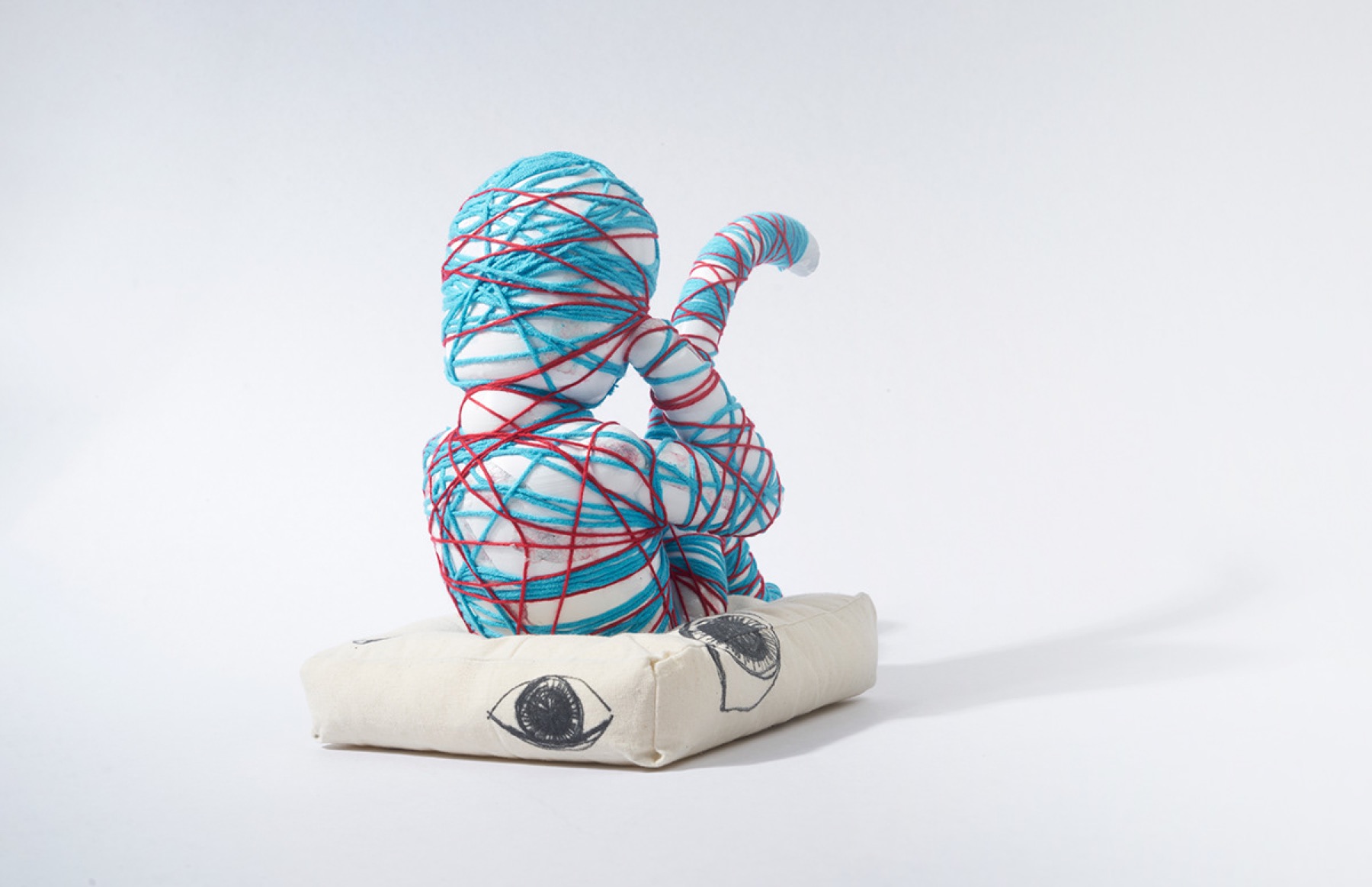
A Room for Flat Things
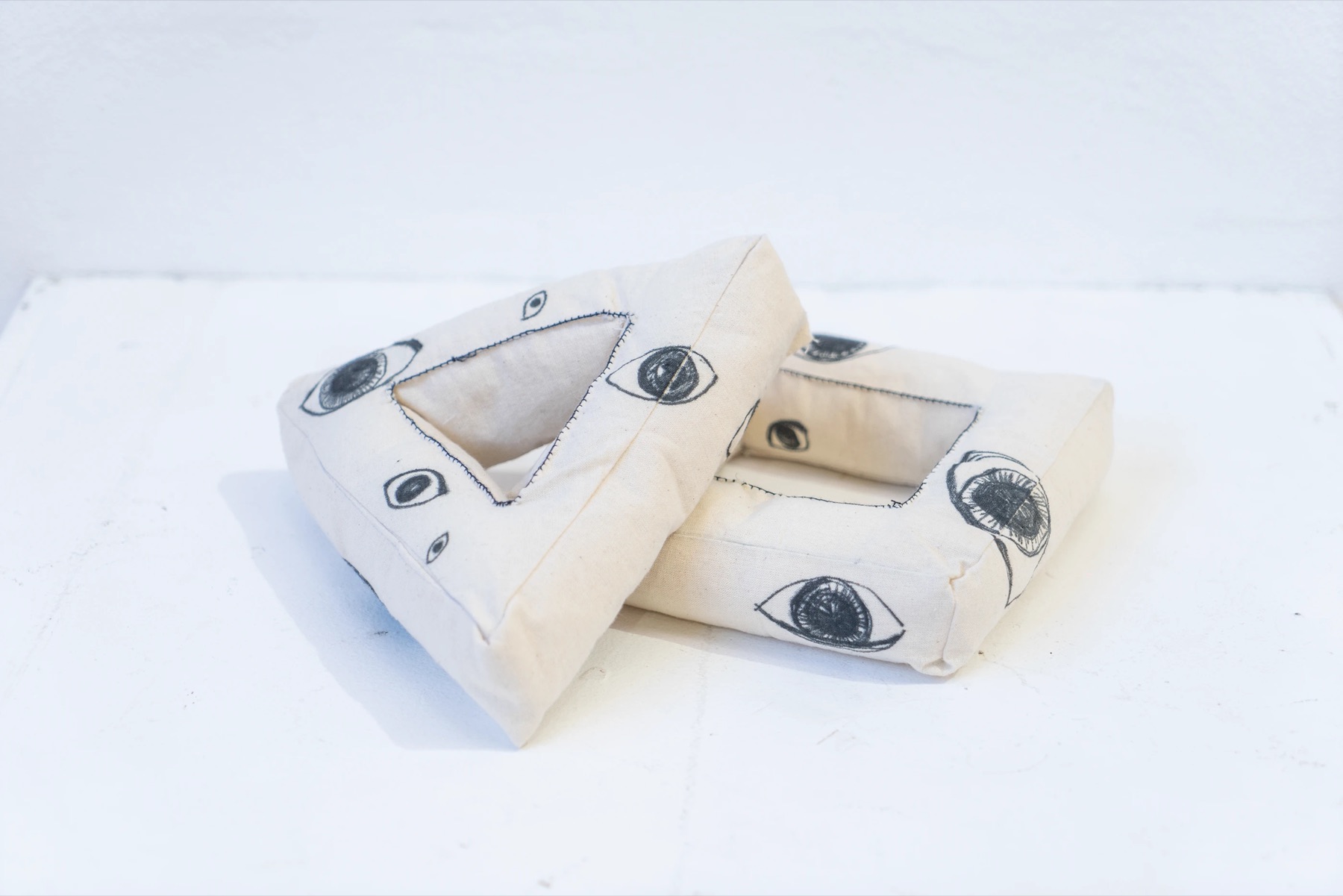
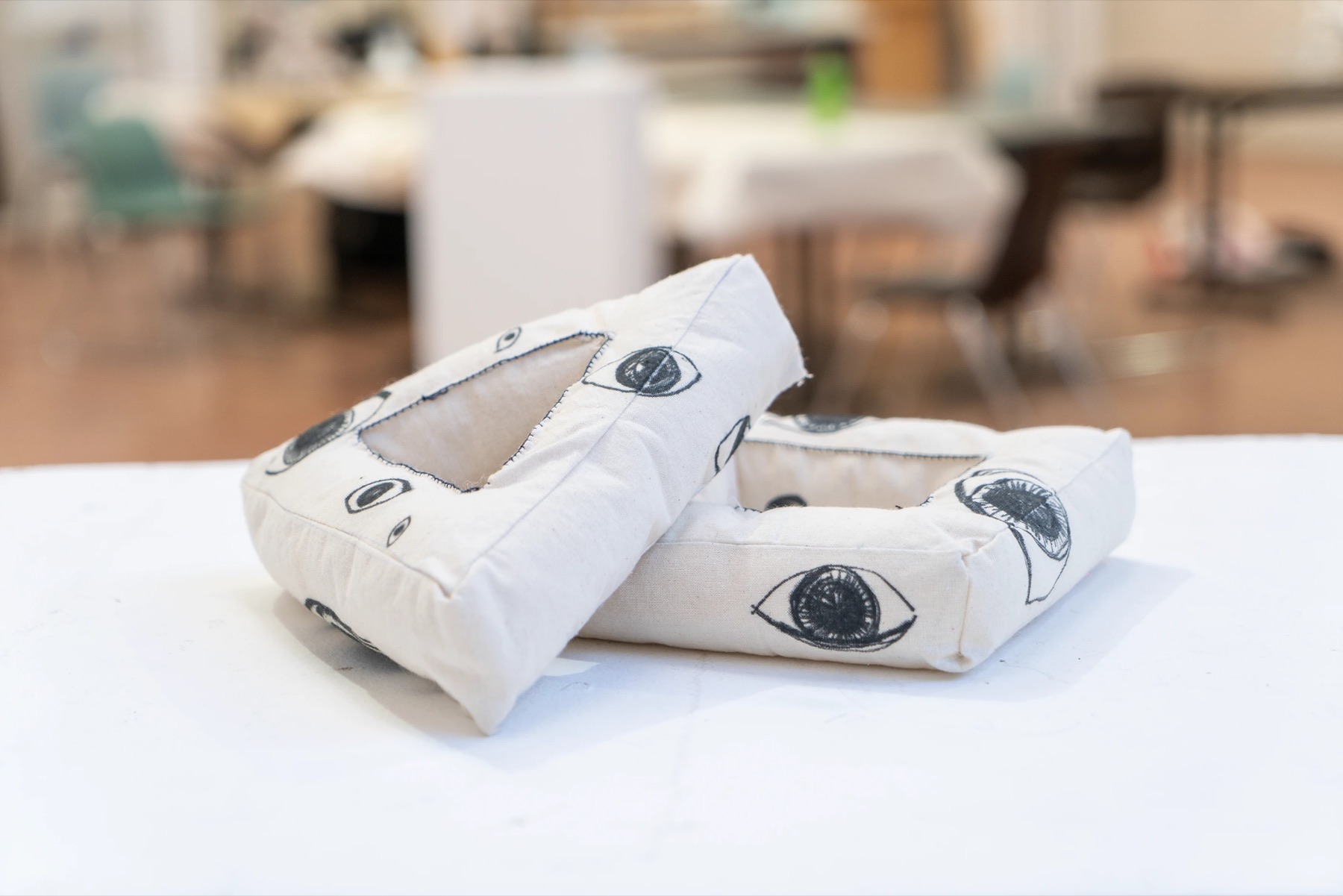
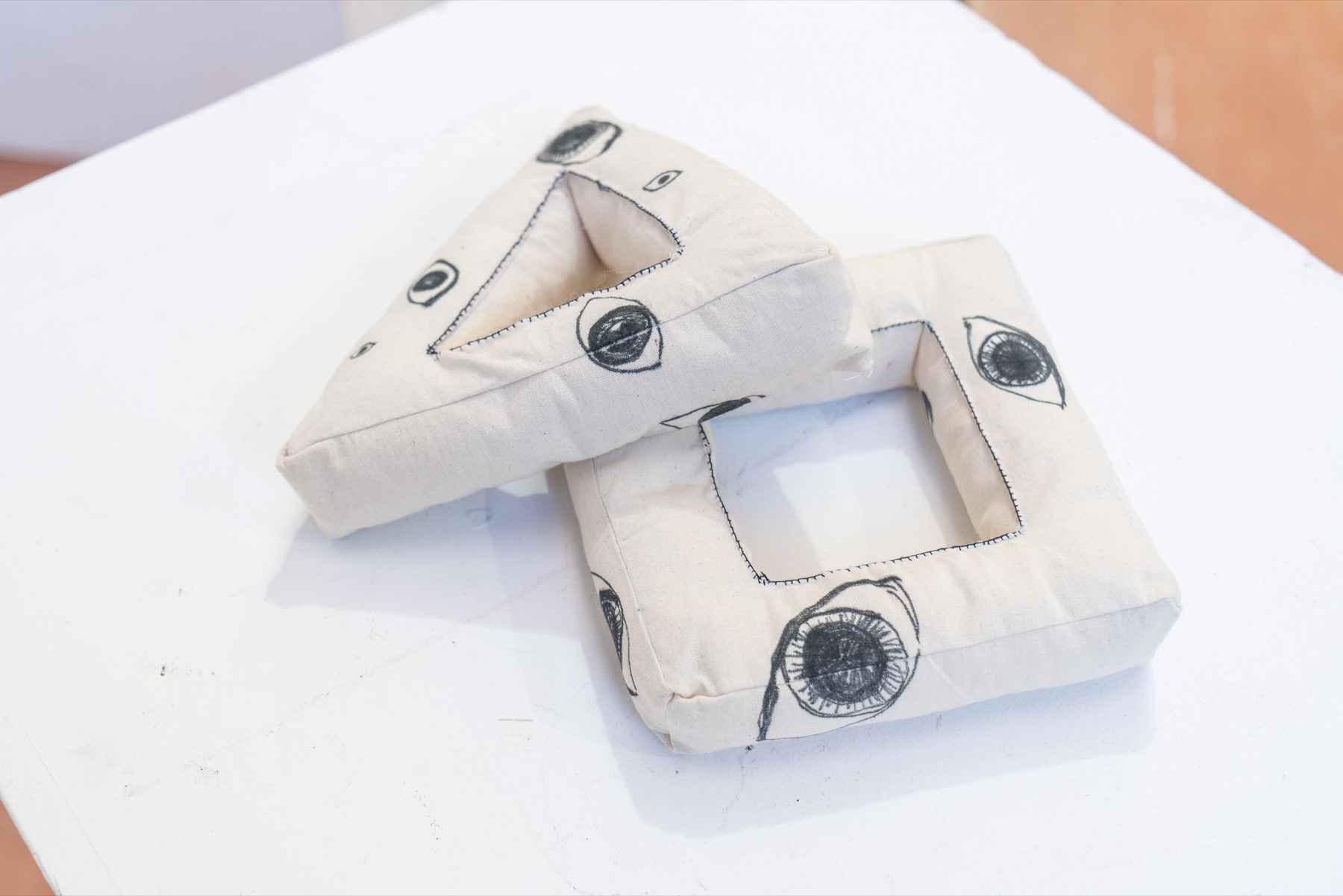
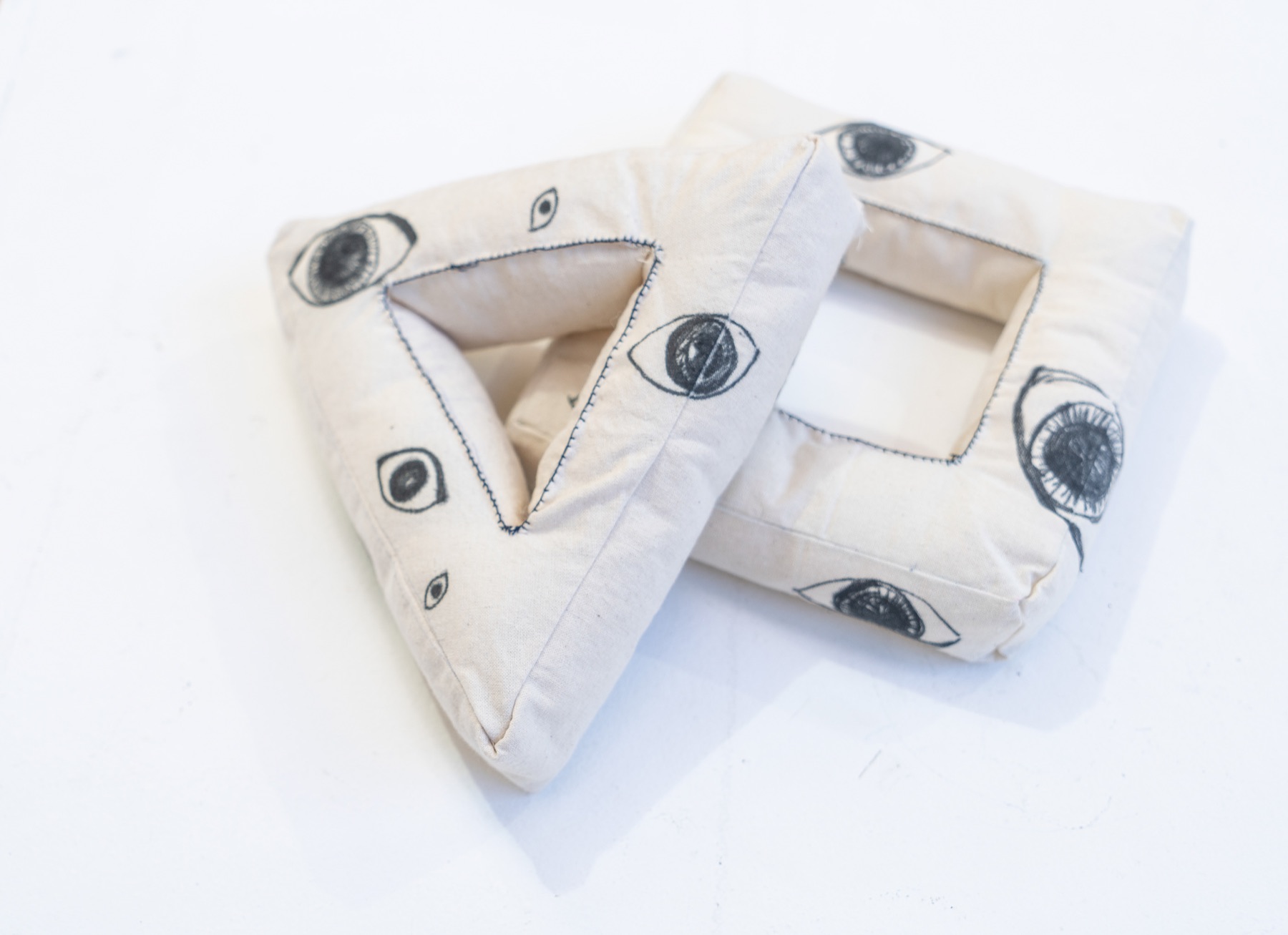
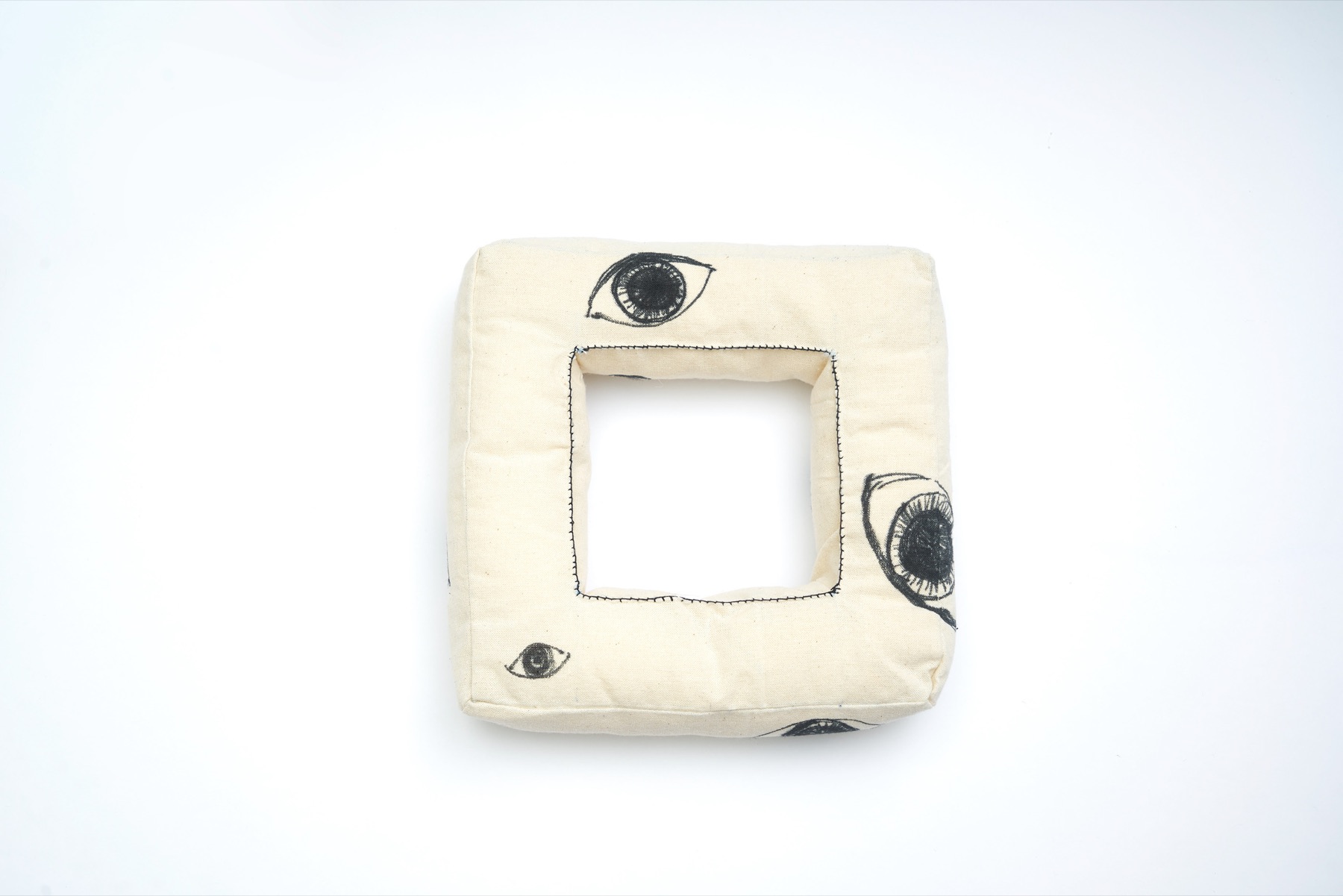
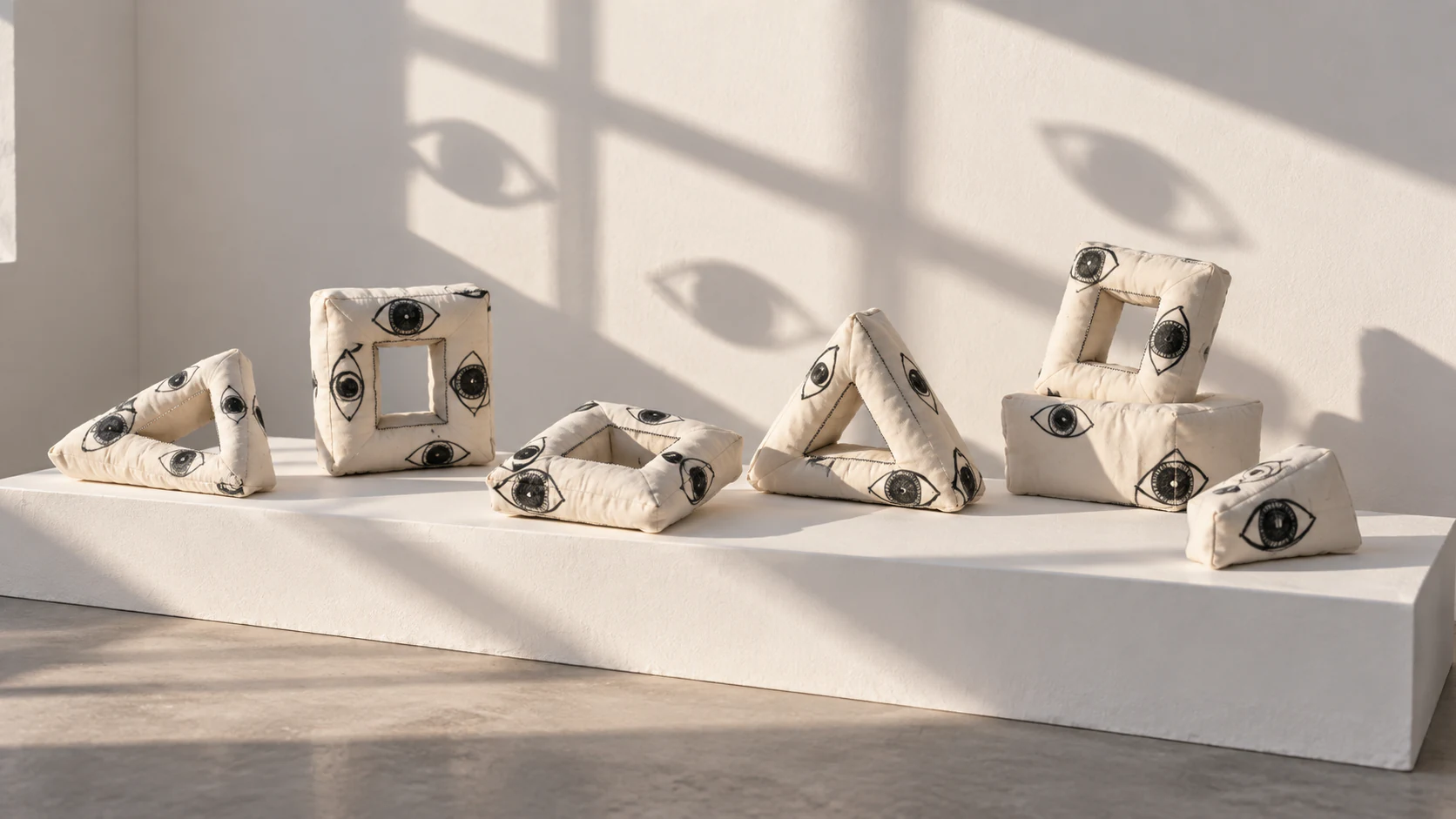
This independent exhibition study lets the soft figures form a small civic assembly. Their sewn corners, square apertures and drawn eyes are kept deliberately imperfect; the work gains presence through repetition and the long white plinth rather than through a glossy museum makeover. Raking sunlight throws a second cast of eyes across the wall, so the exhibition quietly doubles the original Flatland question: what counts as a body when a form can be both object and image? The installation invites looking without deciding too quickly what, exactly, is looking back.
The Soft Geometry Study
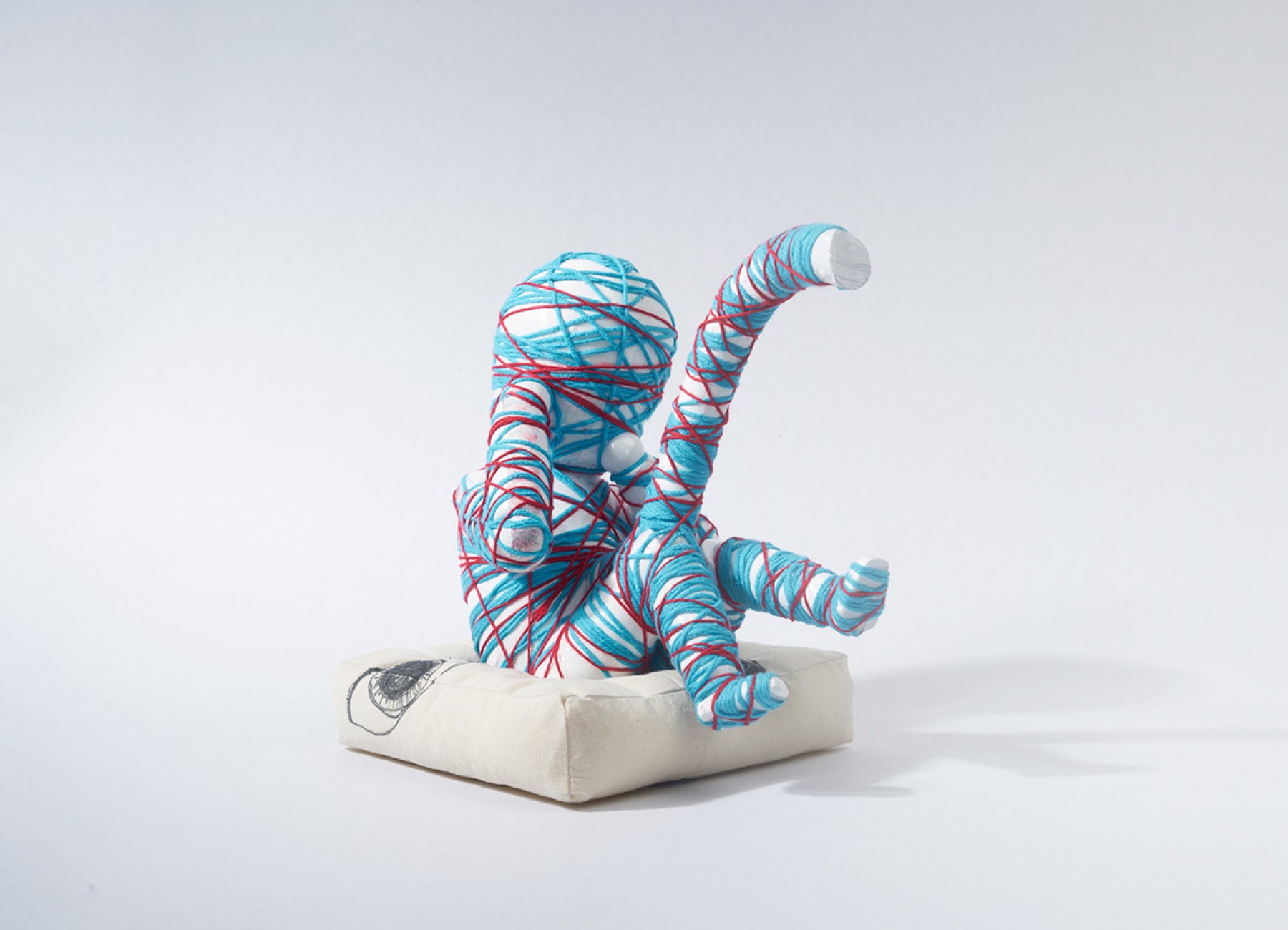
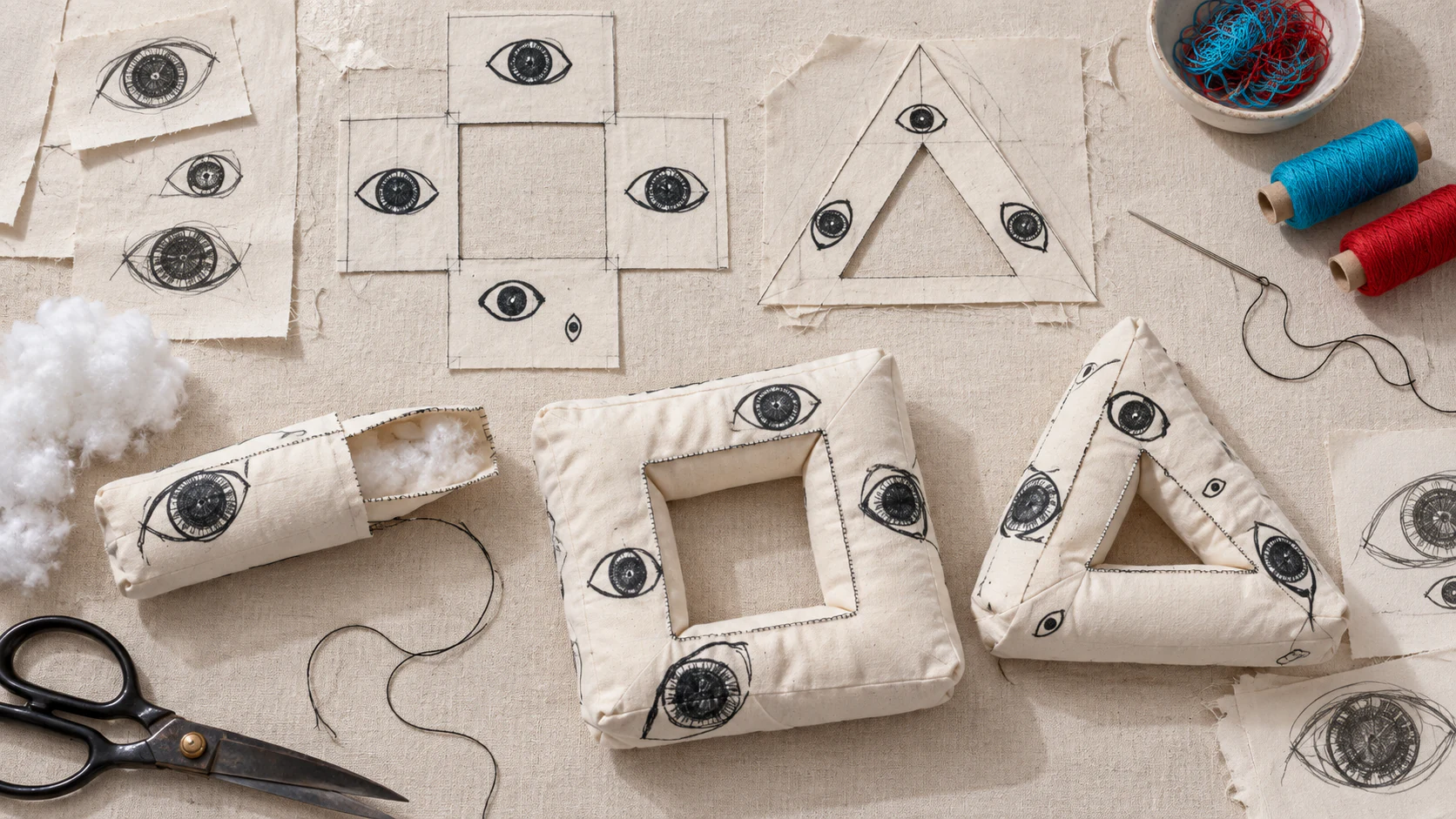
This independent studio study shows the proposition behind the objects: a drawn line can become a seam, a flat pattern can become a volume, and an empty square can remain an empty square even after it gains weight. Pattern fragments, eye tests, cotton stuffing, red and cyan thread and half-finished forms sit together as evidence of a material conversation. The composition is intentionally practical rather than romantic. It foregrounds the decisions that make the sculptures convincing: where to allow collapse, where to leave a gap, and when an irregular eye becomes more alive than a perfect one.
Soft Monument, Hard Light
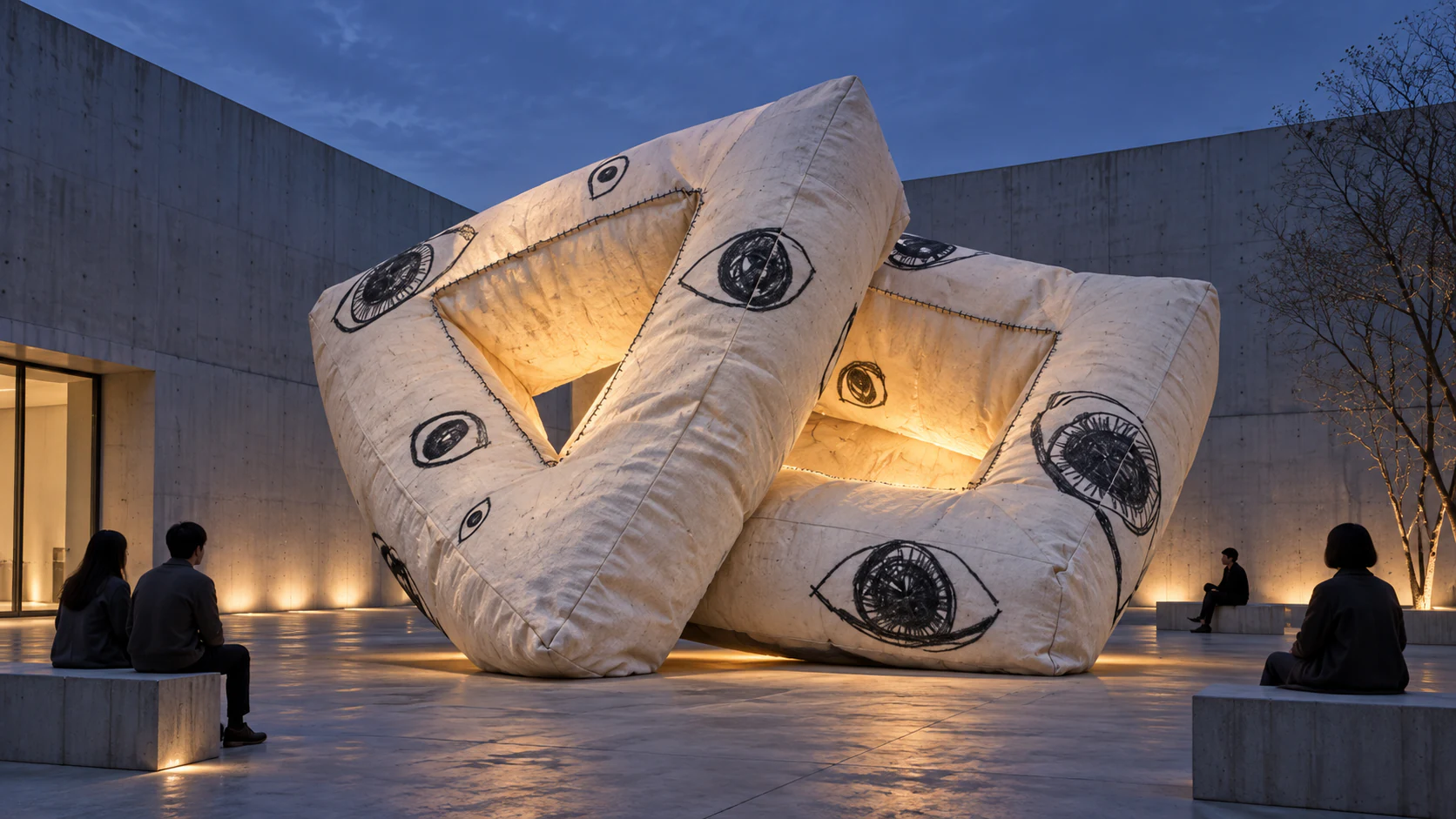
This independent public-art proposal scales the handmade language up without pretending that softness is fragile. The huge stitched volumes lean into one another inside a concrete courtyard, their openings becoming warm rooms of light and their hand-drawn eyes refusing the neutrality of monumental sculpture. At dusk, people can sit beside the work, pass through its voids or simply watch the fabric take on the weather. The piece turns the Flatland paradox into a shared urban encounter: a monument that is visibly assembled, visibly vulnerable and still able to occupy space with authority.
Pocket Flatland
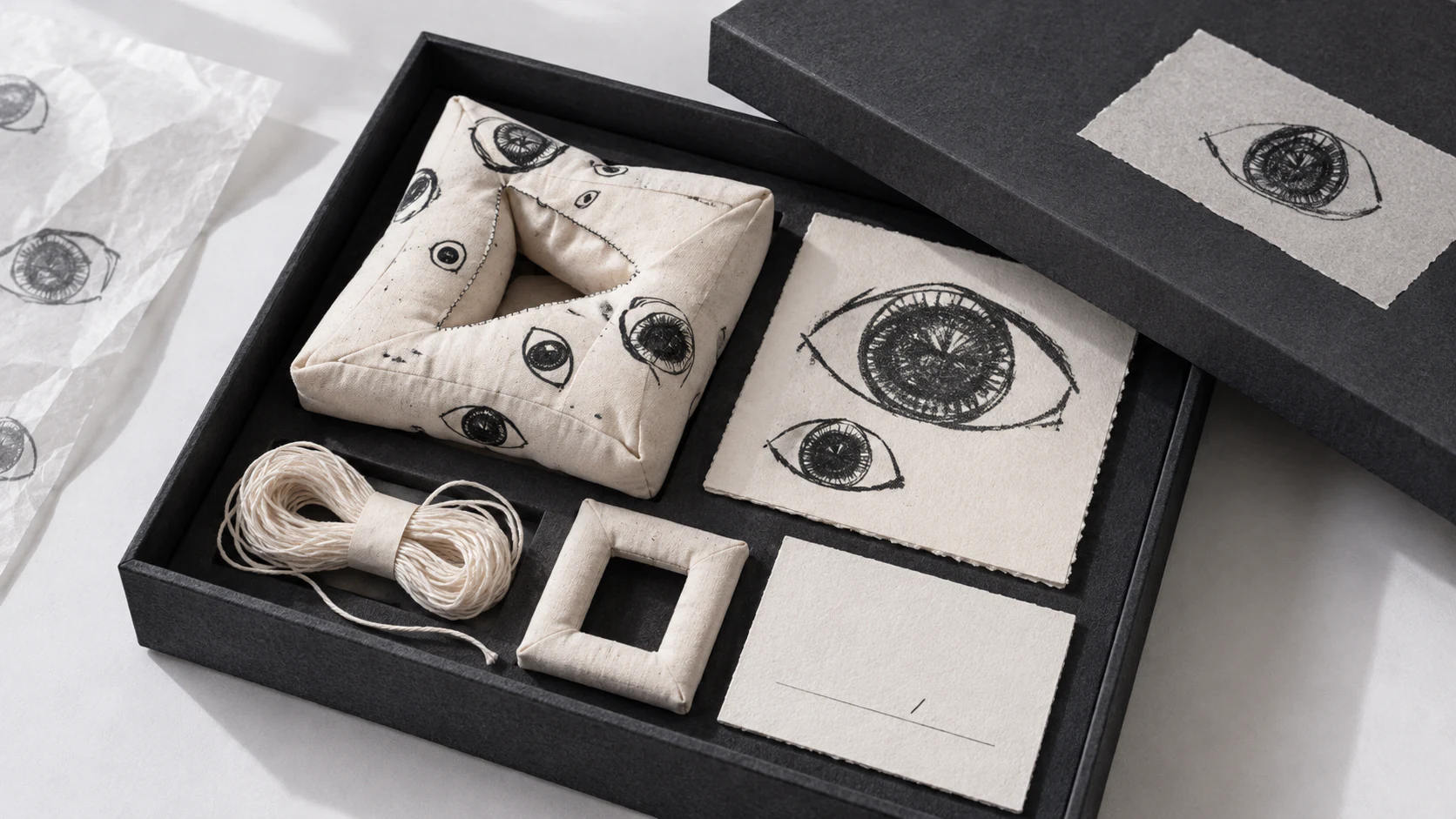
A sculpture can be collected without becoming merchandise. This independent artist-edition study imagines a shallow archival box containing a folded soft form, an eye-print card, thread, a small frame and an unfilled edition certificate. The dark box provides a sharp counterpoint to the unbleached textile, while the contents preserve the work’s sense of process rather than sealing it behind a glass case. It is a portable archive of material decisions: draw, fold, stitch, leave one opening unresolved. The owner receives an object, but also a compact instruction for continuing to look at it.
The Audience Learns to Fold
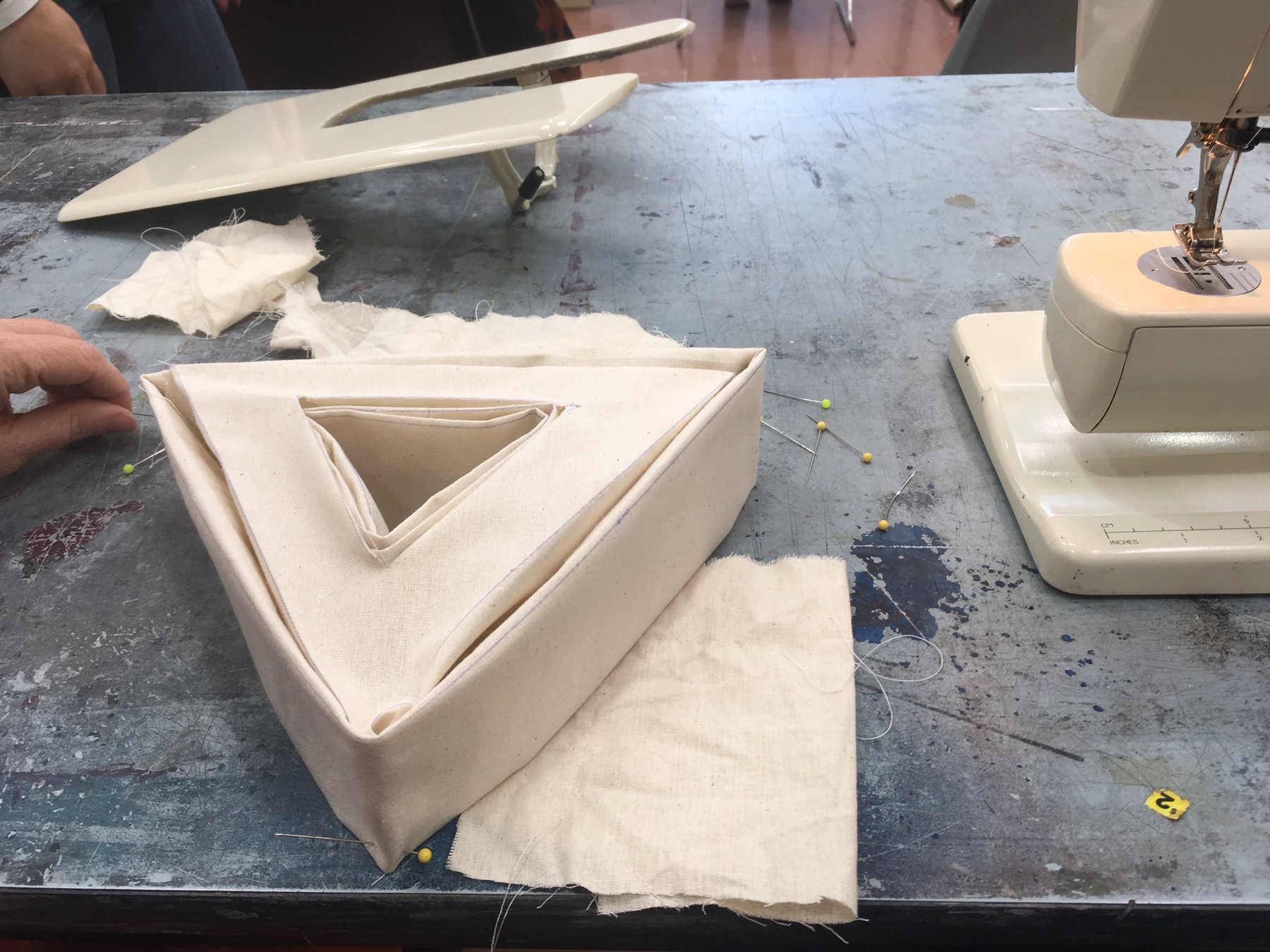
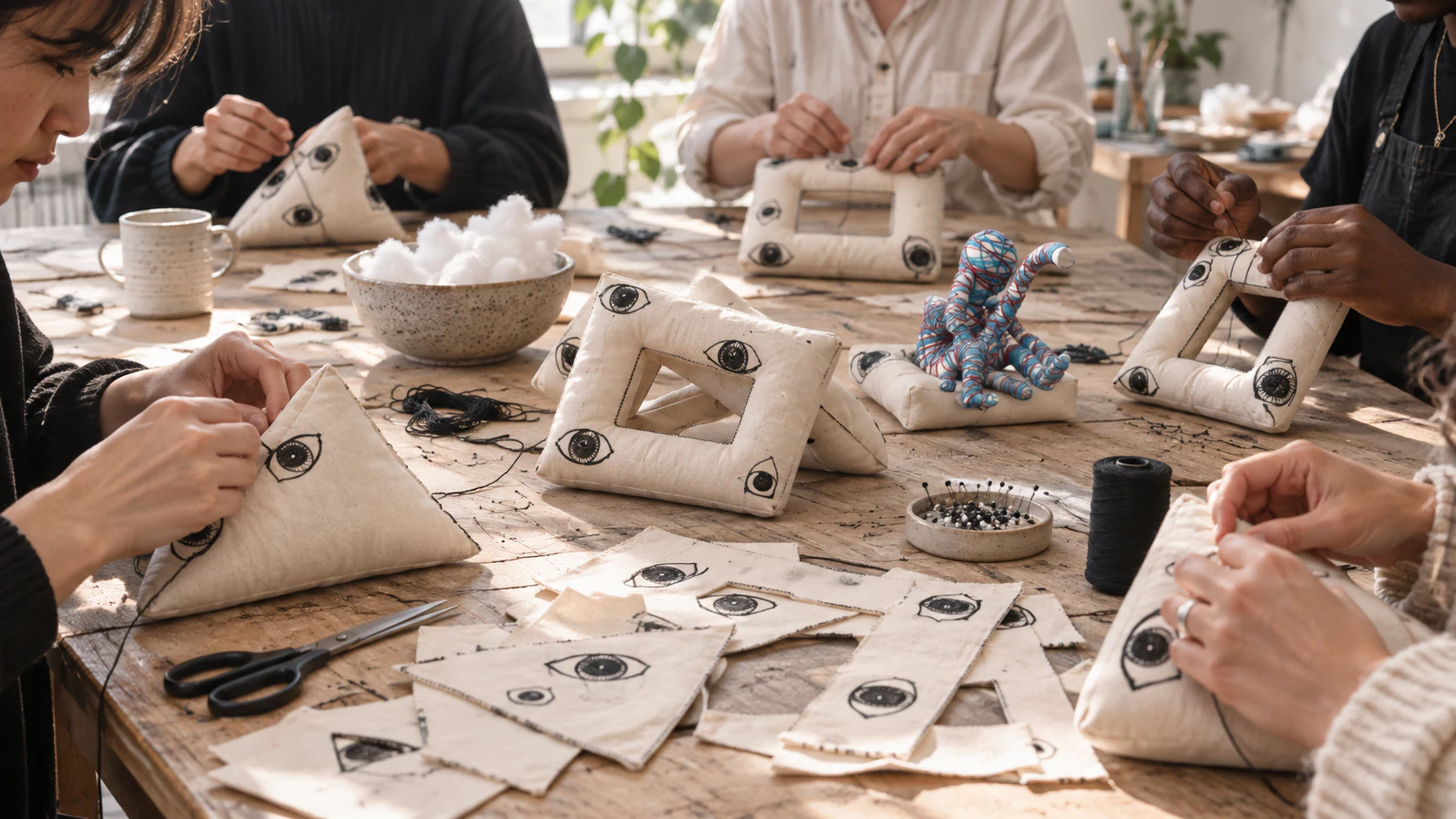
This independent participatory-workshop study treats making as a form of close reading. Around a shared table, participants turn eye-printed canvas, stuffing and thread into individual geometric creatures. The activity is not a simplified craft lesson; it asks each person to decide which plane should stand, which opening should stay open and where a gaze belongs. The original sculpture becomes a social score rather than a fixed object. By the end, the room contains many uneven answers to the same formal question, each carrying the unmistakable evidence of a hand.
A Fold Becomes a Place
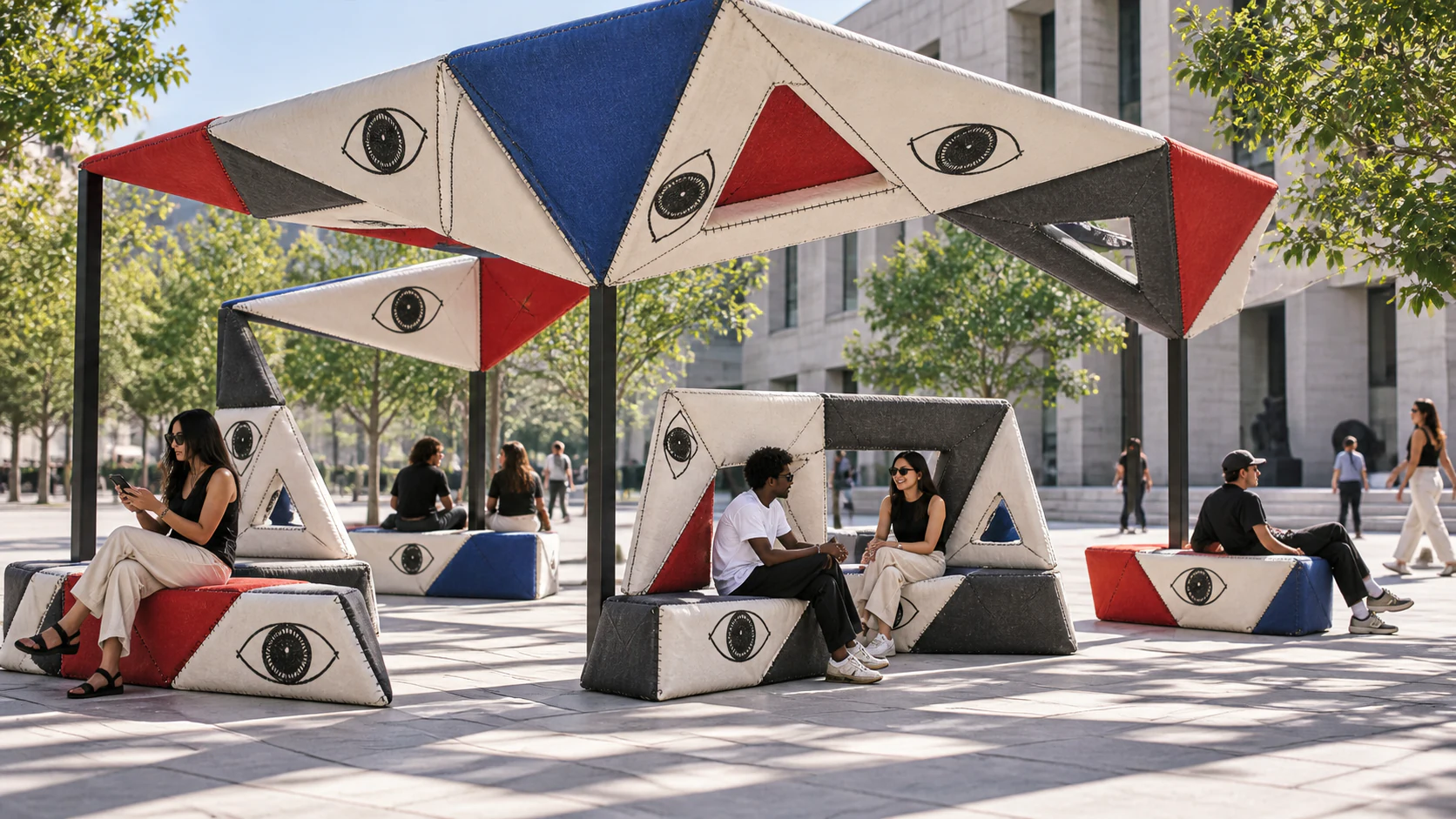
This independent spatial extension enlarges the original folded geometry into public seating and shade. A graphic plane becomes something people can lean on, pass through and gather beneath. Colour clarifies orientation while the folds manage structure, sightlines and intimacy. The idea remains minimal on paper but gains complexity through bodies, weather and use.
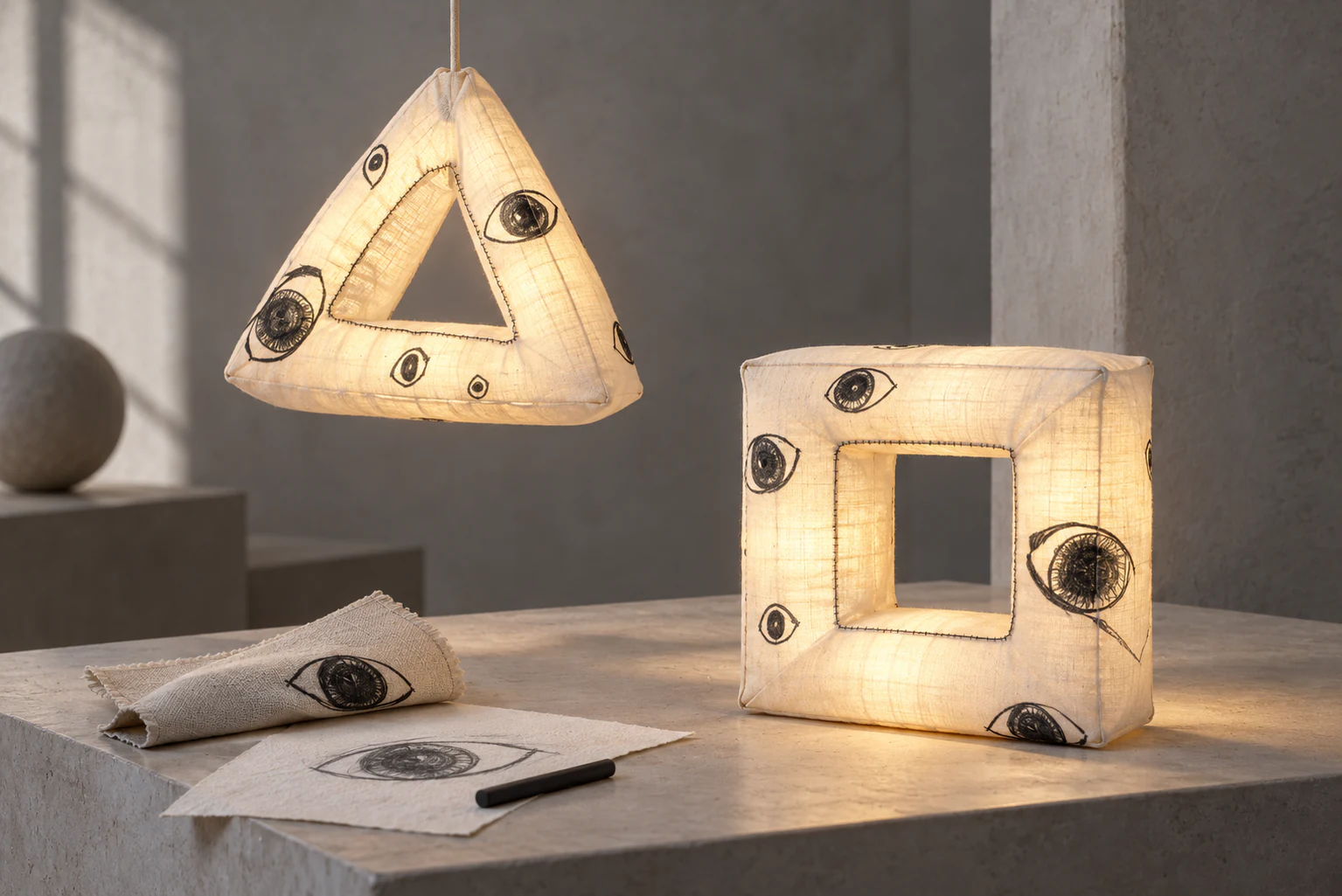
Soft Light, Open Eyes
The original stitched rings and hand-drawn eyes become a pair of sculptural lights in this independent material study. Translucent linen lets the seams remain visible, and the warm glow exposes the weave that a solid sculpture would conceal. The triangle hangs; the square rests. Their empty centres frame small pieces of the room, so the objects participate in looking as much as they invite it. The slight irregularity of the drawing matters: a perfectly repeated eye would feel like a pattern, while these feel like individual glances. The image is a lighting concept; construction and electrical detailing would be developed through physical prototypes.