Tension Field
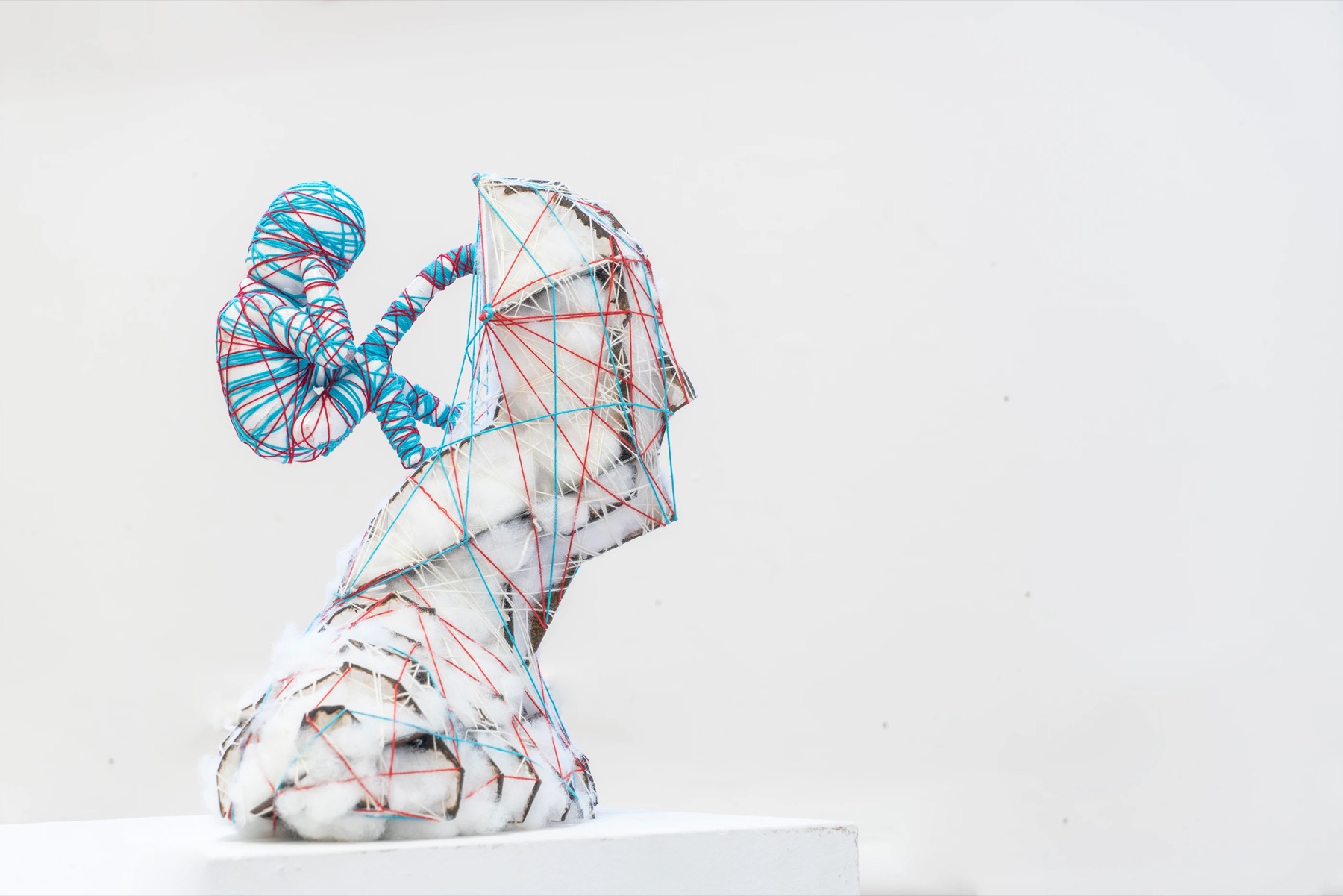
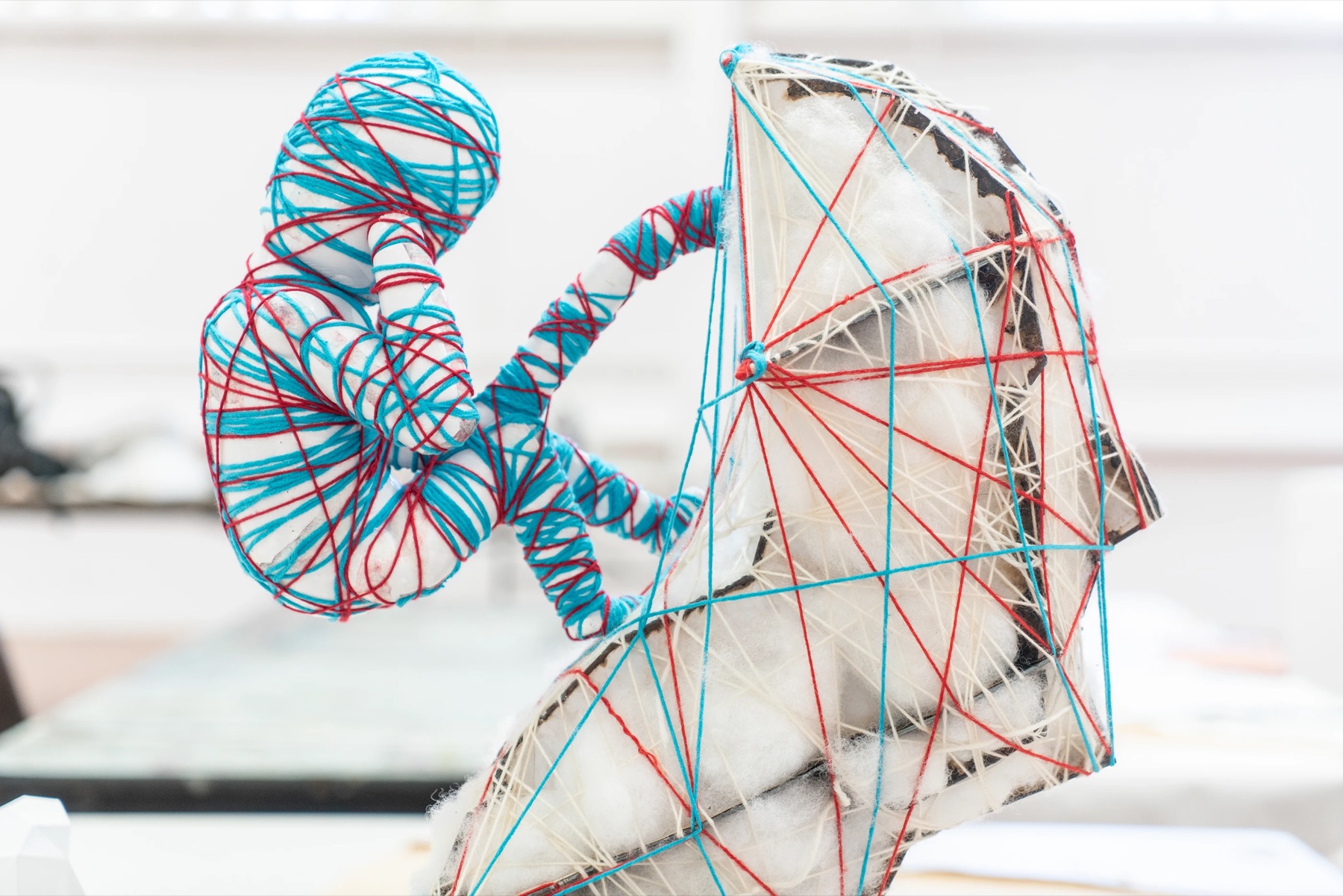
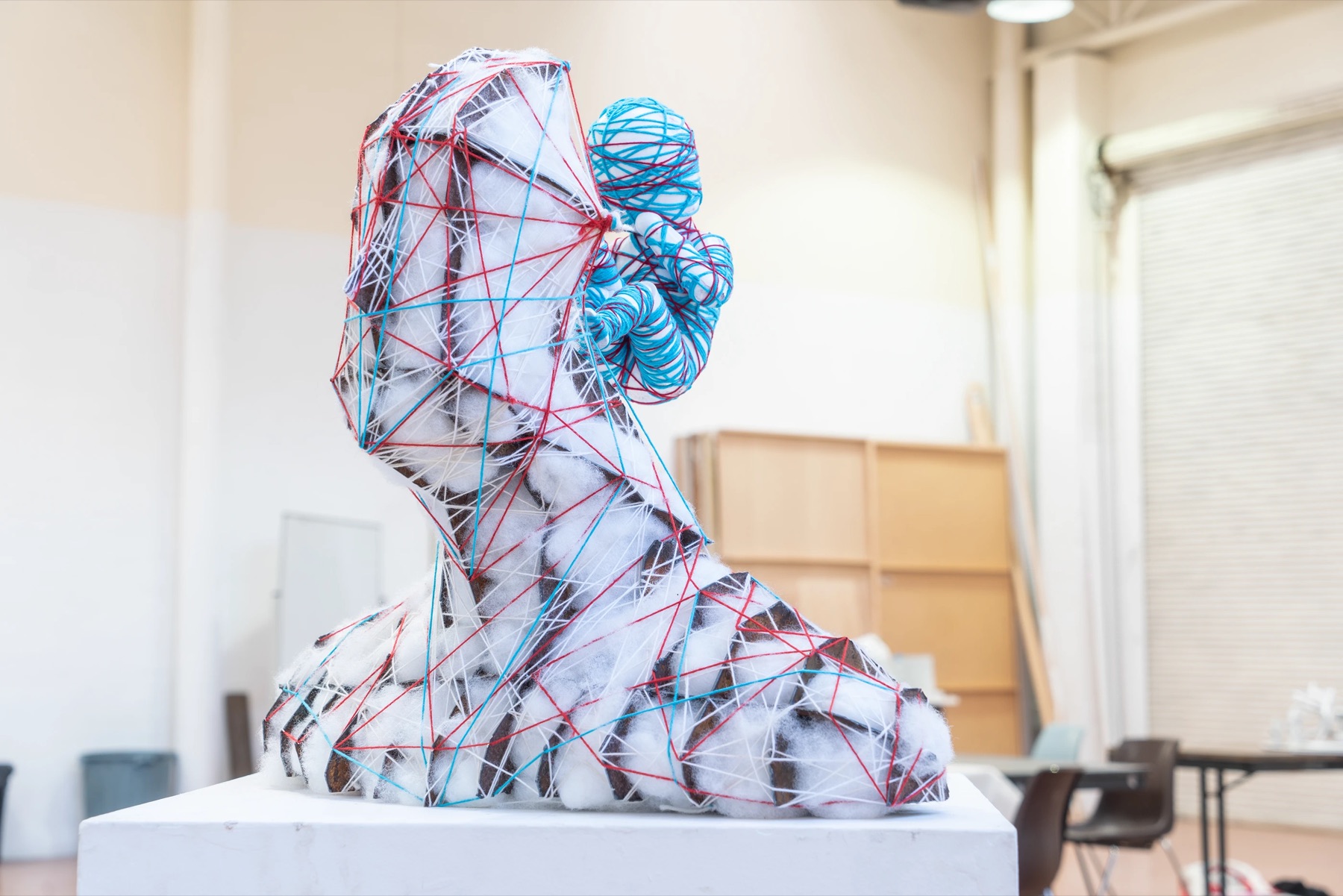
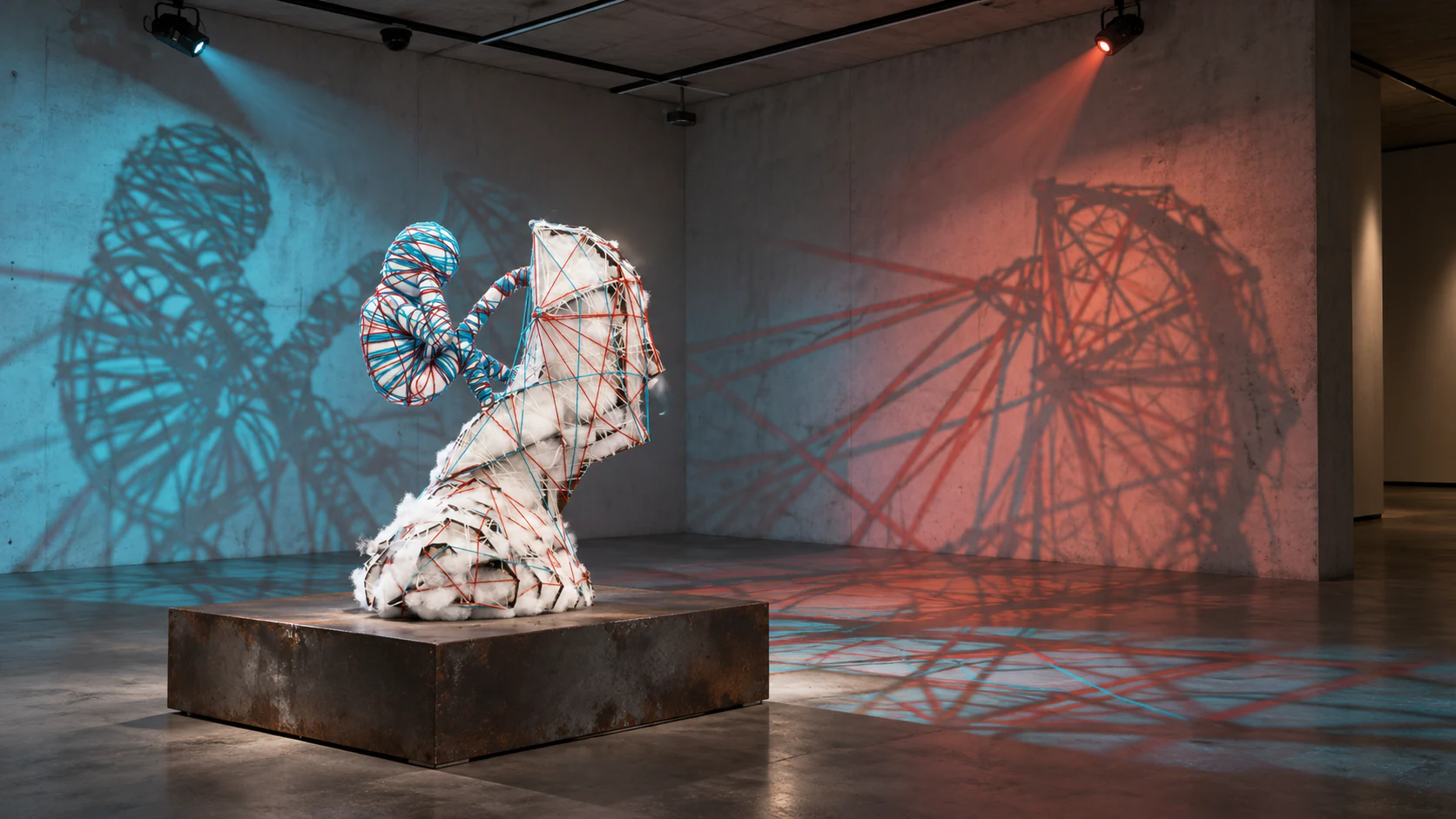
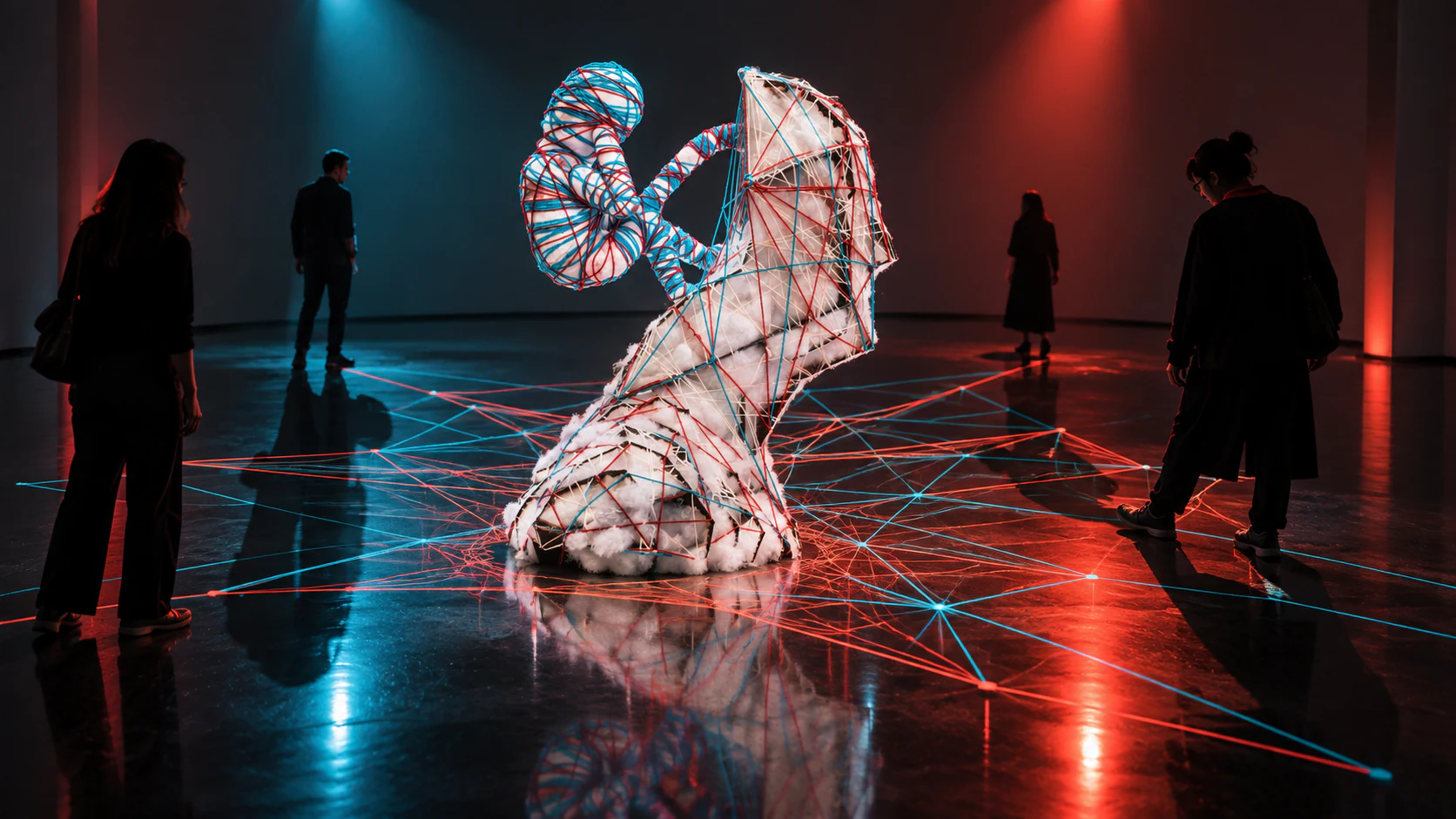
This independent exhibition study develops the sculpture's most important material idea: a body is not only a volume, but a network of forces held in temporary balance. The original cotton, welded steel and crossed threads remain unchanged on a low steel plinth. Two carefully aimed cyan and vermilion lights enlarge those threads into moving architectural shadows, allowing a small physical object to occupy the whole room. Subtle presence sensors shift the angle and intensity as visitors move, but the response stays slow enough to feel bodily rather than theatrical. The extension does not decorate the sculpture with technology. It reveals a structure that was already there, translating tension, support and vulnerability from material into light.
The Body as a Weather System
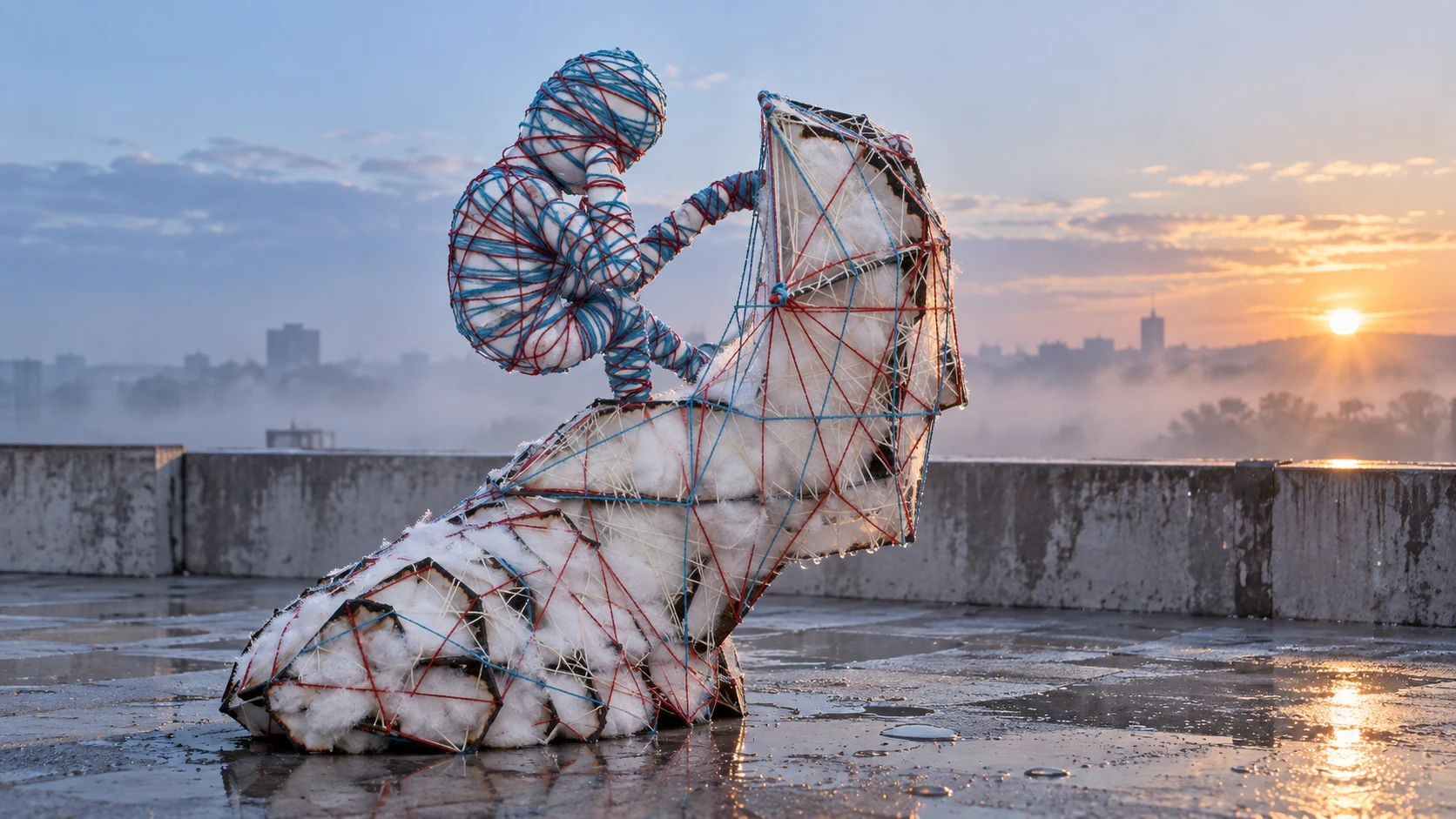
This independent outdoor study shifts the original figure from white studio space into an atmosphere it cannot control. Dew catches in the red, cyan and white thread lines; the wet rooftop turns the steel edges into a dark drawing against a slow sunrise. The work remains visibly made from cut planes, cotton and tension, but weather adds another collaborator: fog softens the silhouette, sunlight redraws it, water briefly binds sky and ground together. It proposes that a body is never a sealed object. It is an arrangement continually completed by the conditions around it.
Joint Studies
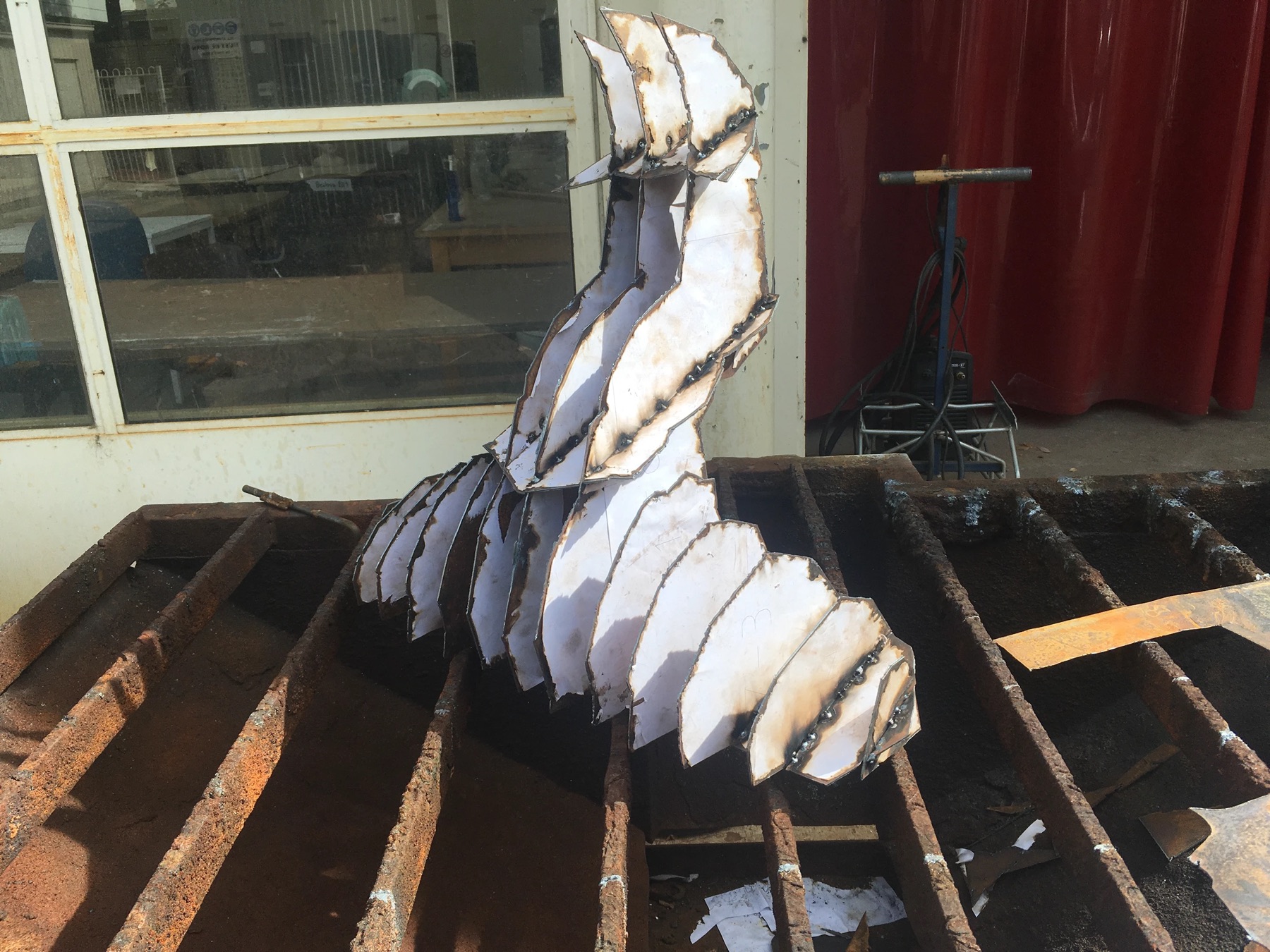
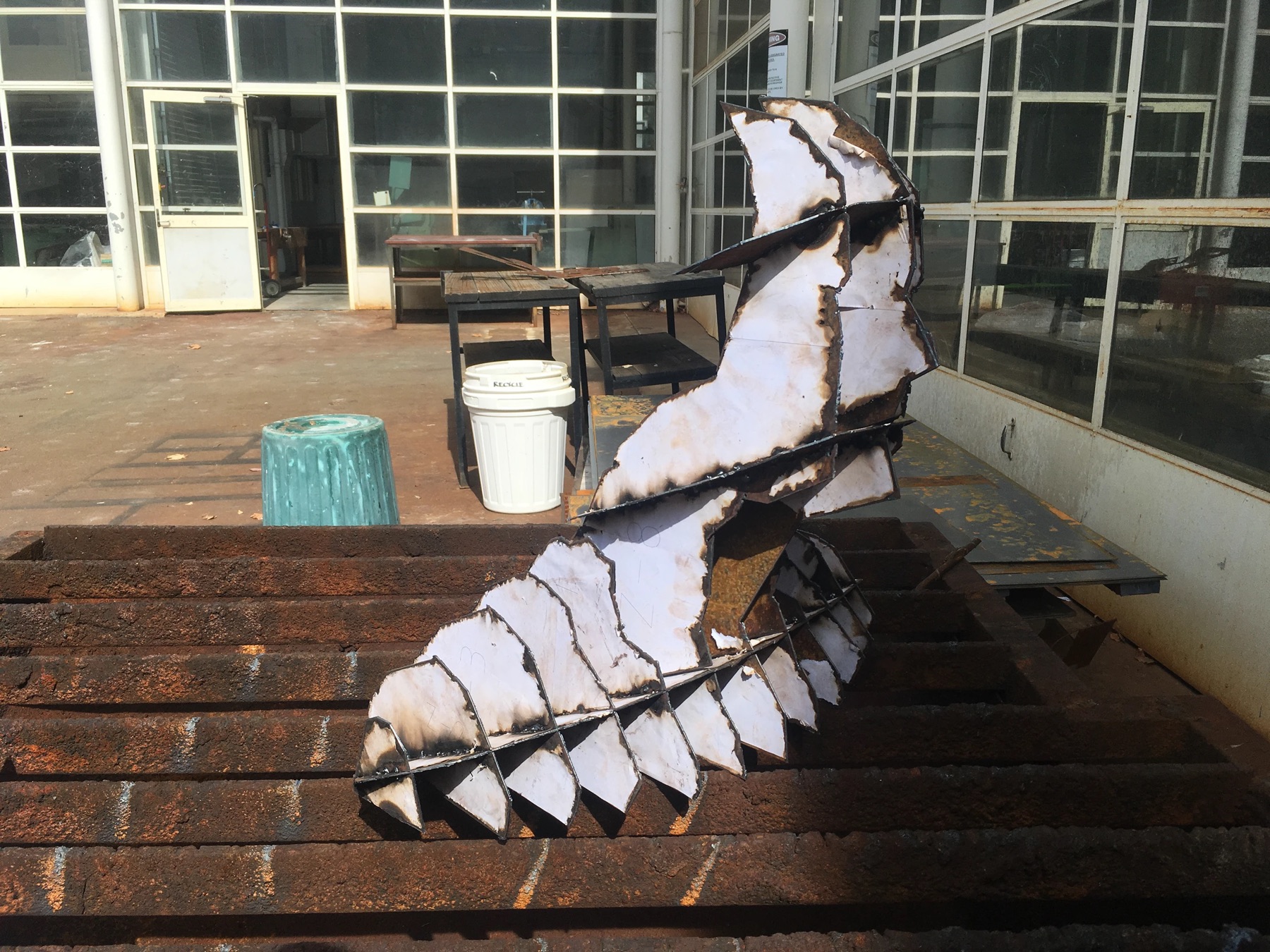
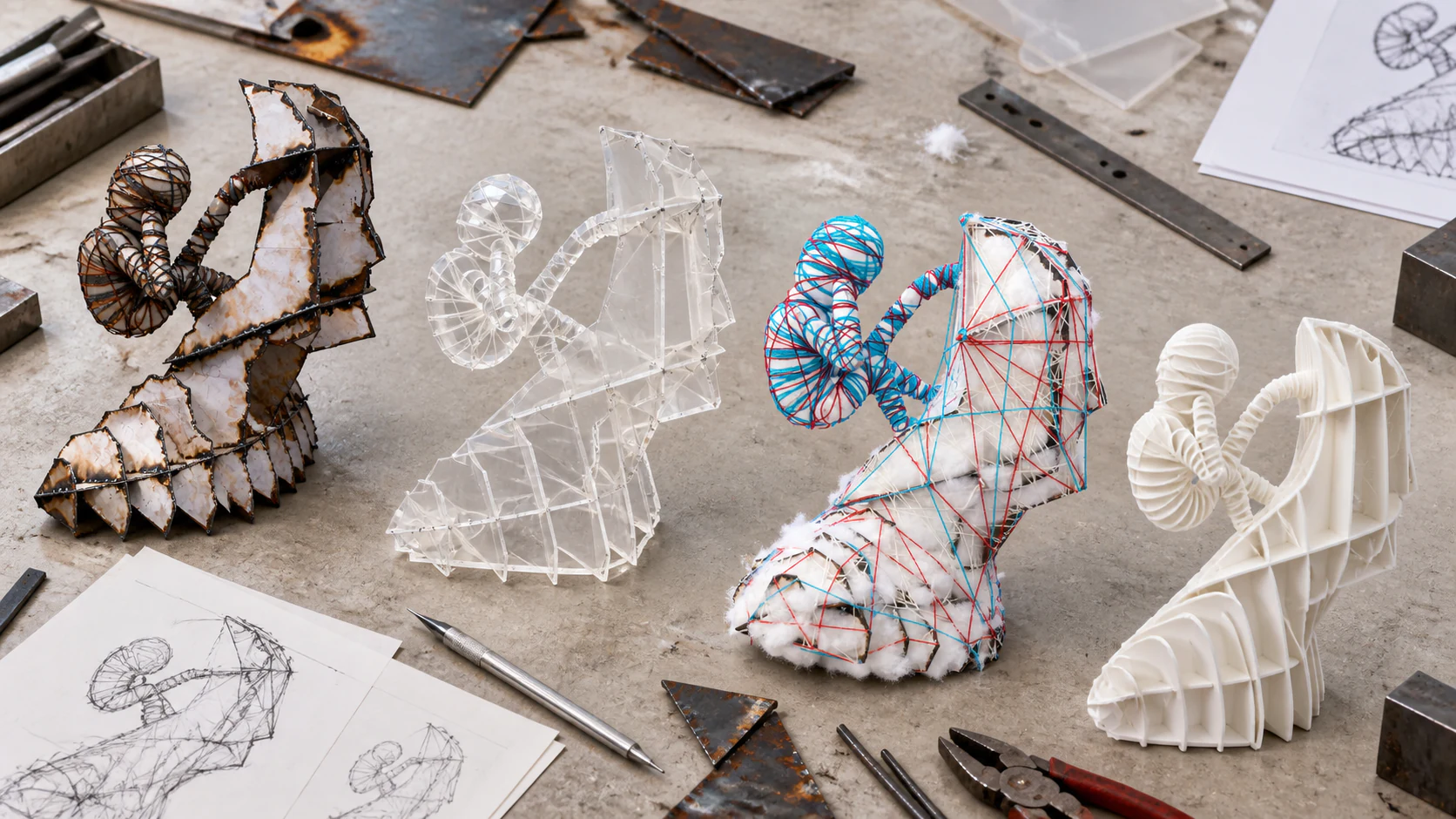
The original sculpture uses different materials to make an argument about support: rigid material needs soft material, and a line only has meaning because it pulls between points. This independent fabrication study lays out four related maquettes in steel, acrylic, thread-and-cotton, and a printed sectional skeleton. Seeing them together makes the production logic legible without flattening the work into a technical exercise. Each version loses something and gains something else. The study treats material substitution as a way to think, not merely a way to prototype.
A Body You Can Walk Around
This independent gallery study turns the sculpture’s tension diagram into a floor field. Cyan and vermilion lines radiate beyond the object, and visitors’ shadows momentarily enter the drawing as they circle it. The response is deliberately slow and low-tech in spirit: it does not gamify the work or ask for attention through spectacle. Instead, it makes viewpoint physical. Standing near one plane makes another recede; crossing a projected line makes the room’s architecture part of the sculpture. The installation extends the original question of form into a shared act of orientation.
The Unfinished Anatomy
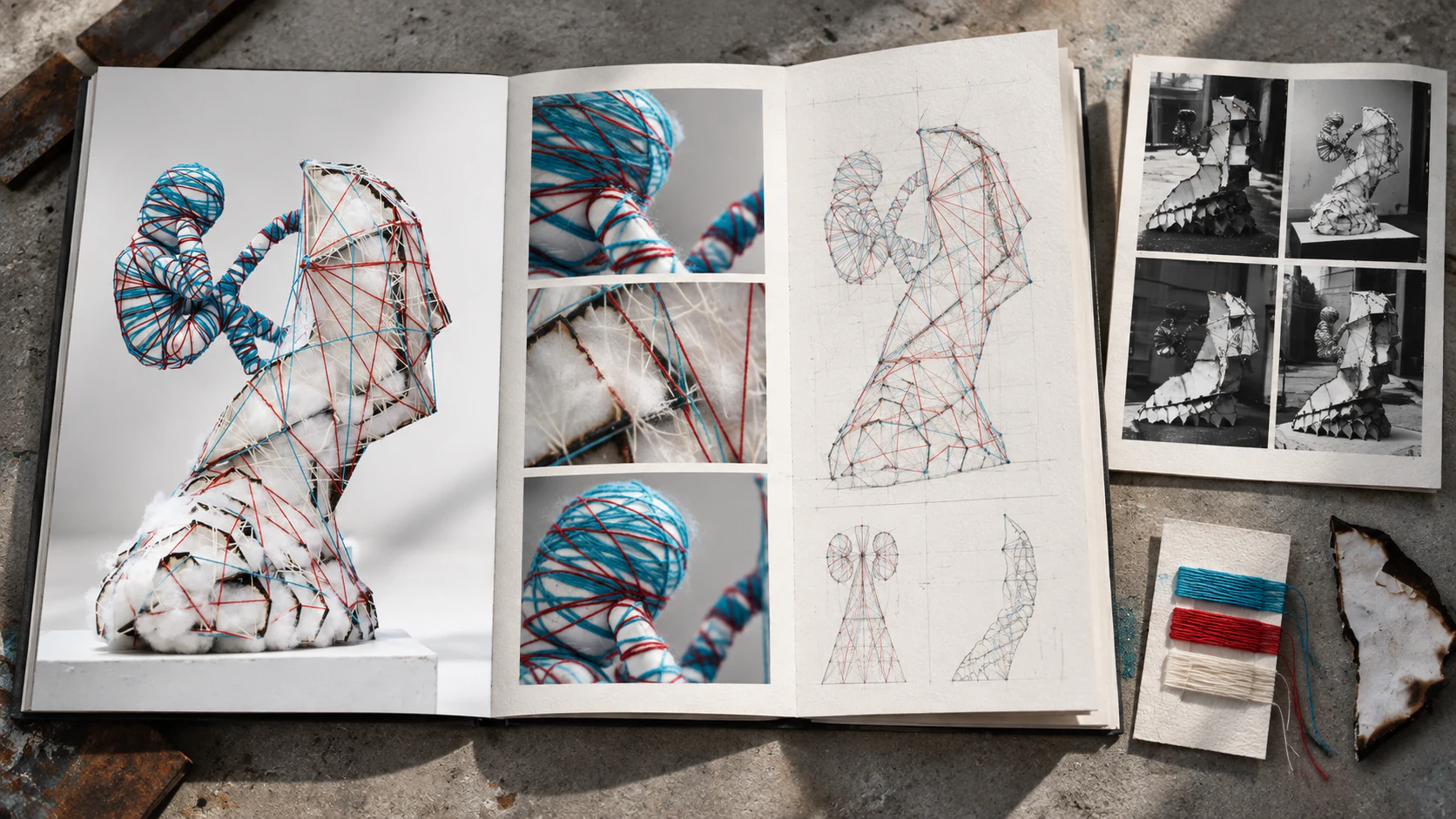
This independent publication study treats documentation as a second material form of the sculpture. Large photographs record the body from a chosen distance; contact sheets preserve the less heroic views; foldout diagrams map forces without claiming to explain them away; small thread samples keep the scale of the hand in the reader’s grasp. The book is deliberately unfinished in tone. It gives a future viewer evidence of the work’s construction while leaving room for the thing that cannot be diagrammed: the strange feeling of seeing a figure held together by so little, and by so much.
The Complete Shadow
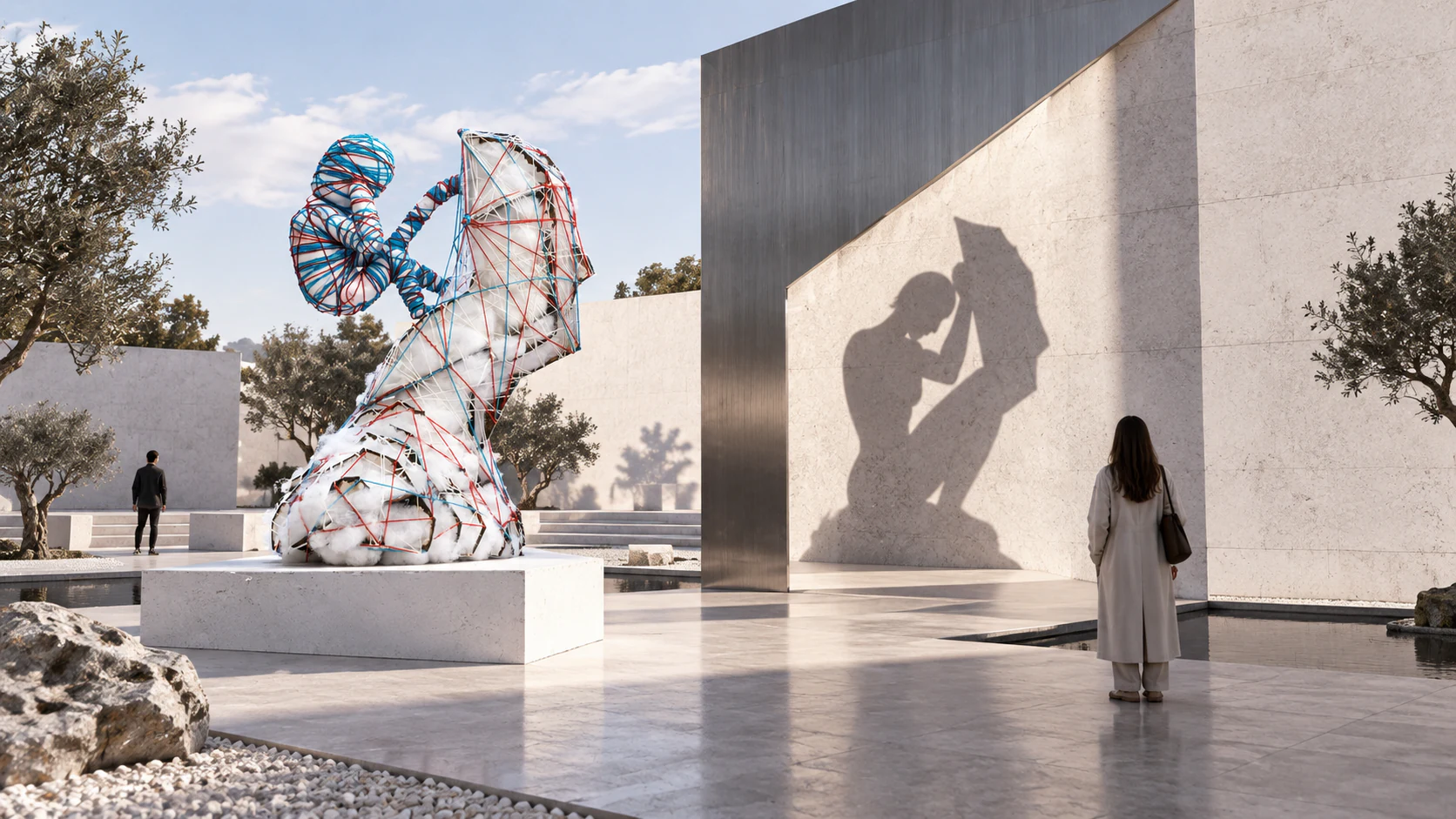
This independent public-art extension lets an incomplete sculpture become whole only at a particular hour. Sunlight, season and the viewer’s position finish the figure through shadow. The work treats absence as material: the missing part is not repaired but scheduled. It develops the original human-form study into an encounter shaped by patience, weather and place.