Precision in Layers
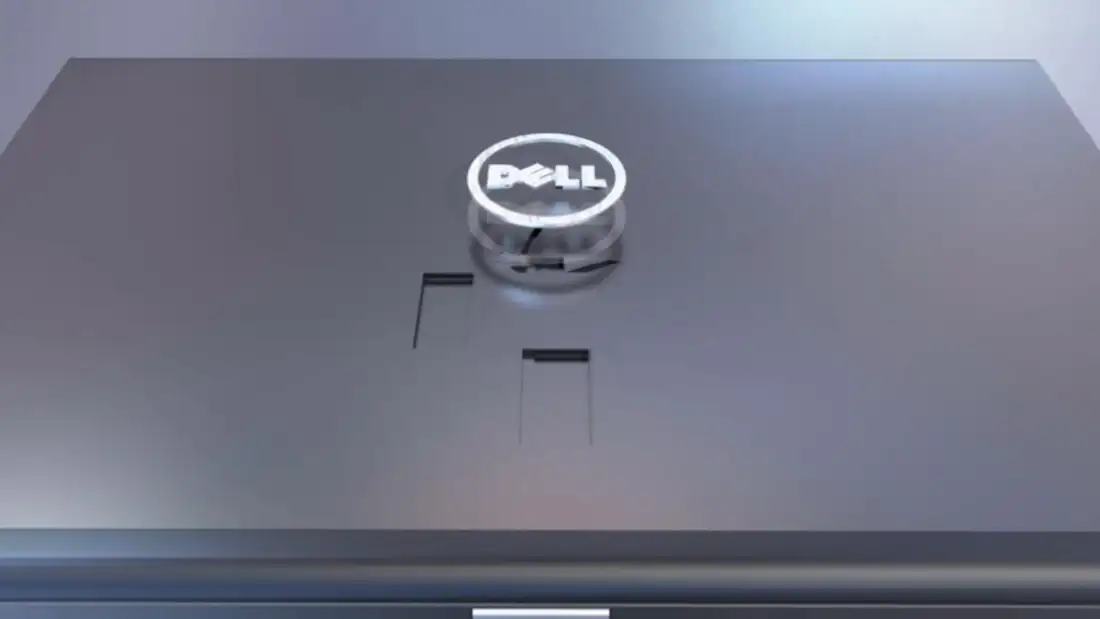
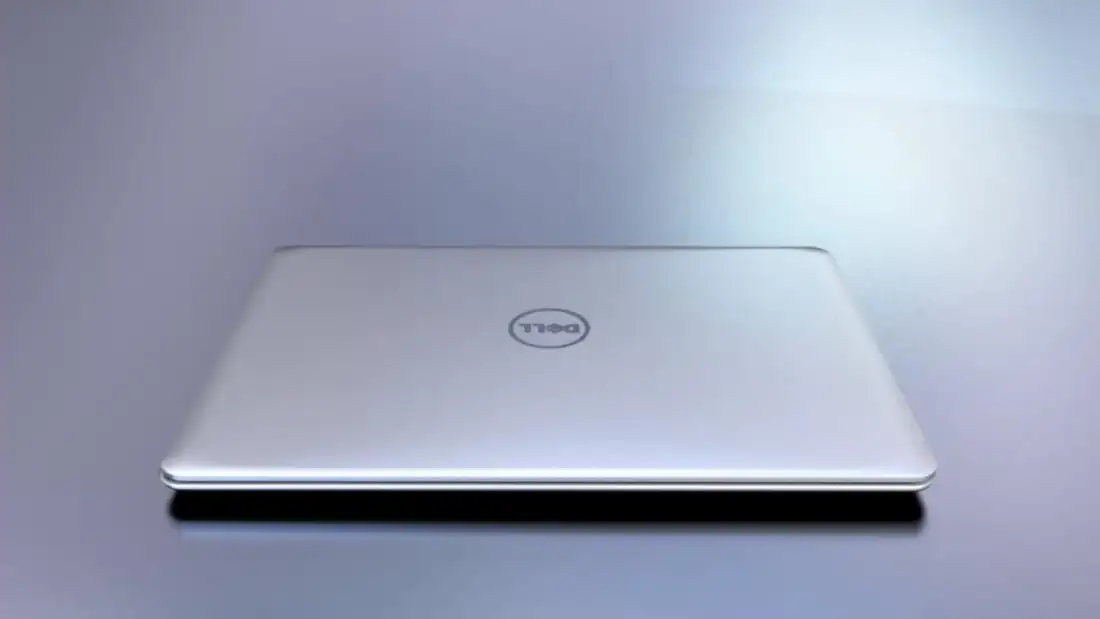
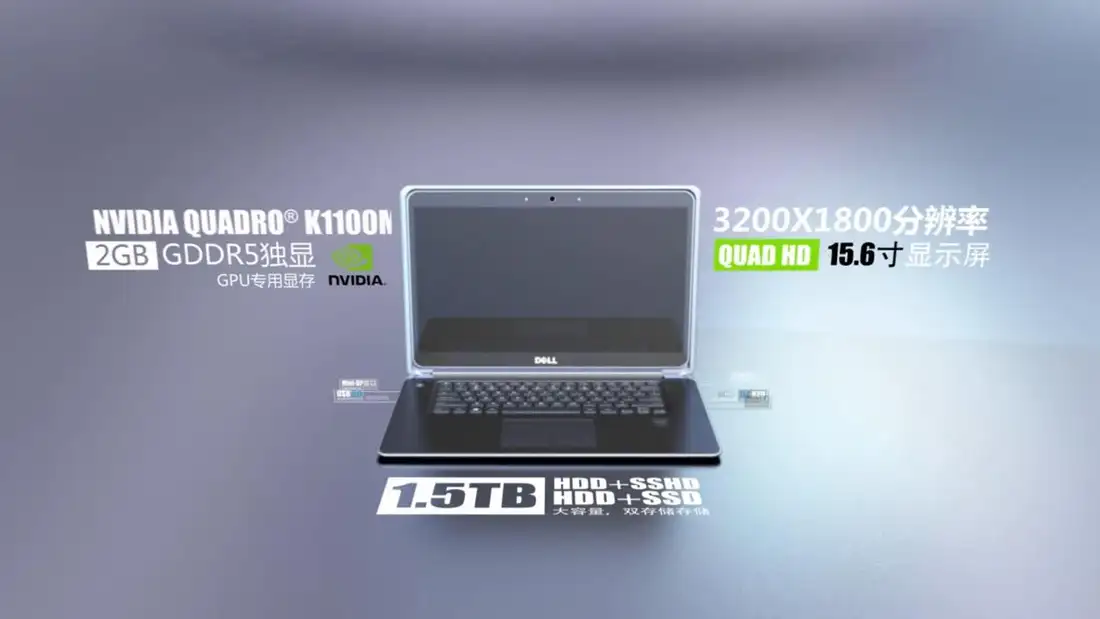
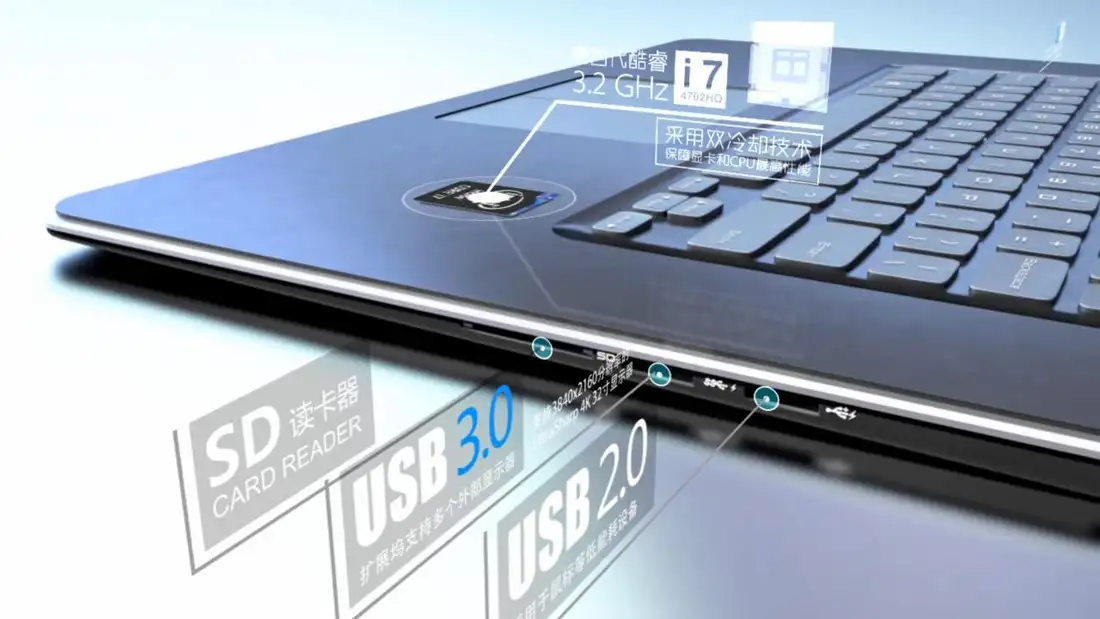
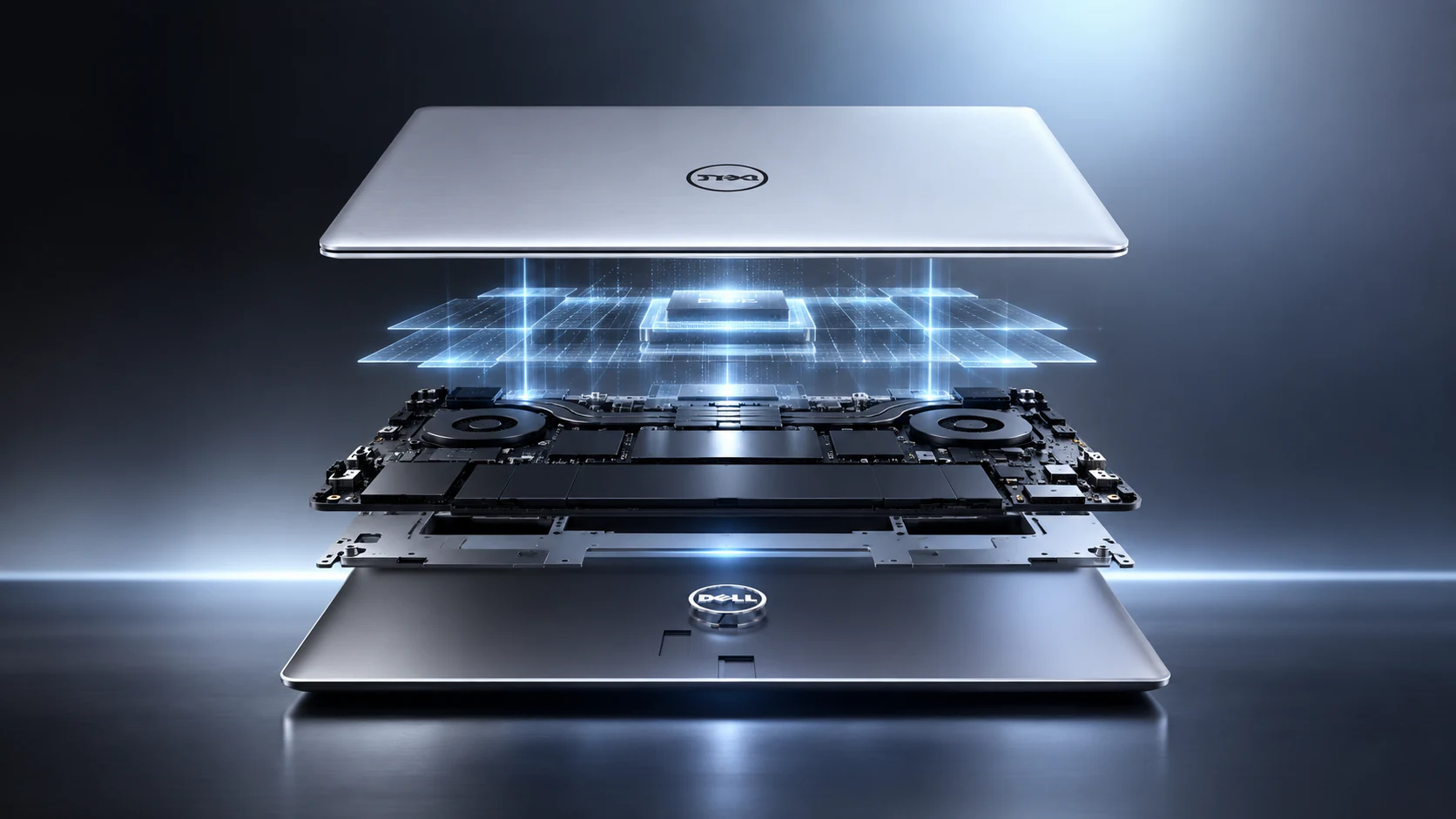
This independent key visual translates the original motion language into a single suspended moment. The workstation is separated into material shell, working components and an illuminated computational layer, making performance legible without inventing a list of specifications. The composition borrows from architectural section drawings: each plane has a job, each gap creates understanding, and the eye can move from surface to system without losing the product. Cool light is used as information rather than decoration. The result treats technology as assembled intelligence, not a mysterious black box. Precision becomes visible through relationships between parts, which is usually where the interesting design work was hiding anyway.
Patch Deck: A Bench for Three Sessions
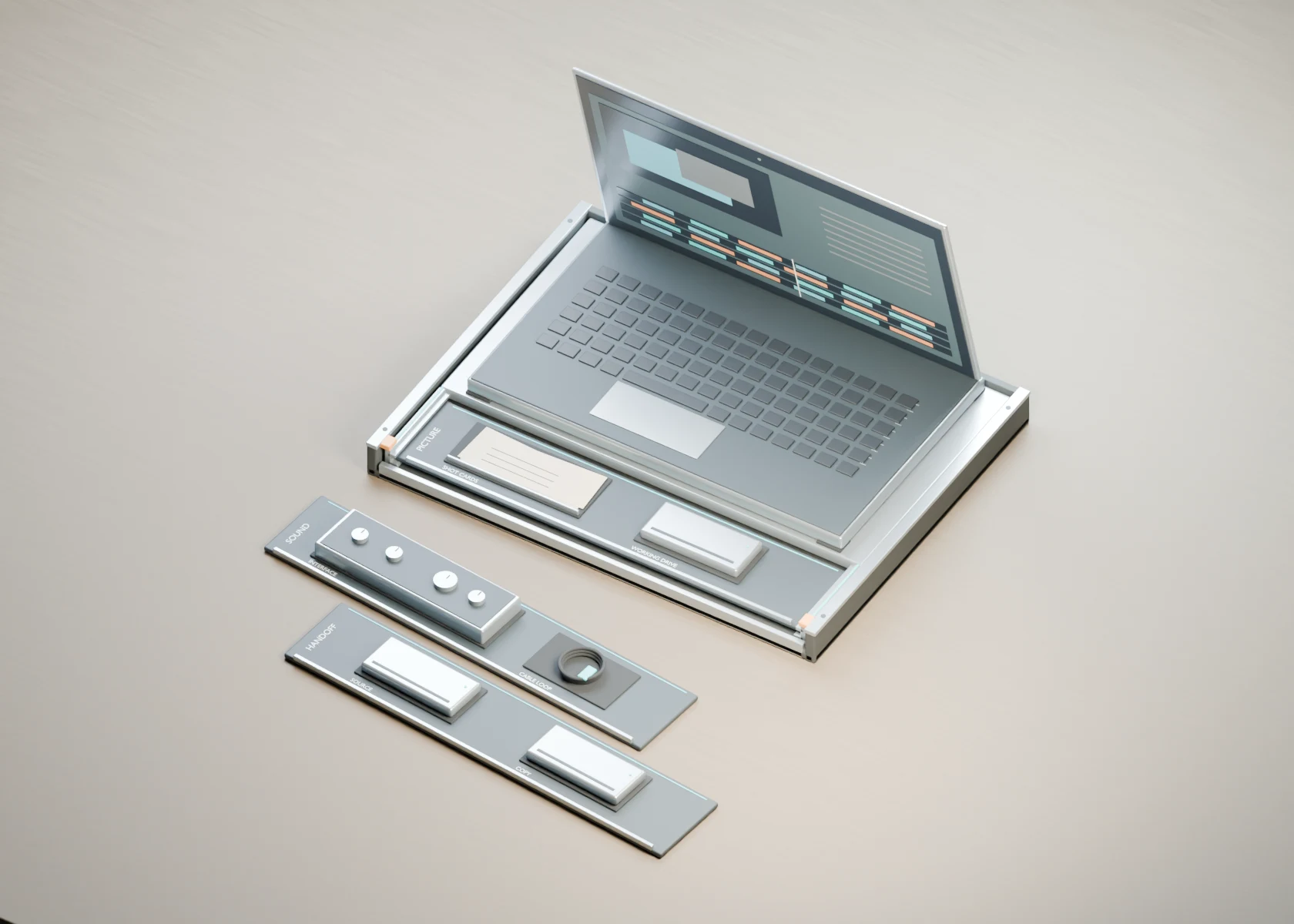
The 2014 film moves the same slim workstation between picture and sound desks. Patch Deck keeps the notebook on one fixed bridge and moves the task to it. A shared front rail takes a picture, sound or handoff tray, so the next session begins by changing what is within reach.
Light becomes a label
The silver edge and graphite surface follow the film's material language. Its cyan callout lines become locating stripes. Amber marks the release, borrowing the visible pull points from the companion storage film rather than adding another decorative accent.
One rail, three passive trays
Shot cards sit beside the working drive; the sound tray separates its interface from the coiled lead; matching handoff bays distinguish source from copy. The render and interactive rail share the same layout. This is an independent concept, not Dell hardware or a tested fit for a specific machine.
The tray rail
440 × 344 mm / concept footprintTray seatedA shot-card ledge keeps the next cut in sight. The shallow pocket holds the working drive.