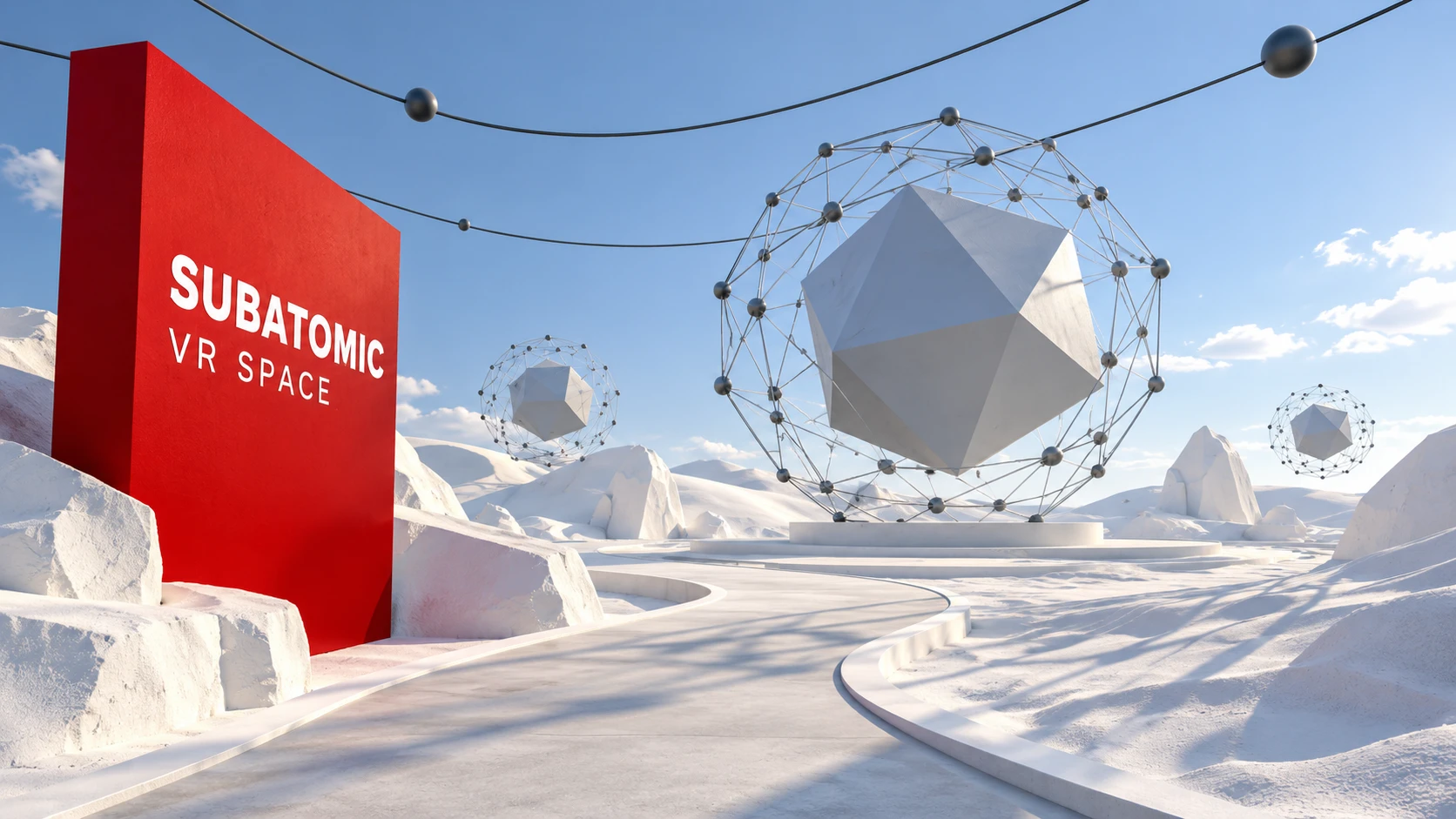
Orbital Sculpture Garden
White terrain, faceted solids, graphite orbit lines and geodesic cages evolve into a walkable sculpture garden. A sinuous path establishes approach and scale, while a red entrance monolith carries the original typographic accent into architecture. This independent spatial study uses cast wire shadows and repeated orbital structures to connect the source virtual environment with a tangible exhibition landscape.
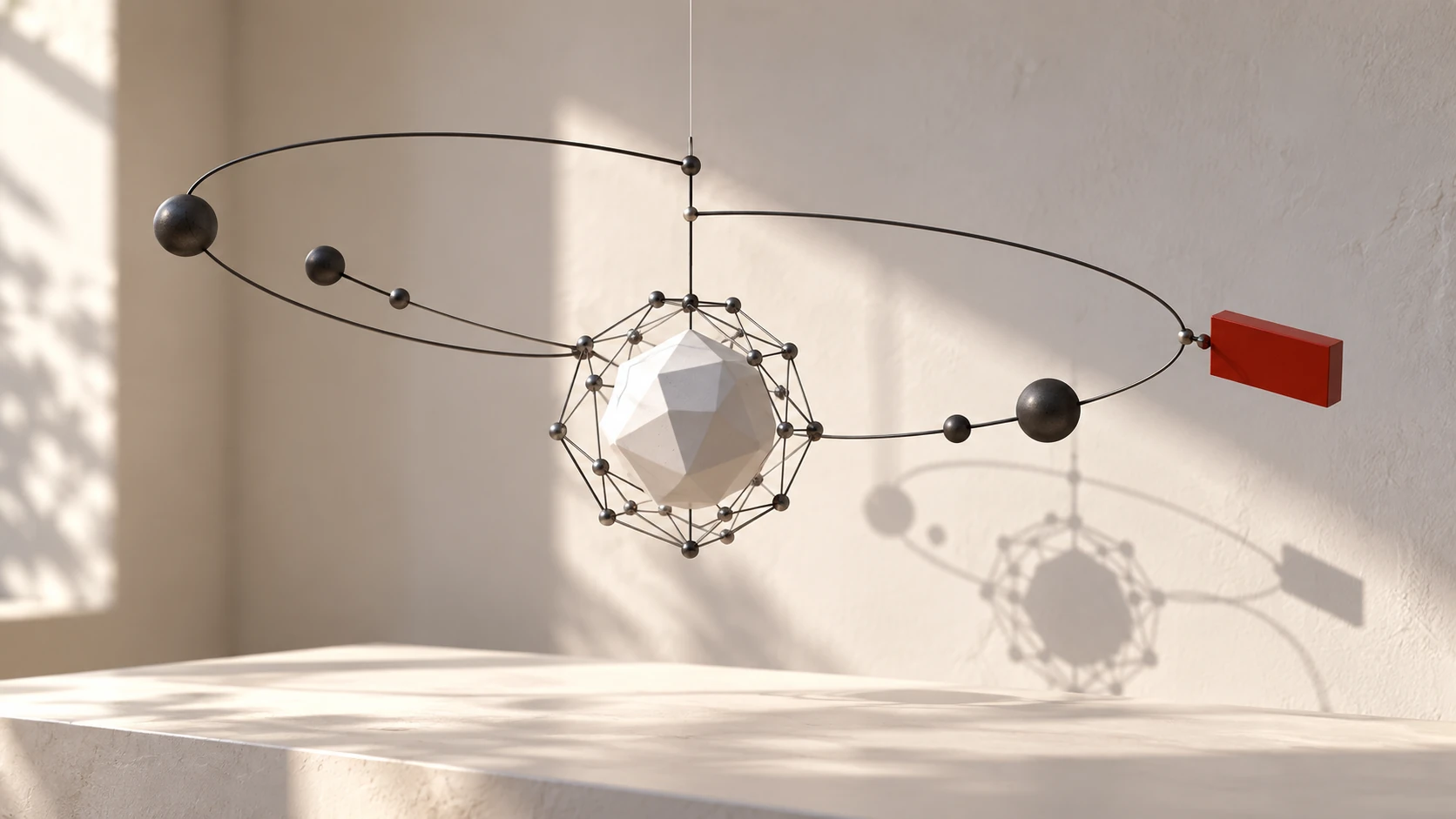
Orbital Mobile
The virtual environment's white faceted core, graphite orbit lines and small spherical nodes become a suspended kinetic mobile. A single red counterweight carries the original title-panel accent into balance and motion.
Lightfield Table / The Objects Stay
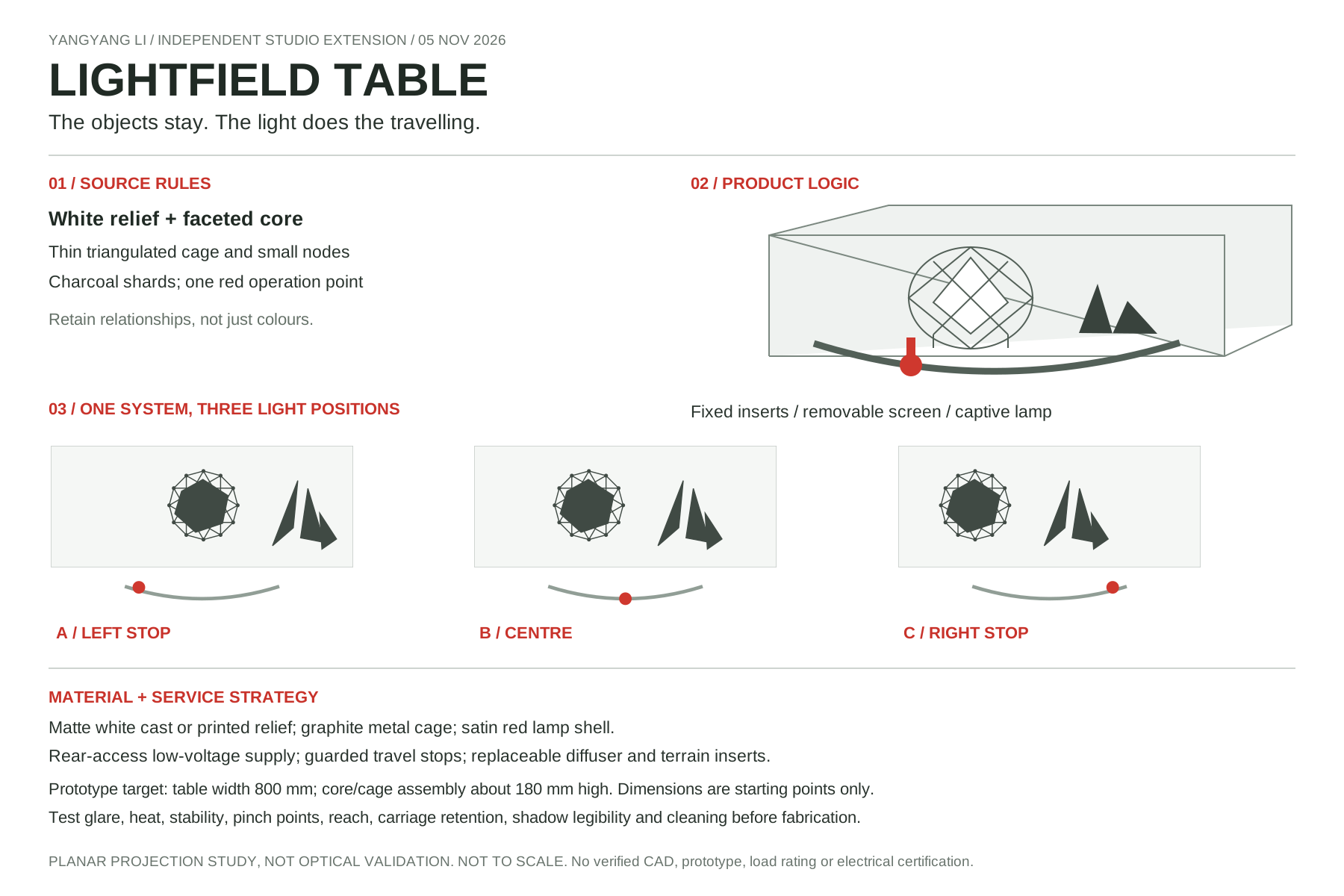
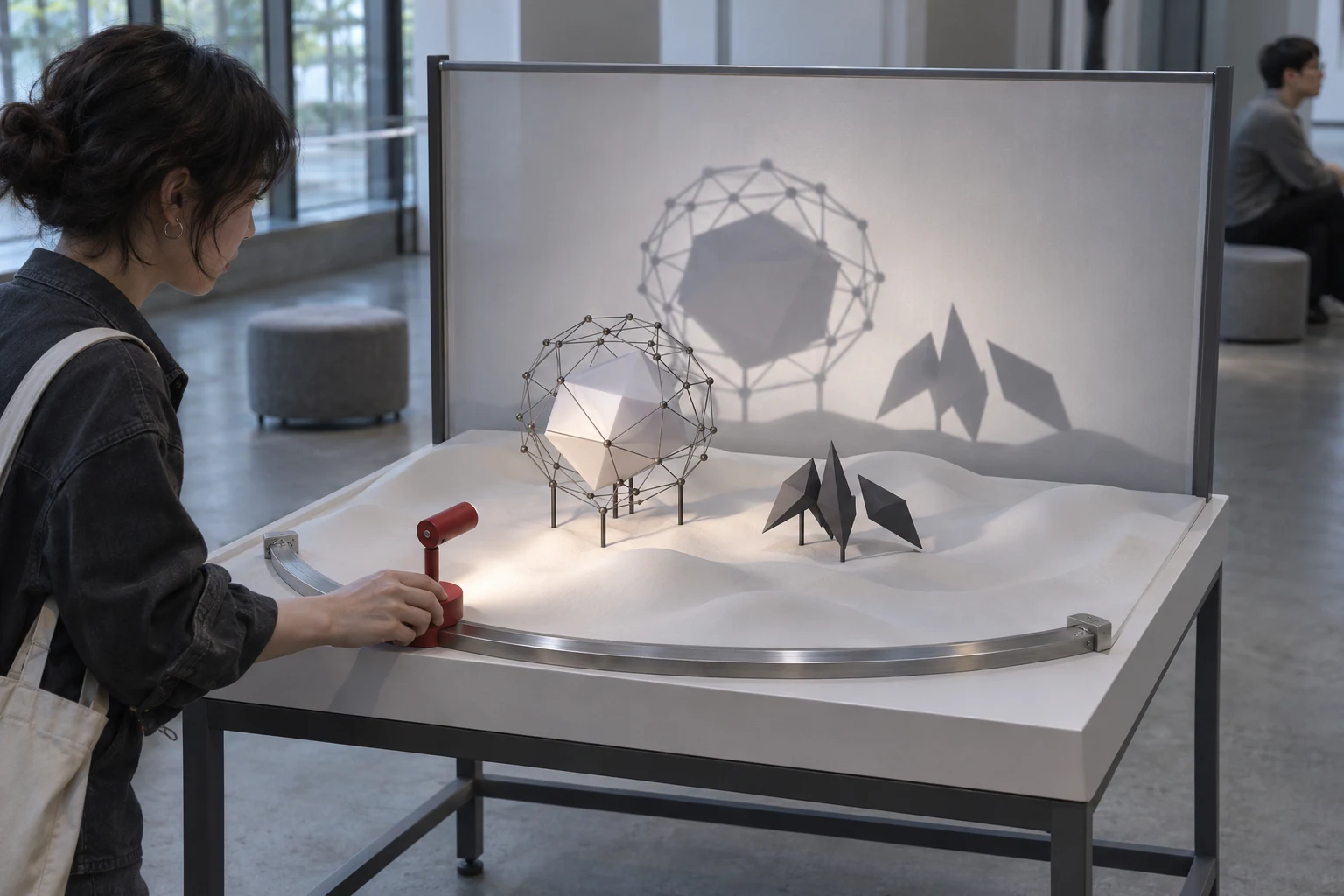
The original VR world makes scale and viewpoint feel negotiable. This independent Studio Extension brings that question to a shared table: white terrain, a faceted core, a graphite cage and dark shards stay still while a red lamp travels along a short arc. Their shadows become a second landscape. No headset, and no need to pretend we have shrunk an atom.
Keep the grammar; change the encounter
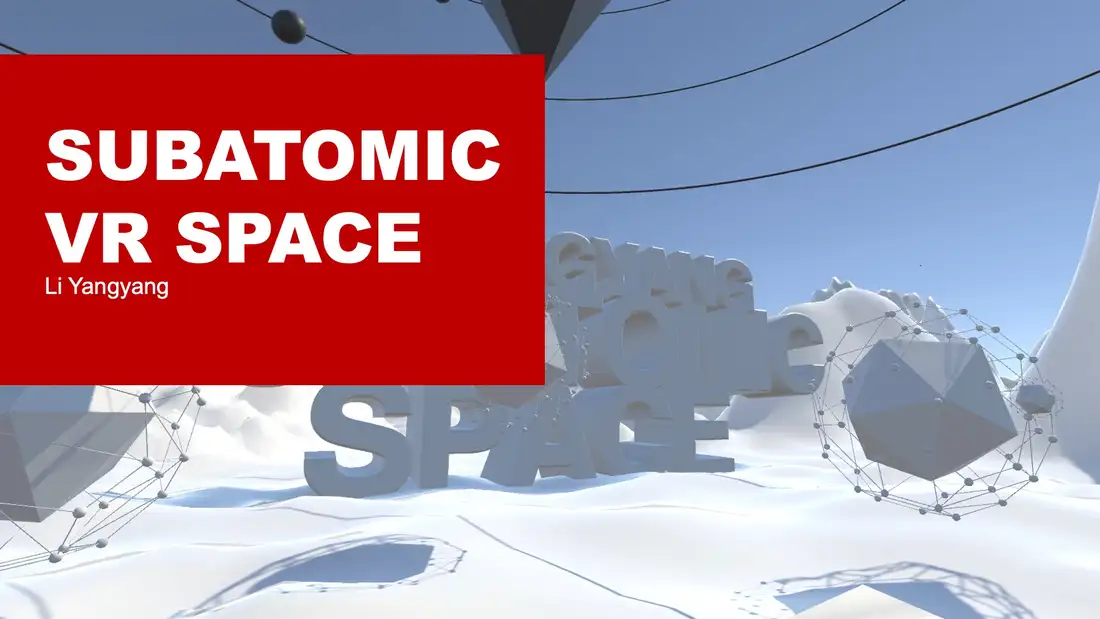
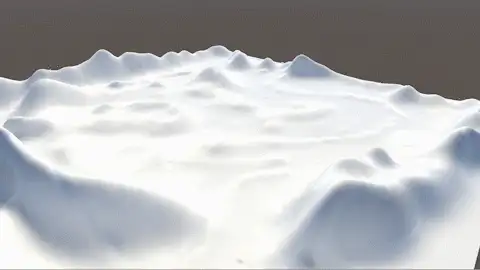
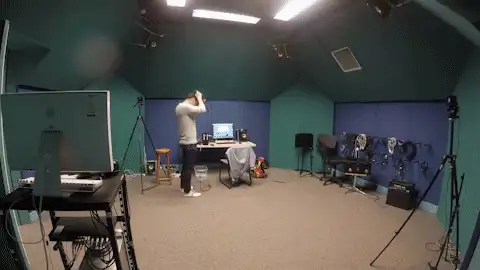
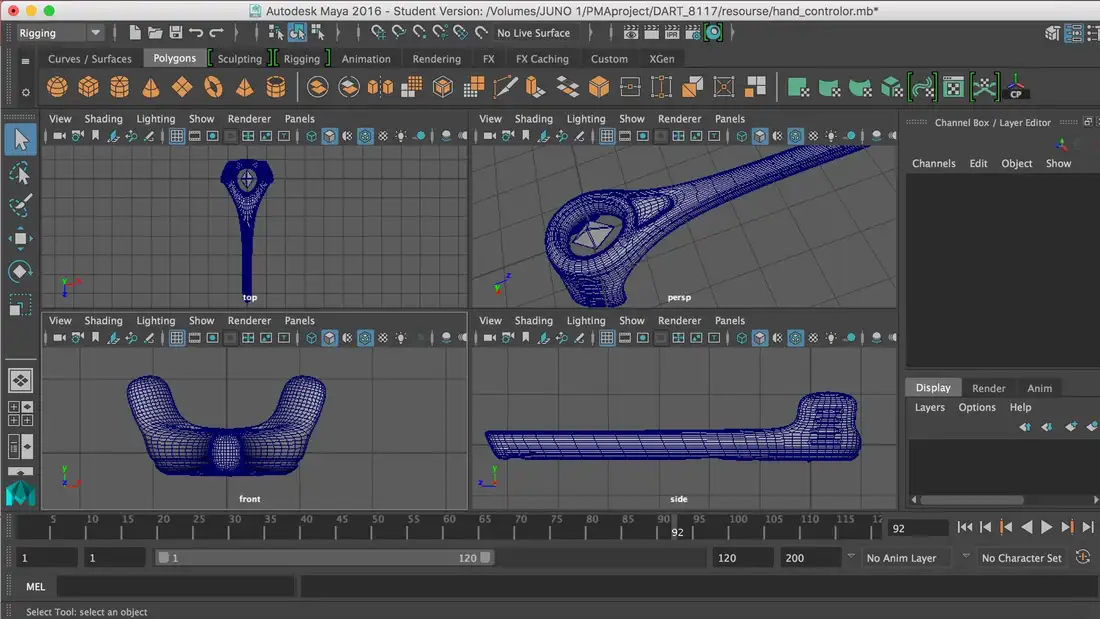
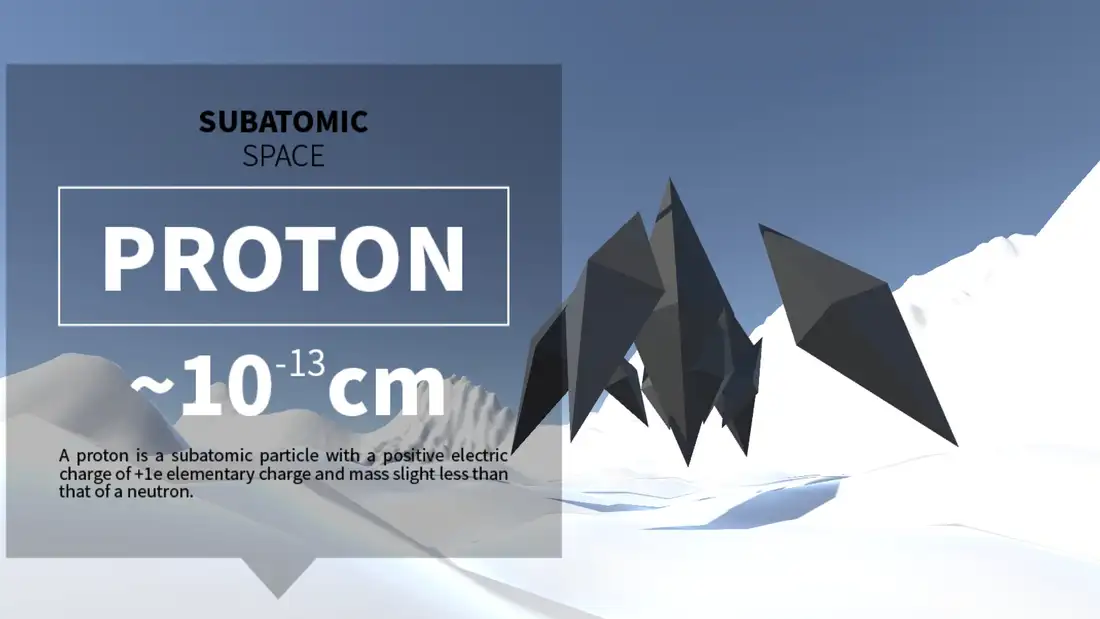
The six source images establish white undulating ground, angular solids, a faceted core inside a thin triangulated cage with ball-like nodes, graphite lines and a red title accent. The VR capture and controller model also matter: this began as a spatial experience, not a decorative pattern. The earlier sculpture garden and mobile remain intact. Here the change is participatory and tabletop-sized, with the original red accent becoming the one object a visitor operates. The exhibit is a visual analogy, not a literal or scientifically accurate model of atomic structure.
One moving part, several readings
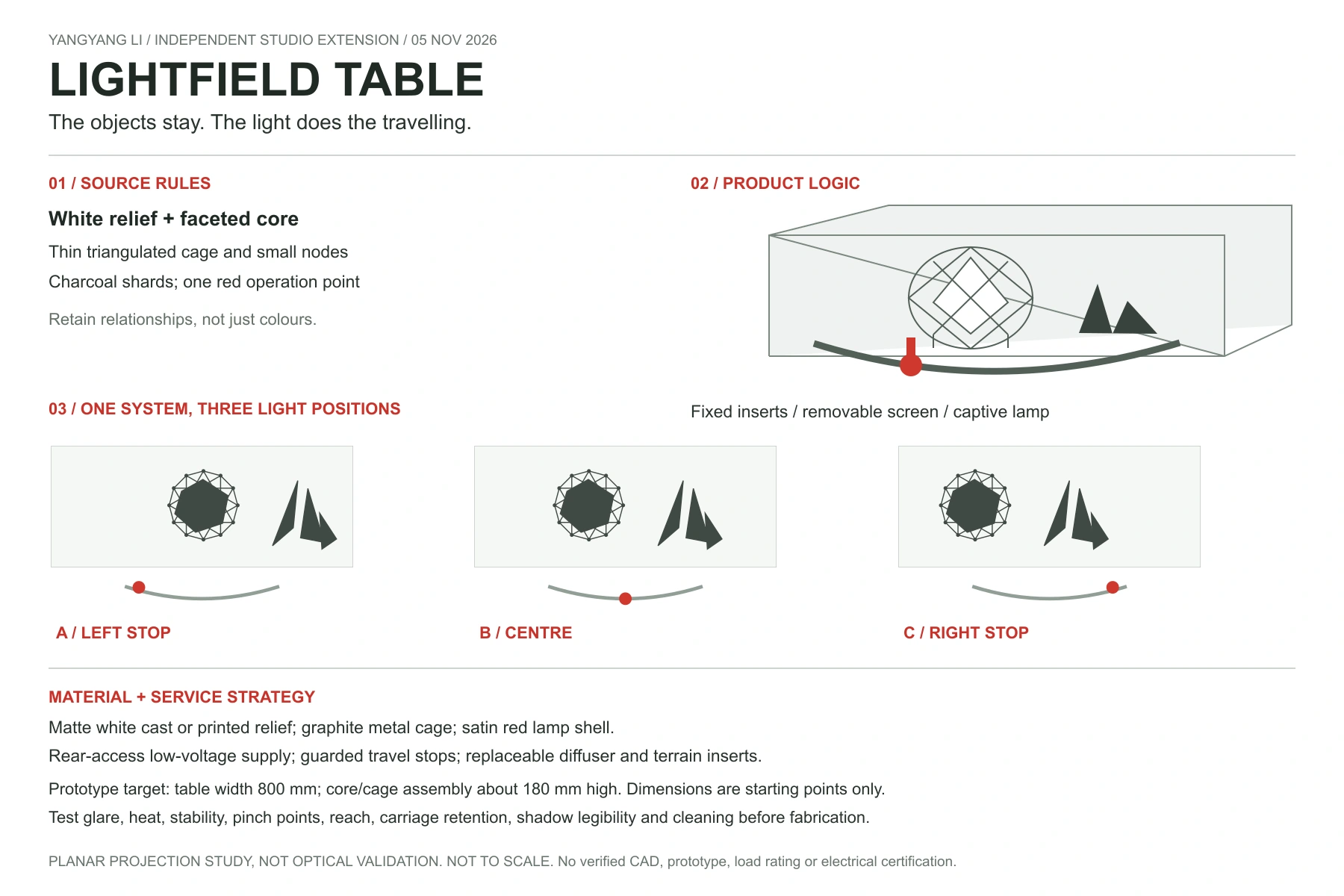
A captive lamp carriage follows a short front rail. The terrain and sculpture inserts stay fixed; a removable rear screen catches their changing silhouettes. A low point of light makes the cage read as a drawing, the core as a solid and the shards as a broken skyline. That difference is the system: line, mass and surface respond to the same action. The screen experiment below uses a planar silhouette projection to isolate this relationship. It does not simulate the photographed object's full three-dimensional shadows, lighting falloff or real materials.
Design the invitation and the maintenance together
The red lamp shell provides an obvious handhold without asking visitors to touch the delicate wirework. Proposed guarded stops and a retained carriage limit travel; the power route stays behind the screen and below the table. Terrain, screen and sculpture inserts should be individually removable for cleaning or replacement. Start with an 800 mm-wide table and an approximately 180 mm-high cage as a scale study, then test seated and standing reach before fixing the dimensions. The generated use scene demonstrates intent, not measured construction.
What the first physical trial must answer
Compare a matte white printed relief with a cast mineral-composite sample, dark coated metal members and a replaceable diffuser. Check edge finish, cleaning, object retention and table stability. Then test glare, lamp temperature, travel stops, pinch clearance, cable protection and readable shadows under actual ambient light. The small source terrain and capture images remain at their original resolution; no invented detail has been substituted. No verified CAD, physical prototype, electrical certification or safety approval is claimed. A full-depth optical mock-up is the next step, not another prettier render.