
Snap & Scoot: A Stop-Motion Toy System
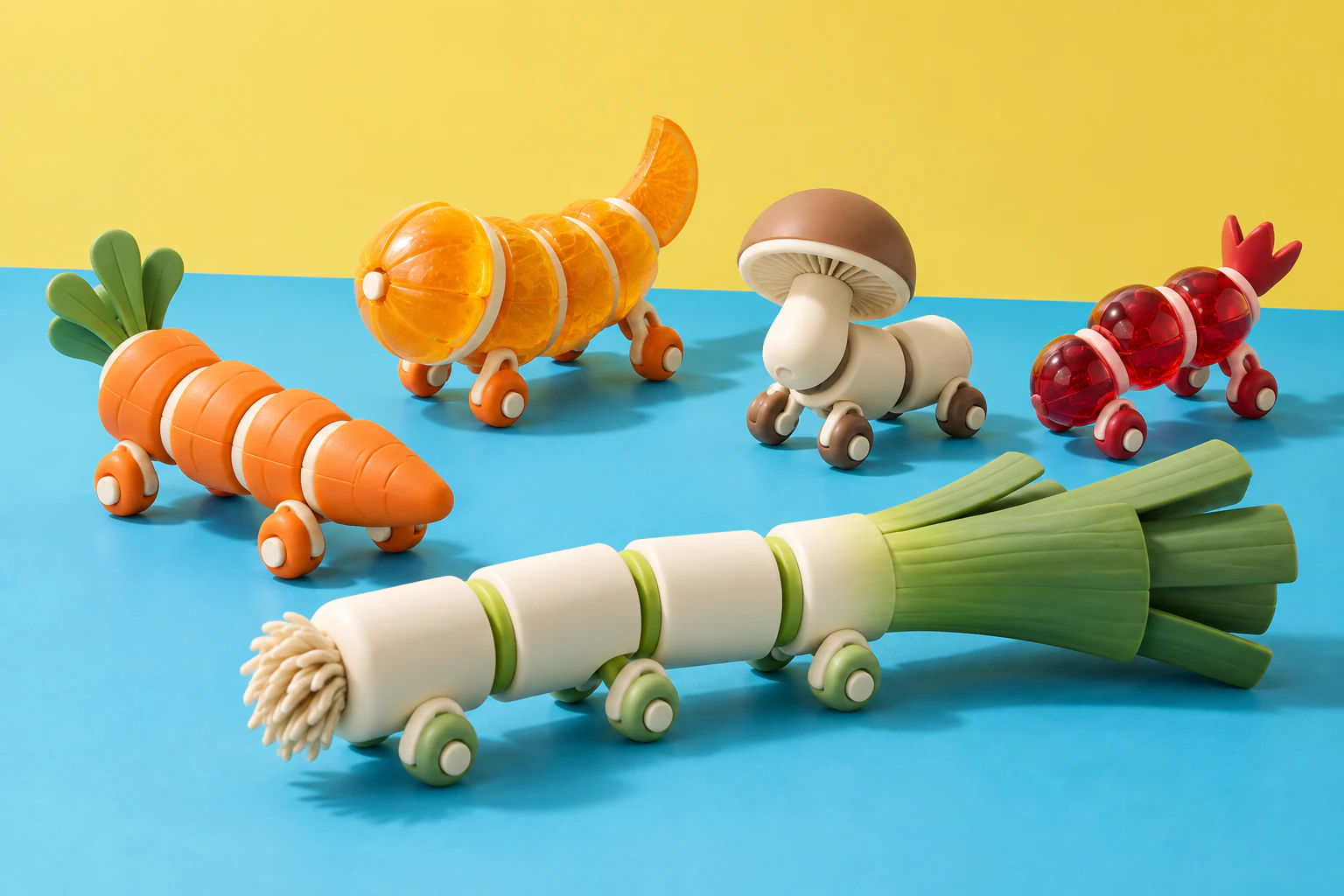
Kitchen Escape began with a wonderfully economical trick: cut familiar food into parts, move those parts one frame at a time, and an ordinary kitchen suddenly develops its own secret traffic. This independent 2026 extension turns that method into a physical toy system. Leek, carrot, citrus, mushroom and seed forms become modular rolling creatures that children can rebuild, race through a fold-out kitchen and animate with a phone. The toys do not add faces or a borrowed cartoon personality. Their character still comes from proportion, rhythm, material and movement, just as it did in the original films.
The cut becomes the construction rule
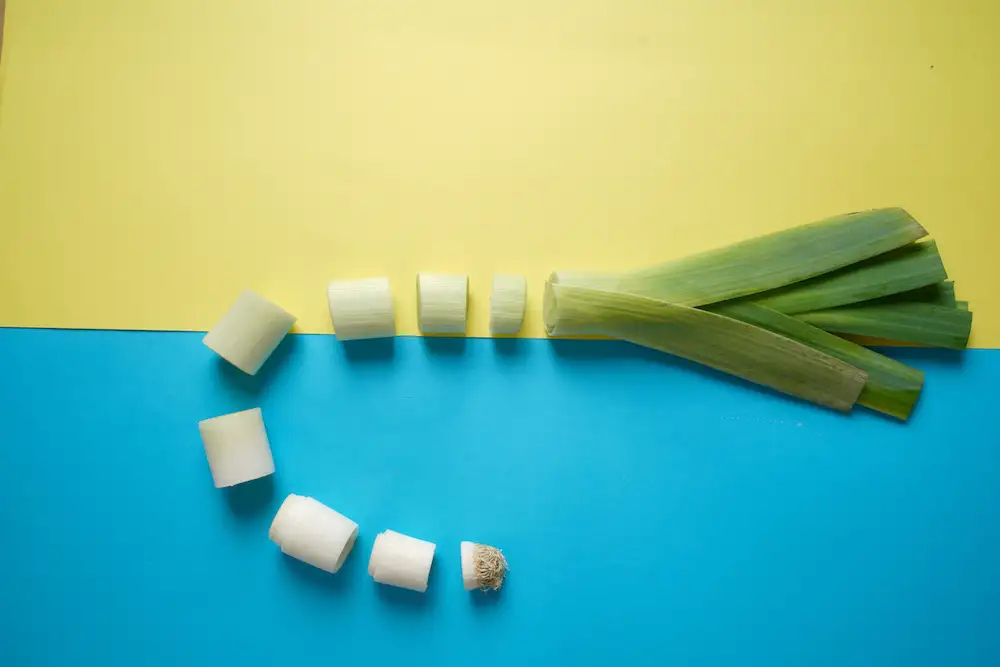
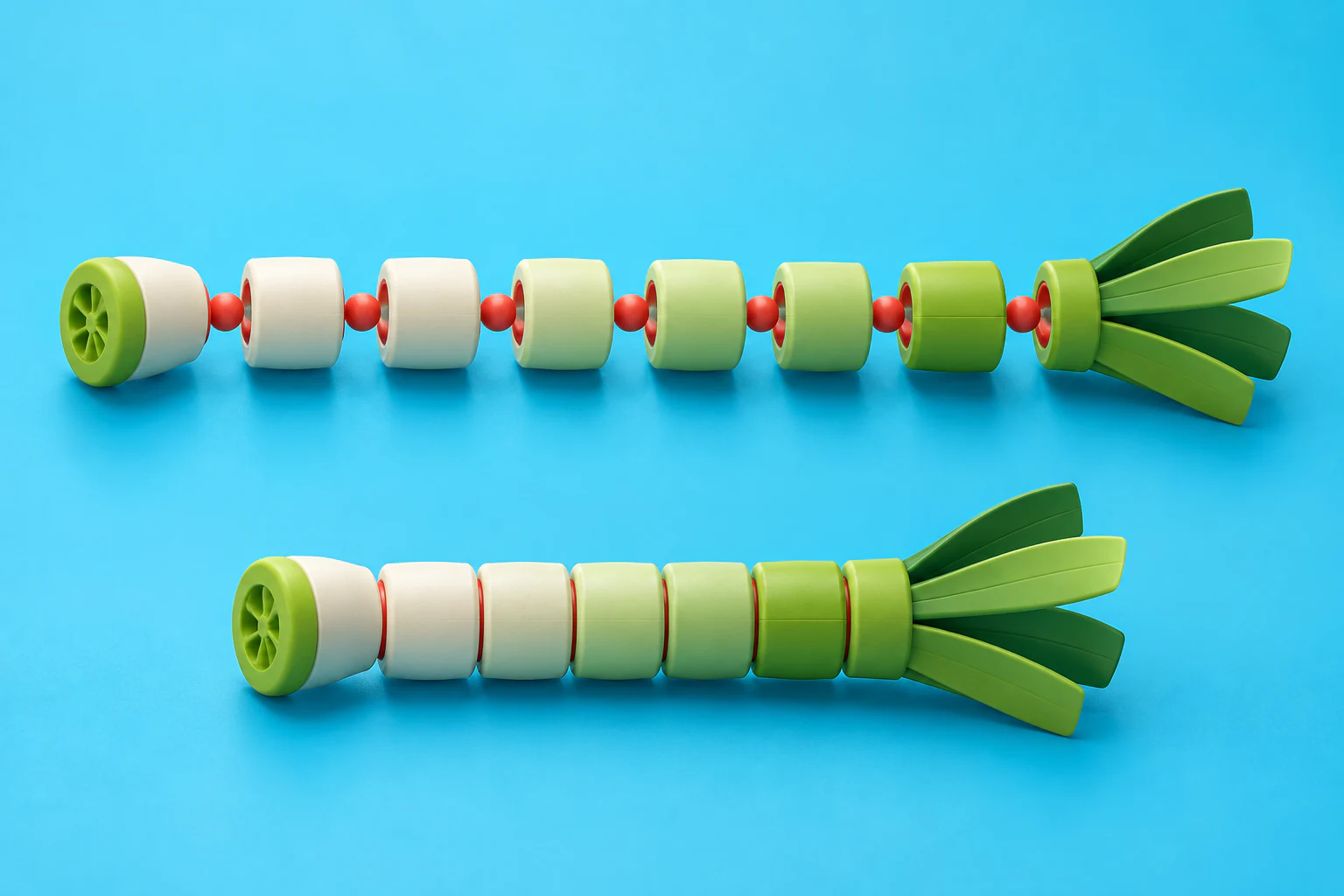
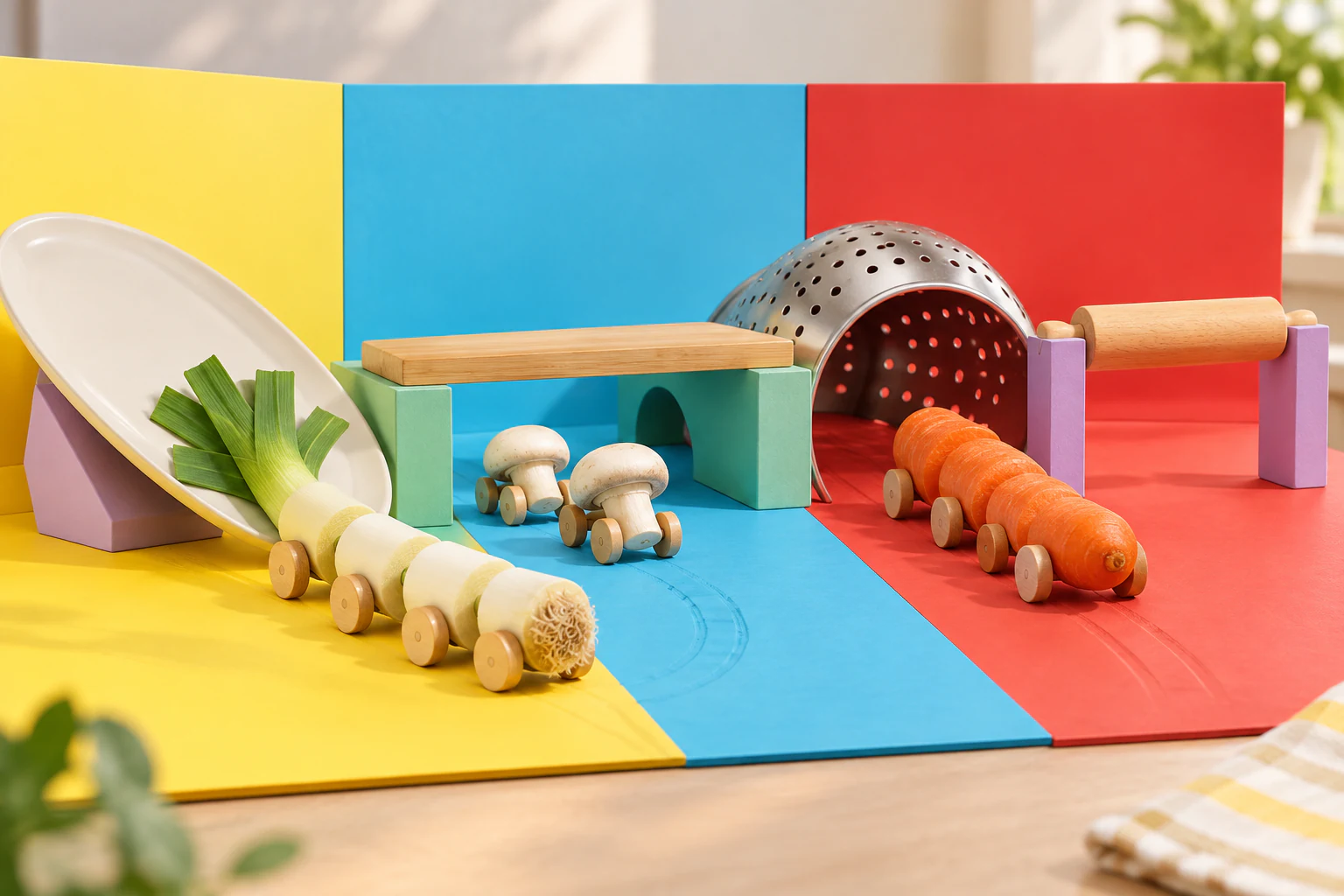
The original project treated every slice as a frame of possibility. Snap & Scoot makes that idea literal: large food-inspired modules join through one concealed magnetic ball-and-socket system, allowing a long leek to become a short sprinter, a curved citrus creature or something that has never appeared in a recipe. Repetition creates rhythm, while the final leaf, cap or rind gives each build a recognisable ending.
Personality without a face
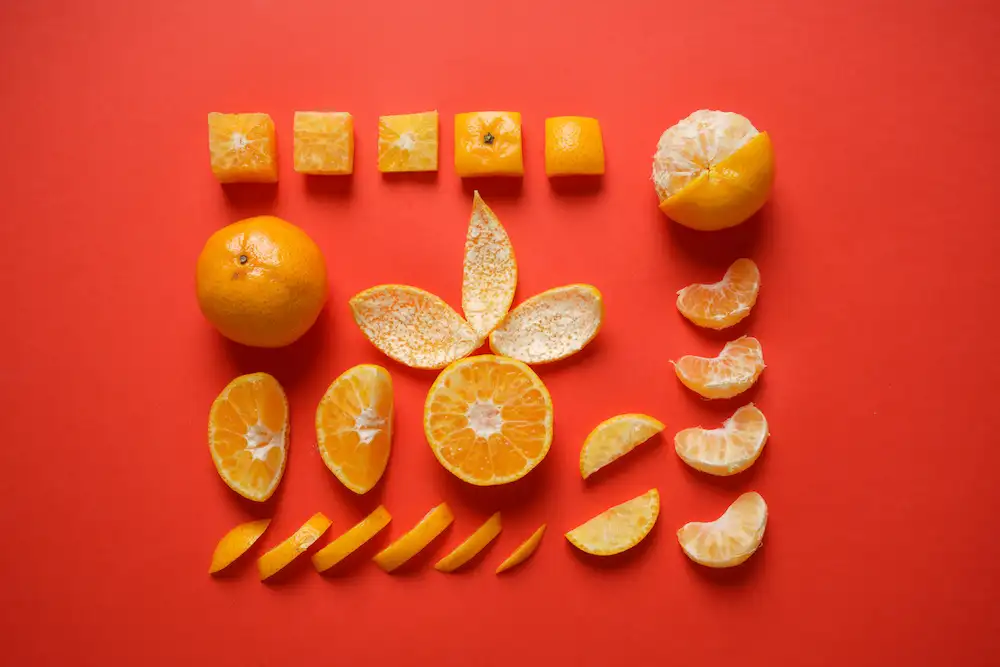
No eyes or mouths are needed. A mushroom leans because its cap is top-heavy; a carrot points forward; translucent citrus segments catch the light as they turn. This keeps the objects close to the visual intelligence of the original photography and leaves children room to invent motives rather than being handed a fixed expression.
One connector, many kinds of motion
Every body segment uses the same generously sized connector. A soft silicone wheel module can sit underneath any piece, so builds may roll straight, articulate like a caterpillar or turn into a four-wheel creature. Keyed internal geometry keeps magnets correctly oriented and prevents the satisfying snap from becoming an equally satisfying rejection.
The kitchen becomes a chase course
Three hinged colour boards unfold into the yellow, cyan and red stages of the film. A plate becomes a ramp, a chopping board becomes a bridge, a colander becomes a tunnel and a rolling pin becomes a gate. These are deliberately simple silhouettes: the set supports the toys and the camera instead of competing with them.
Play ends with a film, not a tidy-up
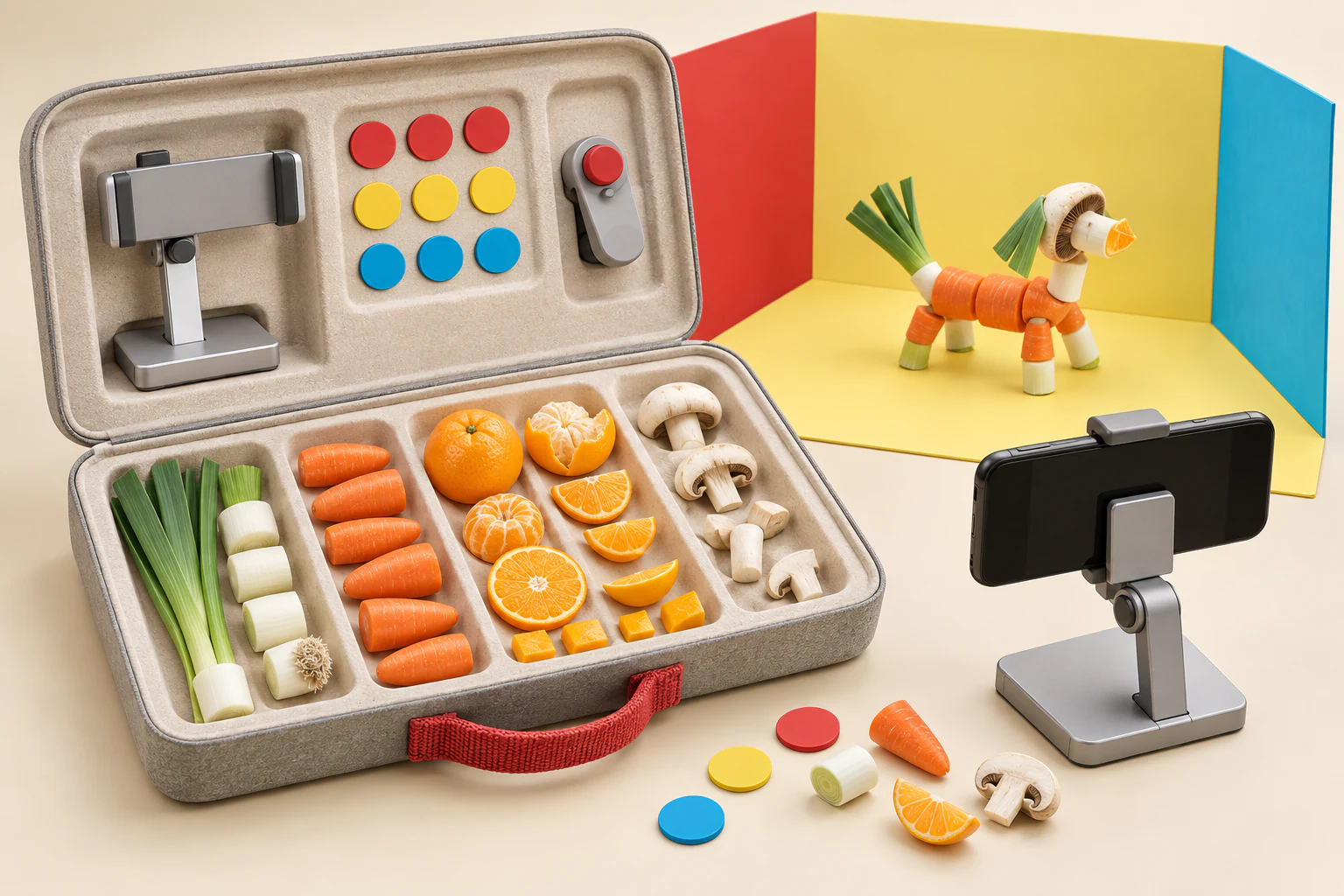
The creator kit adds a stable phone cradle, reusable position markers and a hand-operated frame clicker. Children can rebuild a creature, move it across the stage and immediately test how shape changes read in motion. The activity connects construction, composition and timing, making animation a form of play rather than a separate lesson.
A plausible first production run
The core pieces are sized to avoid small loose parts and use plant-based ABS or recycled polypropylene with over-moulded silicone wheels. Translucent citrus shells can be reserved for a smaller premium set, while repeated body modules share tooling across the range. The case uses moulded fibre and becomes storage, transport and part of the filming setup, so the largest piece of packaging earns a second job.
Shot by Shot: The Grocery Counter Film Booth
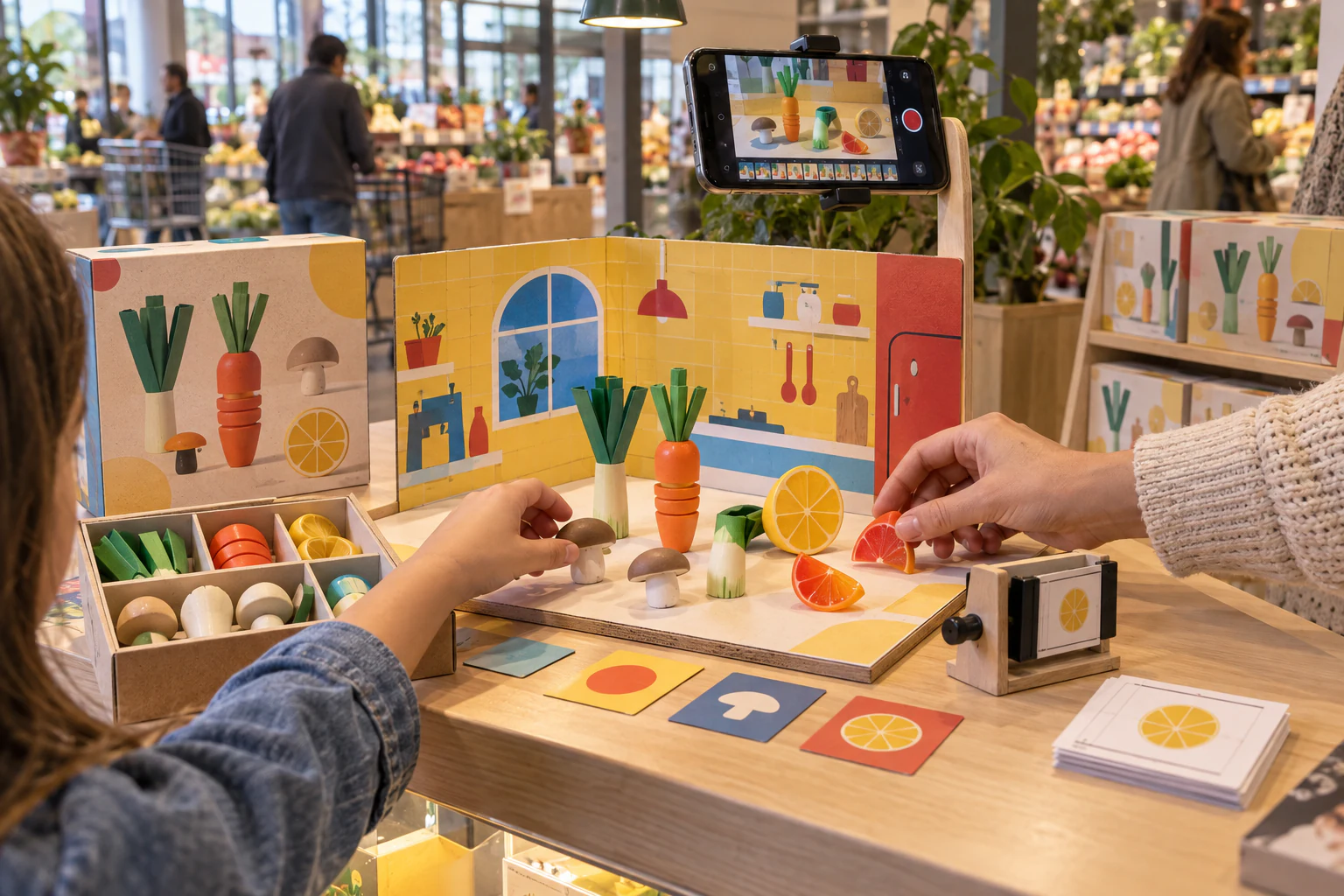
This independent extension takes Kitchen Escape out of the studio and places its visual logic where food is already part of everyday life: the supermarket. The stop-motion kit becomes a small public counter where a carrot, leek, citrus wedge and mushroom can be rebuilt, staged and filmed in minutes. The point is not to turn vegetables into mascots. Their character still comes from cut, scale, balance and the small pause between frames. A cardboard kitchen turns the retail display into a working set; the box becomes a parts tray; a simple phone stand and hand-cranked frame clicker make timing tangible. It is a plausible retail activation, but also a compact invitation to notice that animation begins with moving one ordinary thing, carefully, and then moving it again.
A shop counter that does something
The display earns its floor space by becoming a small maker station. Shoppers do not merely inspect a packaged object: they build a vegetable silhouette, place it on a stage and capture a short sequence. The bright yellow, cyan and red panels retain the original film's crisp graphic world while locating it in an everyday public ritual.
Motion without a screen taking over
A phone cradle records from above, but the visible work stays physical. Position markers, a modest frame clicker and a raised set make the gap between two images easy to understand. The short animation is the souvenir; the tactile decisions are the activity.
Retail, storage and scenery in one object
The fibre-box insert separates parts for the shelf and travels home as a tidy storage tray. The cardboard backdrop folds flat for transport, then opens into a kitchen stage. This keeps packaging from being a decorative afterthought and lets a small retail display evolve into an object with a longer second life.