


Fold Stage Concert Kit
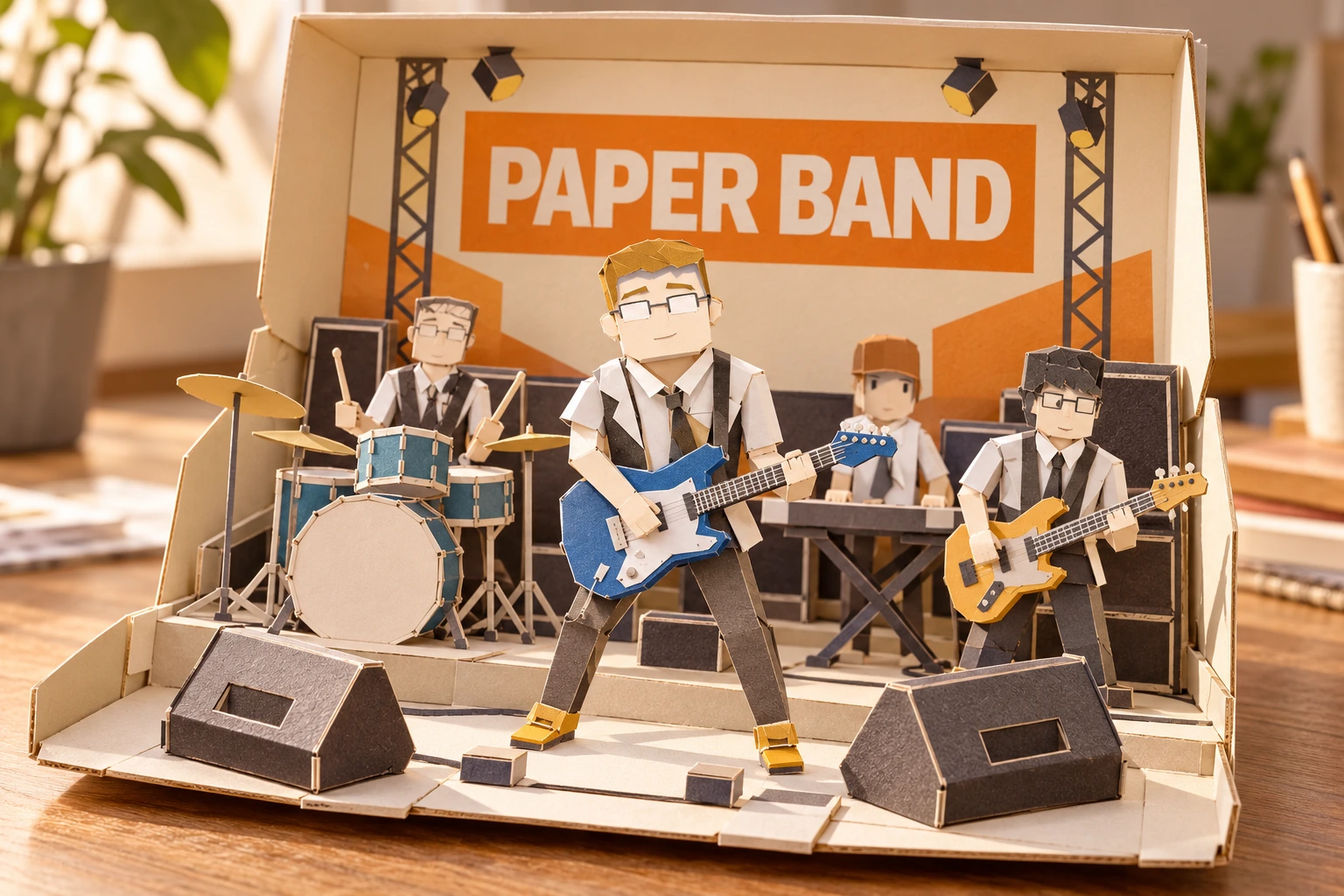
The bespectacled papercraft musician becomes the centre of a fold-out concert kit. A cardboard stage, paper instruments and amber graphic accents extend the animation's handmade construction into a playful collectible object.
Paper Band Projection
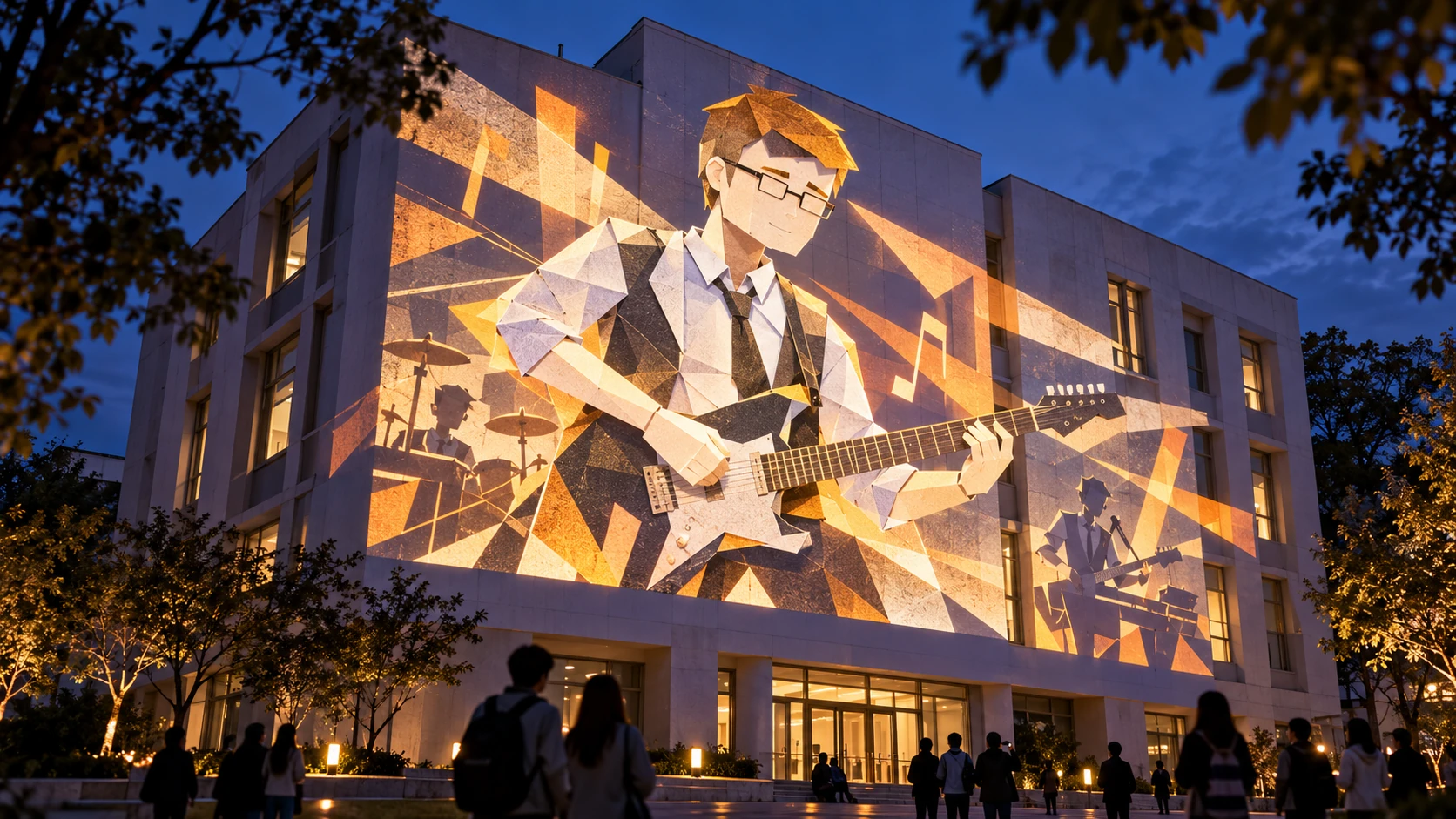
A conceptual outdoor projection translates the animation's folded-paper musician and amber accents into a playful campus evening performance.
One Frame at a Time
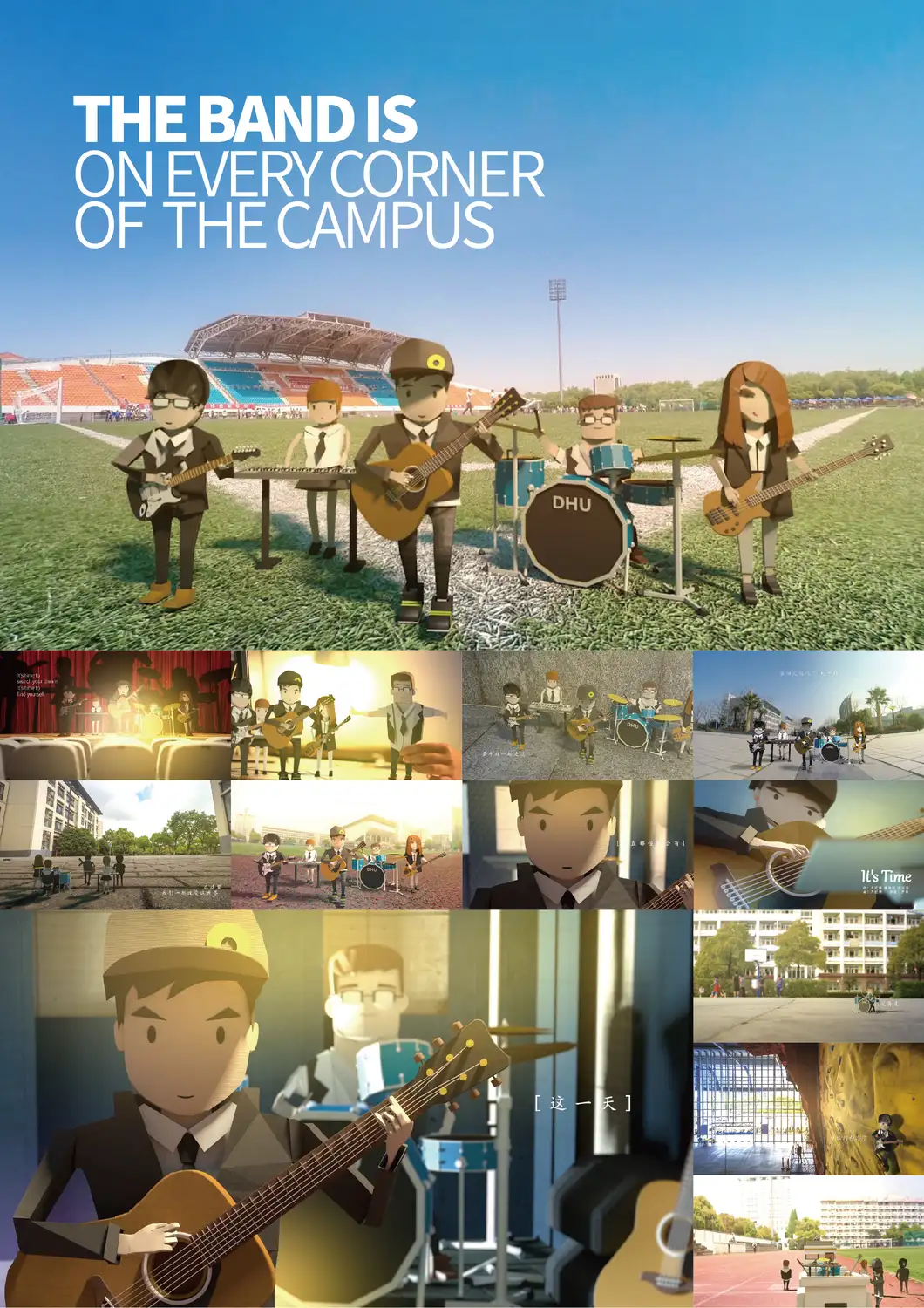
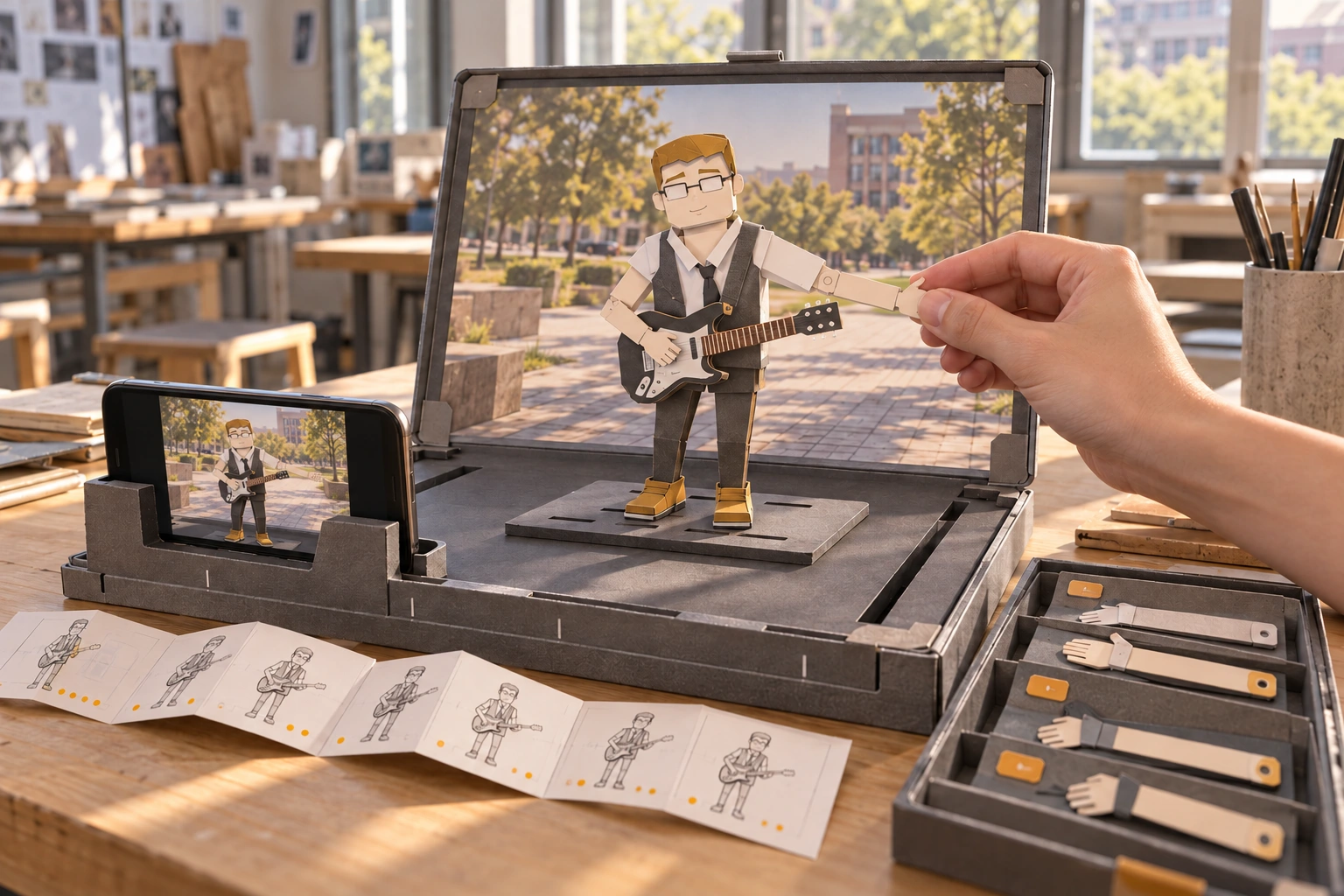
The original project brought a paper band into real campus locations through 3D animation, papercraft and time-lapse photography. This earlier independent scene study translates that making process into a tabletop workshop, with a paper musician, a photographic backdrop and a phone cradle. The printable character sheets in the following chapter develop the visual object itself.
The fold is a signature, not a surface filter
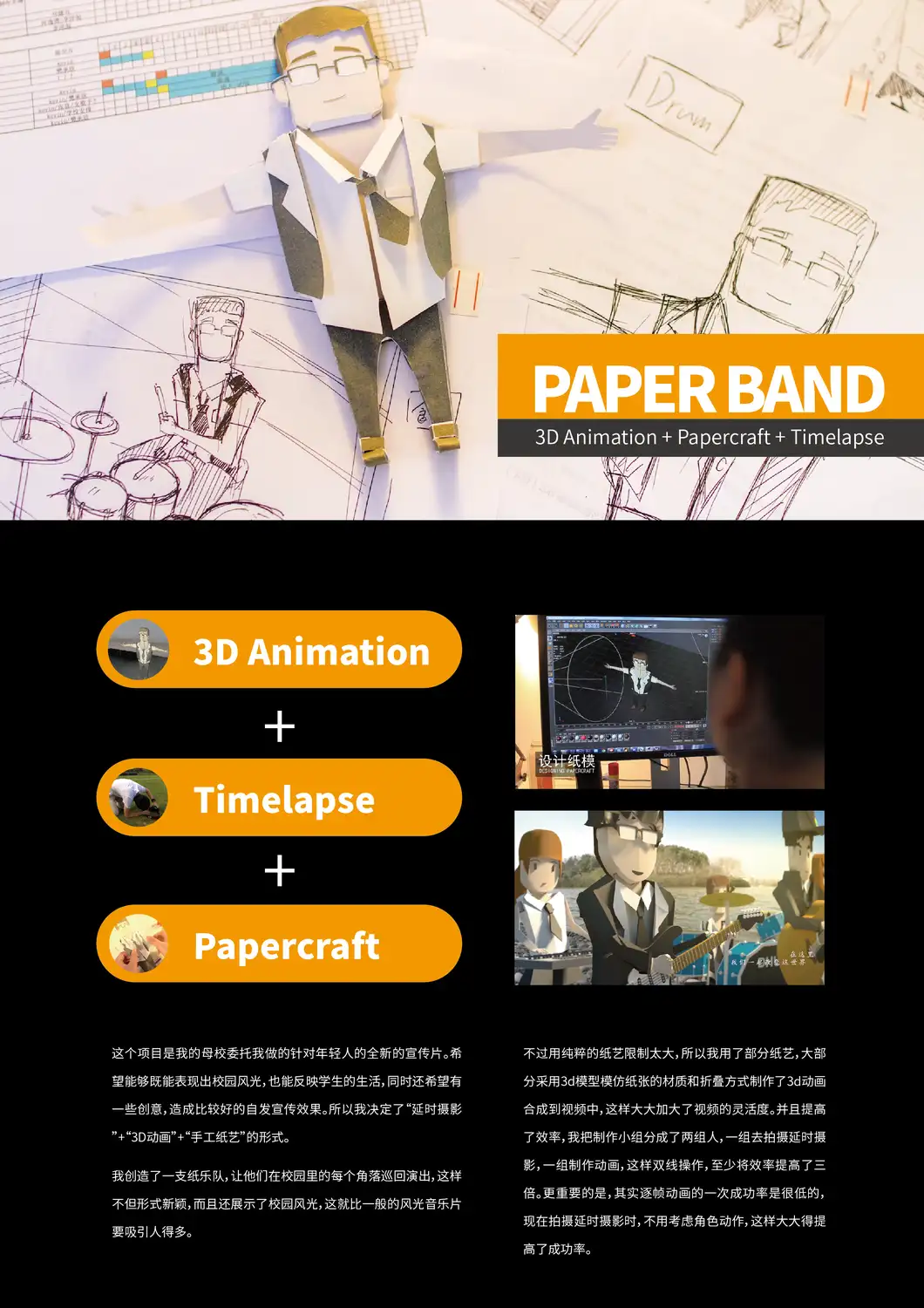
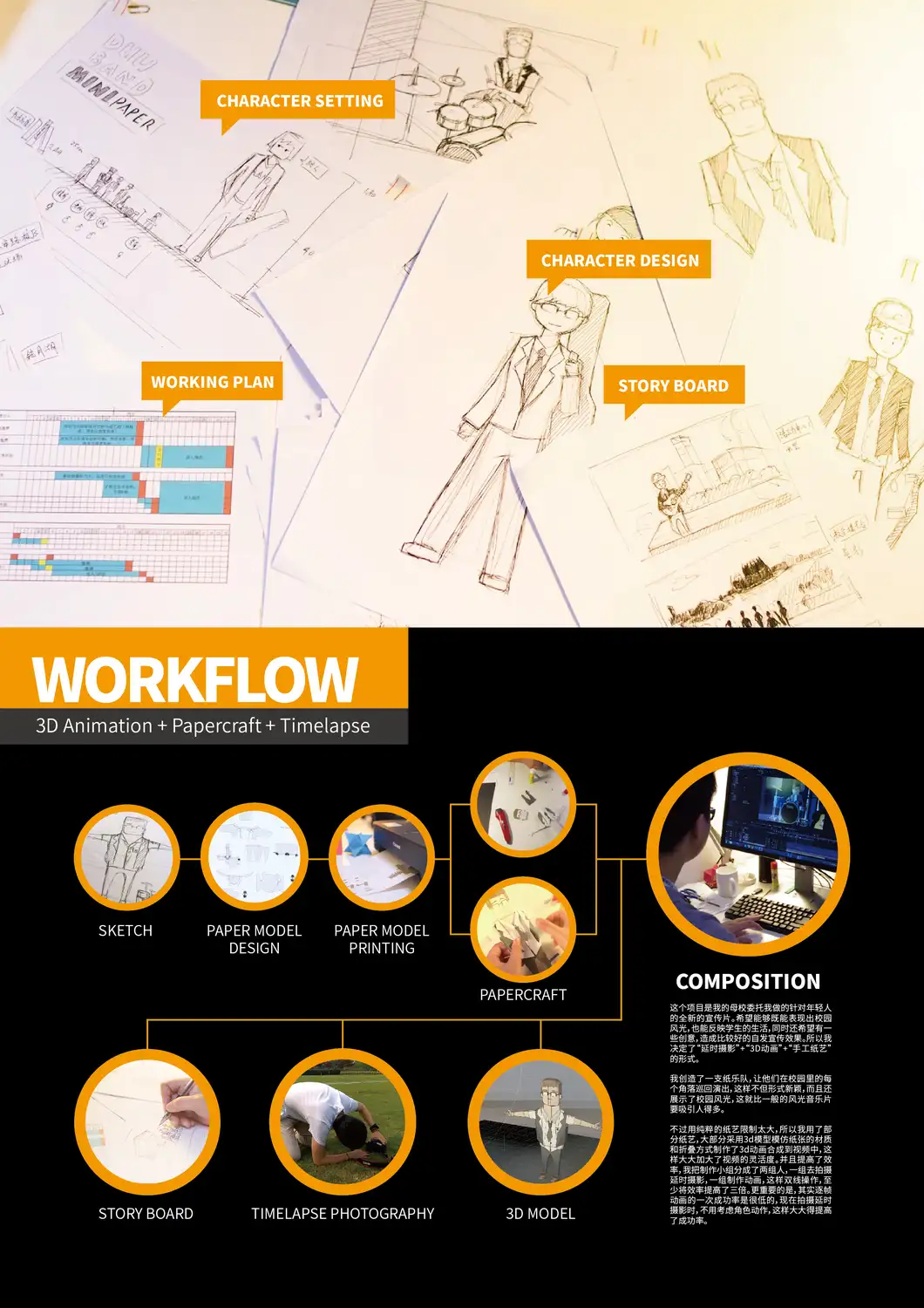
The source sheets show angular paper bodies, simple faces, rectangular glasses, white shirts, dark waistcoats and ties, with amber accents and a blue drum kit. They also show planning, paper assembly and compositing as part of the work. The new scene retains the bespectacled musician's folded silhouette, mustard hair and shoes, one dark tie and layered paper instrument. Only one member is used for the first workshop study; the existing five-person band is not replaced or recast.
From a collectible to a creative instrument
The earlier Fold Stage Concert Kit focused on display; the campus projection enlarged the performance. Here the owner becomes the animator. The first audience is adult makers and university creative workshops. A carry case roughly 400 mm wide and a puppet around 150 mm high are initial mock-up targets, not measured specifications. The lid holds a replaceable campus backdrop, while the phone and puppet each return to a repeatable position. The illustrated screen is concept imagery, not a screenshot of working capture software.
Three routes, and a reason to stay analogue
An all-digital avatar would be easy to move but would lose the paper-making ritual. A motorised puppet would add hidden complexity before the hand-made motion had been tested. The chosen route is a manually posed paper figure with replaceable linkage strips. A broad foot platform locates in slots, and a registered phone cradle reduces accidental reframing. Repetition belongs to the camera position; imperfection belongs to the performance. The first physical trial should favour a readable silhouette over a busier performance.
Design the parts that wear out
Layered card gives the body volume; flat sacrificial strips provide the first elbow experiments. The photograph suggests paper pivots and replaceable limbs, but does not establish a reliable friction joint. Test hole reinforcement, pivot retention and pose creep with physical samples before choosing paper fasteners, sleeves or another mechanism. Store spare links flat in the side tray and lift the figure by its platform, never its instrument. The case hinge, lid support and cradle retention also require load and repeated-use testing.
Keep the image stable; let the paper be alive
Use a fixed focal setup and steady light for the first tabletop trial. Check the phone's actual field of view, clearance for the animator's hand, backdrop seams, platform shadows and whether a pose holds between captures. The source's campus setting becomes a swappable photographic card; permission and privacy still matter when making new location images. The generated workshop scene is a proposal, not evidence that a class, institution or manufactured kit endorsed it.
A visual study, not a music tool
This chapter remains a workshop scene proposal. The later paper-model sheets below return the development to the character's visual construction: silhouette, printed costume, folds and assembly. The phone preview is illustrative; no capture integration, manufactured kit or new animated film is claimed.
Fold the Band / Guitarist No. 01
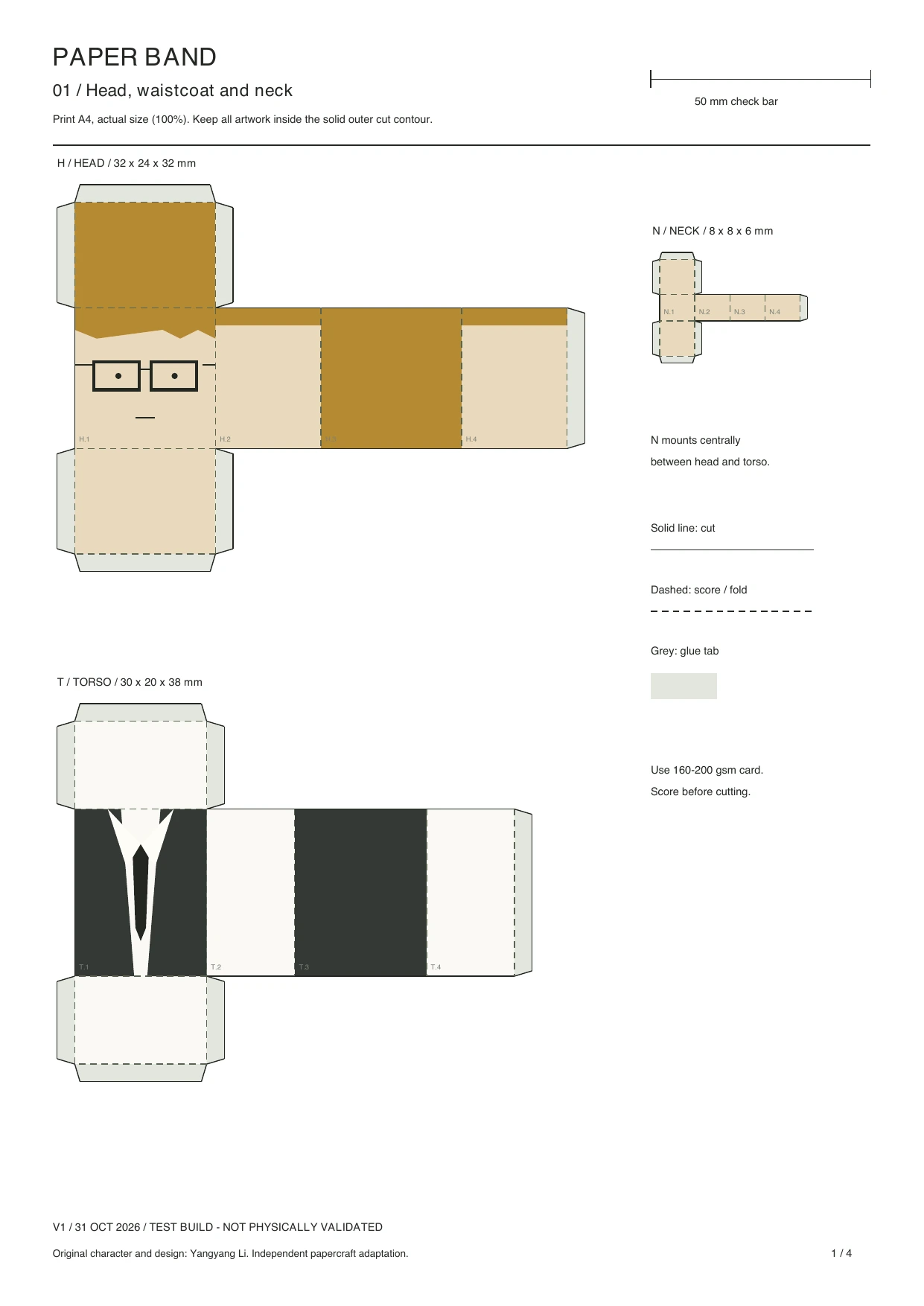
A paper character deserves a paper drawing. These four A4 sheets translate the original bespectacled guitarist into a simplified static display model: pale shirt, dark waistcoat, one tie, mustard hair and shoes, rectangular glasses and an electric guitar. The work is in the shapes, colour blocks and folds, not in adding a music utility to a visual project.
A small figure, a complete set of parts
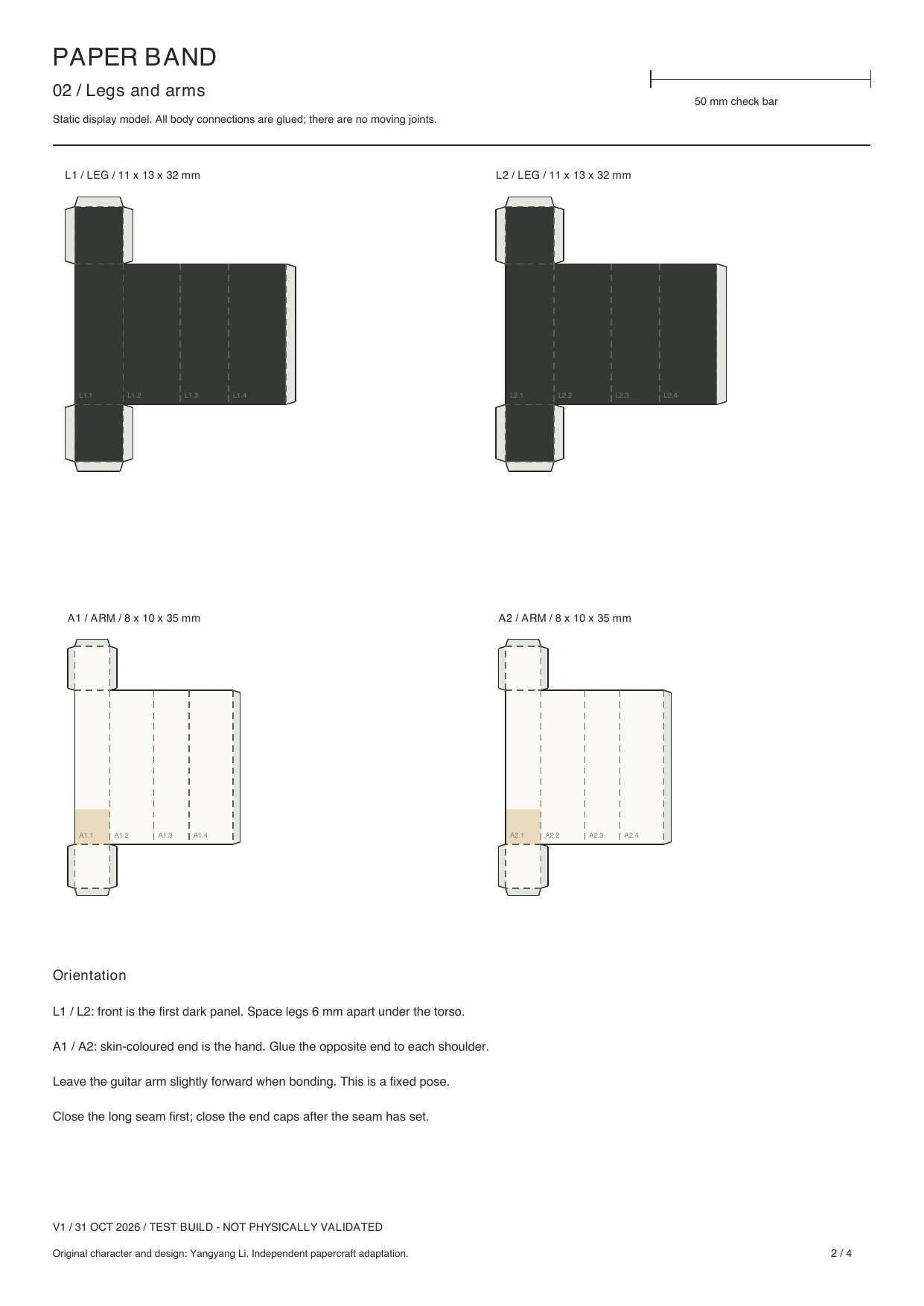
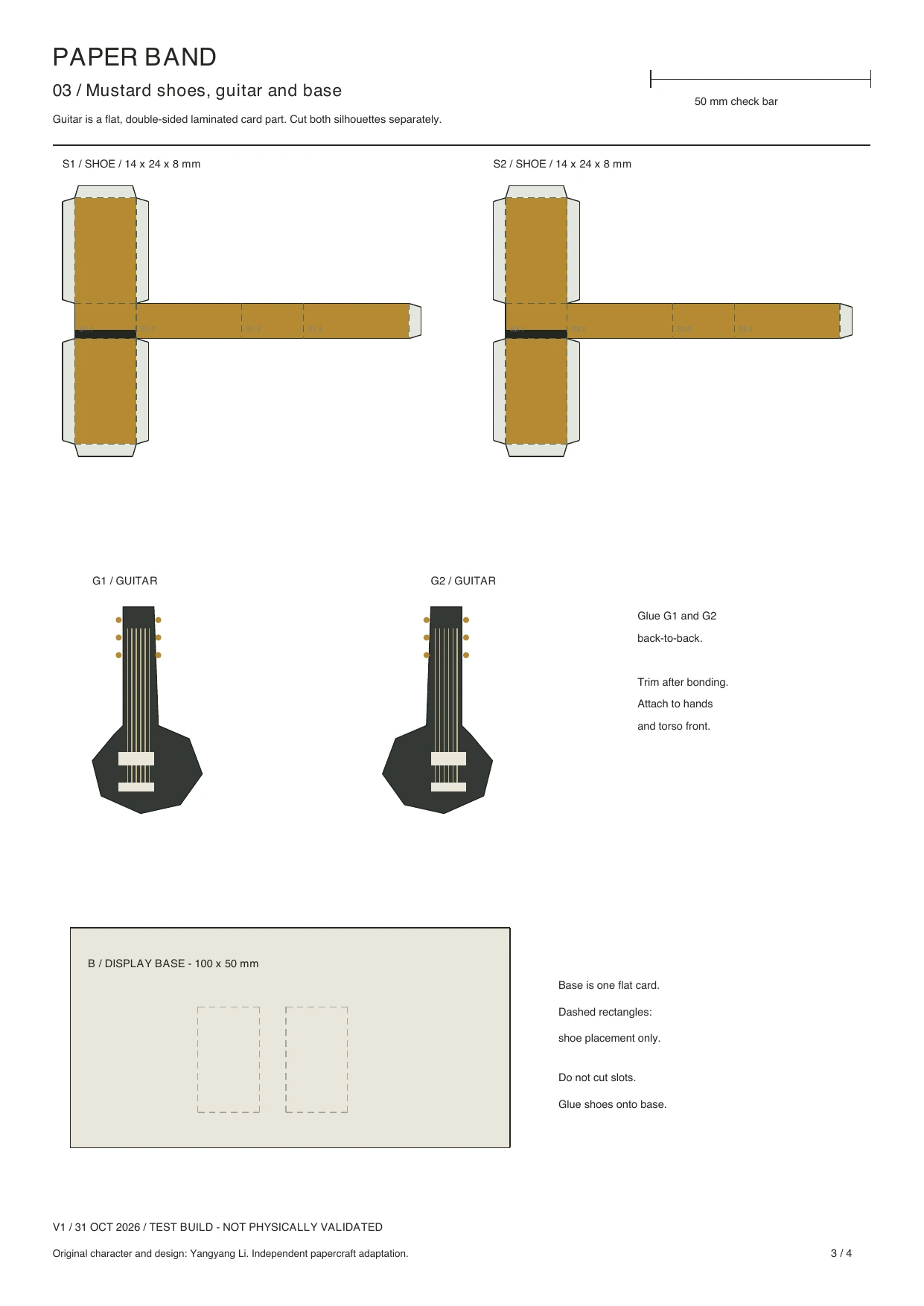
The vector PDF includes connected cut-and-fold nets for the head, torso, neck, two arms, two legs and two shoes, plus a double-sided flat guitar, a display base and an assembly guide. Nine closed volume nets have been checked for connectivity, page bounds and overlap. Solid contours are cut lines; dashed lines are folds; grey areas are glue tabs. Print at 100 percent and check the 50 mm calibration bar.
Translate the silhouette; do not pretend to recover the original mesh
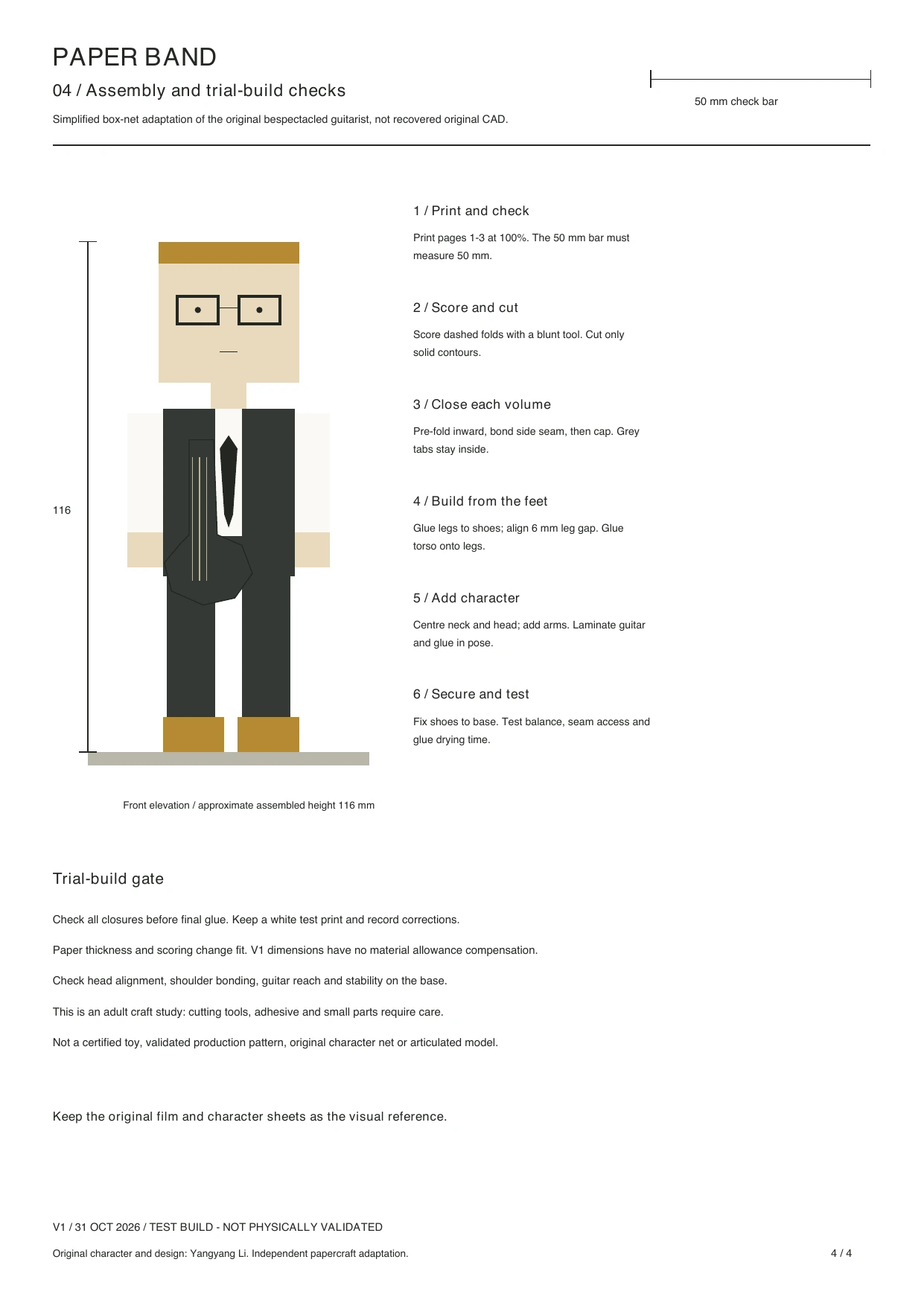
The target height is approximately 116 mm. The source's folded character language is adapted into simpler box volumes with printed costume details. This is an independent papercraft interpretation, not a recovered net from the original 3D model. The arms, guitar and body are glued in a static pose. There are no hidden claims of articulation or a working capture system.
The next review uses card, not another render
V1 is ready for a trial print, not yet validated by a physical build. Try 160-200 gsm card, score before cutting, and dry-fit all closures. Check material thickness, seam access, shoulder bonding, head alignment, guitar reach and balance on the base. Record corrections before producing a final pattern or extending the set to the other four musicians. Cutting tools, adhesive and small parts make this an adult craft study, not a certified children's toy.