
A Story You Can Rehearse
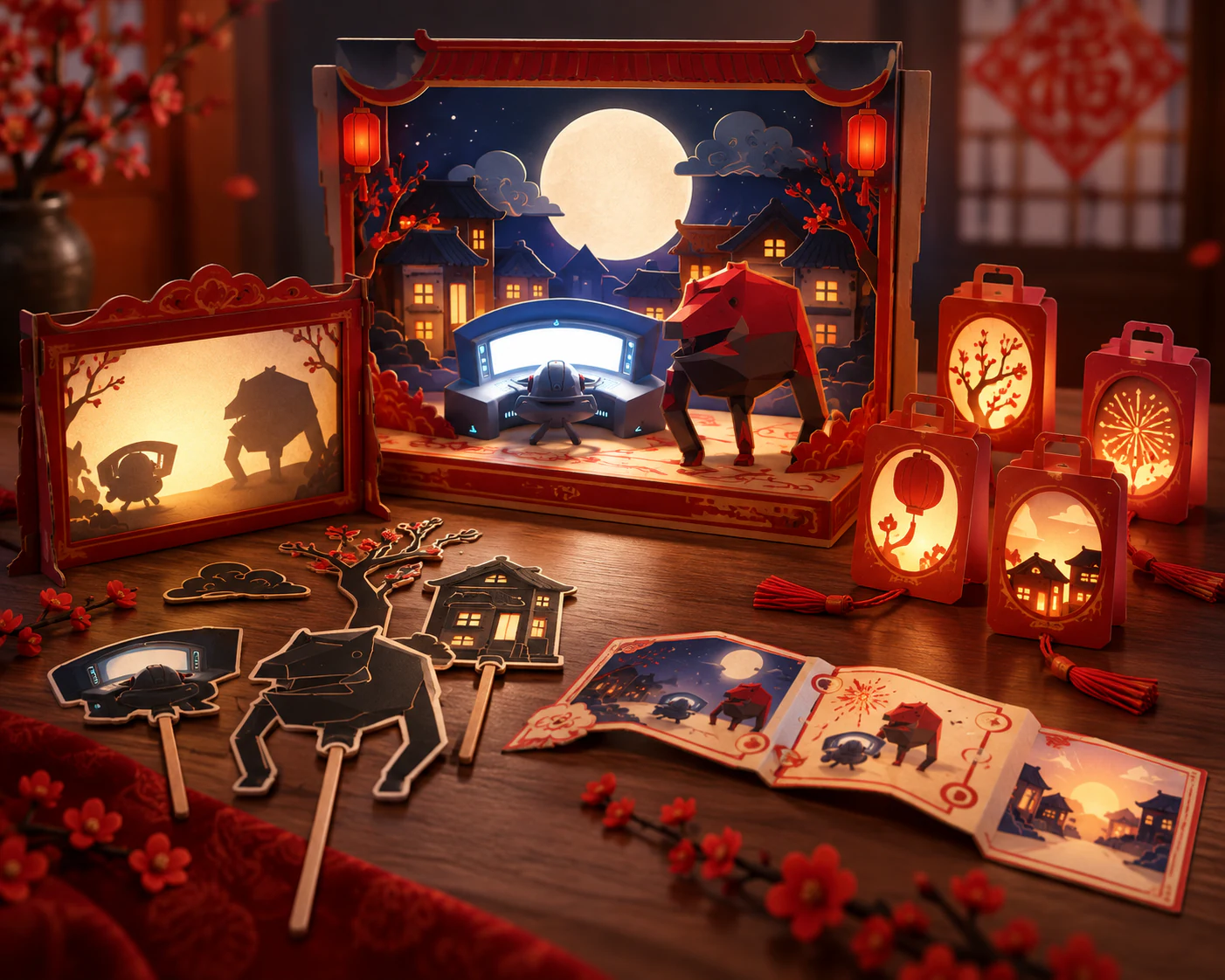
The Nian story has survived because it is retold, not merely observed. This independent festival kit gives children several ways to rehearse that retelling: a pop-up stage establishes place, shadow pieces turn characters into movement, lantern cards carry moments into the room and a small path lets the sequence be rearranged. The visual language stays rooted in red paper, warm light and cut silhouette, while dimensional folding brings the original screen-based work back to the hand. Play is treated as interpretation rather than distraction. Each child can decide when the monster appears, how courage gathers and which light returns first. Tradition remains alive when it leaves space for another voice.
Lantern Guard: A Transforming Toy System
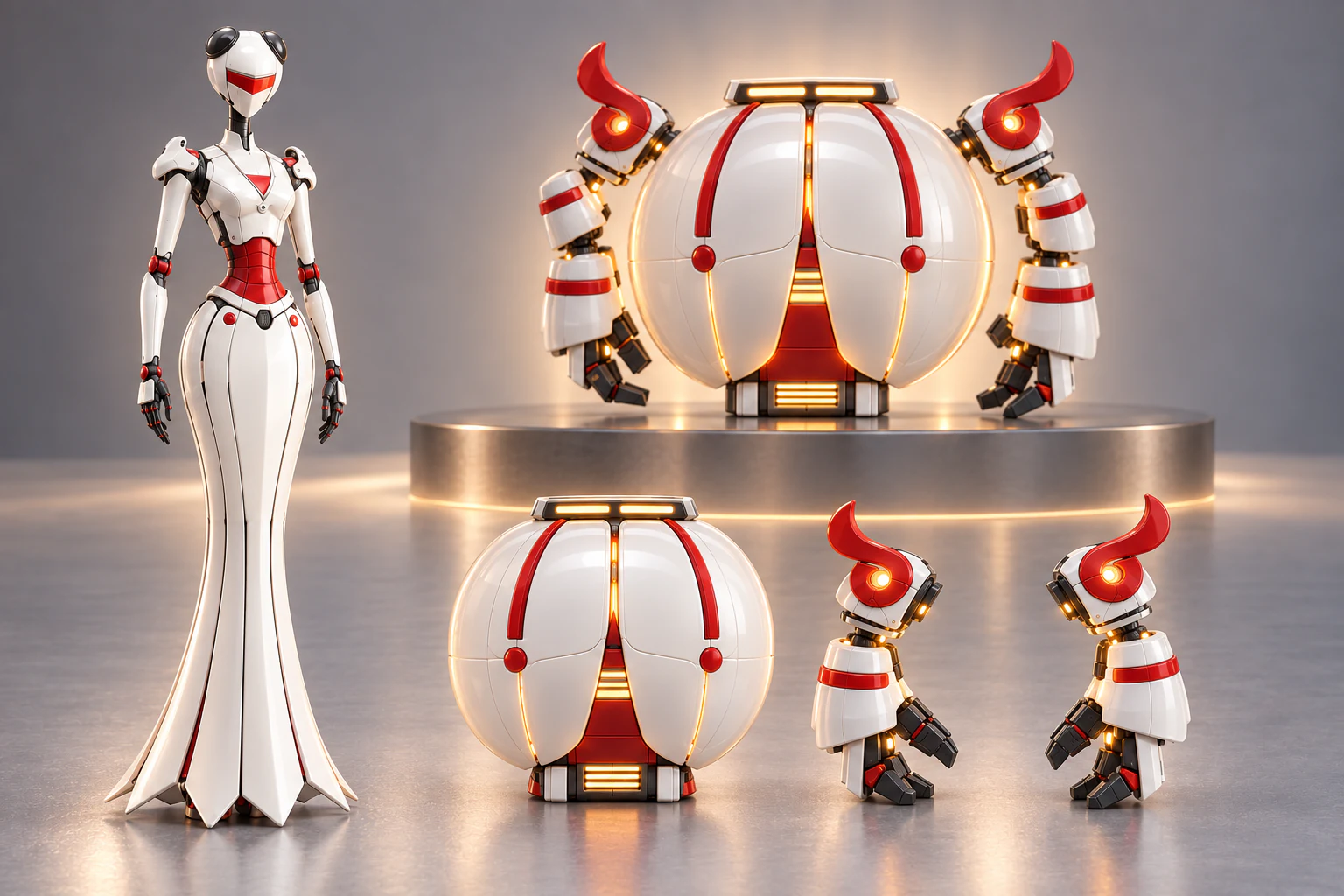
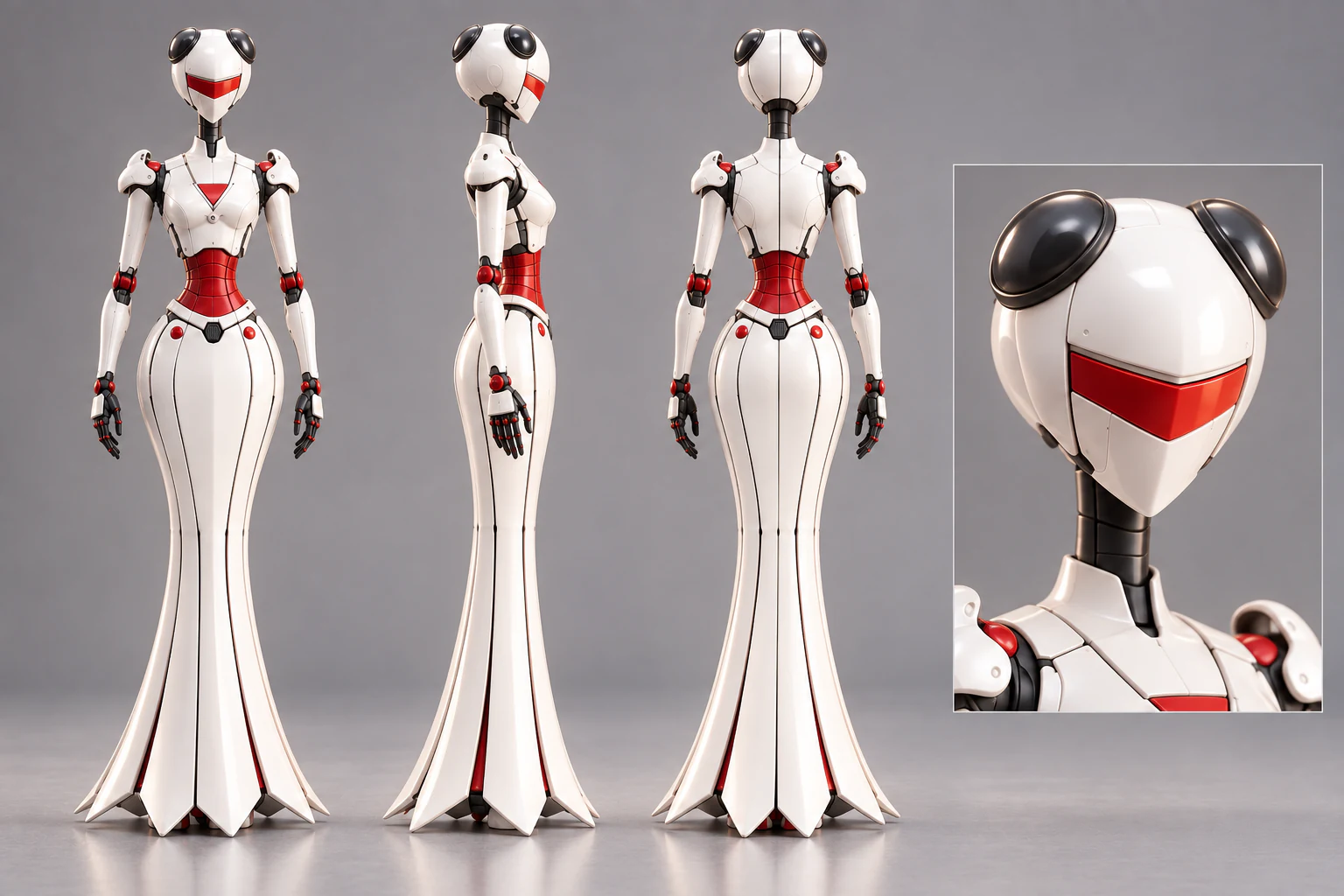
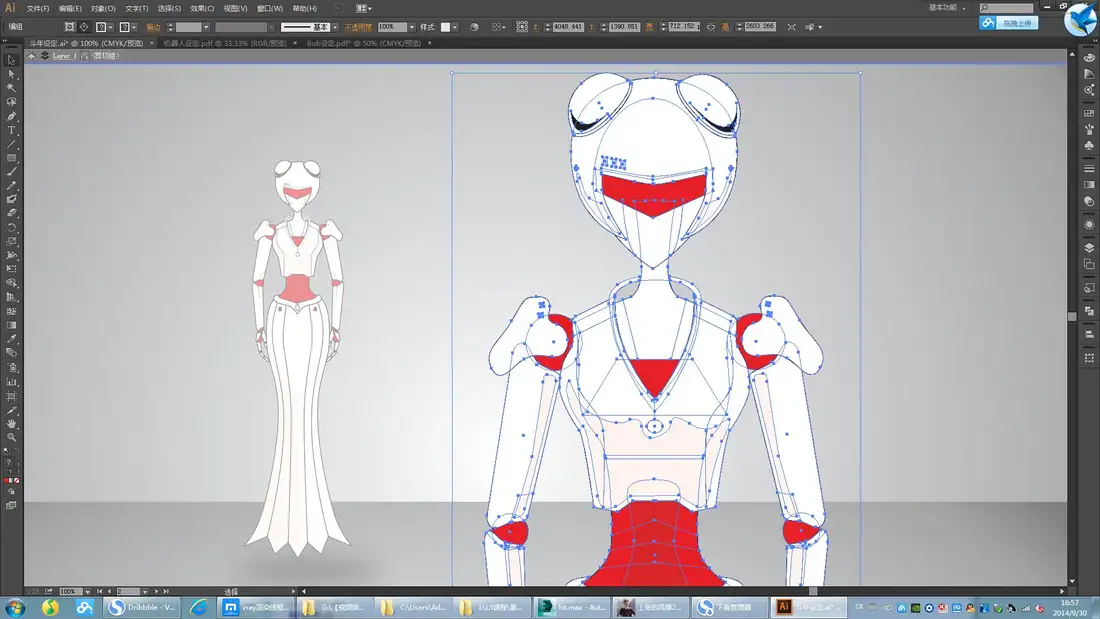
This independent 2026 study returns to the original cast and clarifies its strongest contrast. The tall female robot is the story's composed lead: elegant, observant and built on the vertical rhythm of a ceremonial dress. BOB is her round, slightly comic companion. He works with two mirrored flame-headed utility robots; the three smaller figures fold and dock into one illuminated lantern. The result is not a generic combiner with more parts than personality. It is a small ensemble in which grace, humour and cooperation become the mechanism.
Two silhouettes, two temperaments
The female lead remains independent. Her narrow head, long neck, red waist and skirt-like leg panels create a calm vertical line. BOB stays low, circular and visually eager. Seen together, they read before any dialogue does: she steadies the room; he rolls into trouble and somehow brings the light.
A three-robot lantern
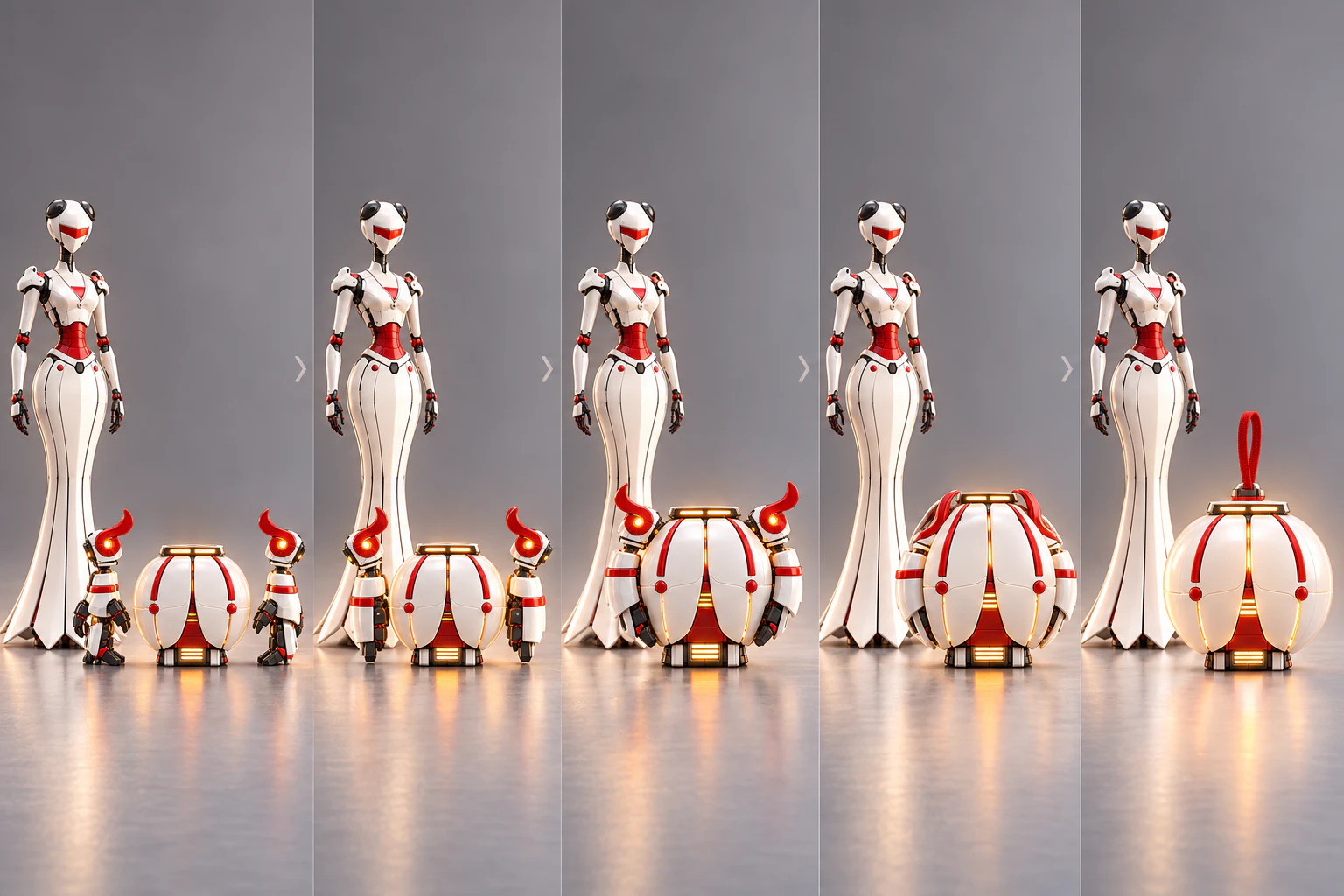
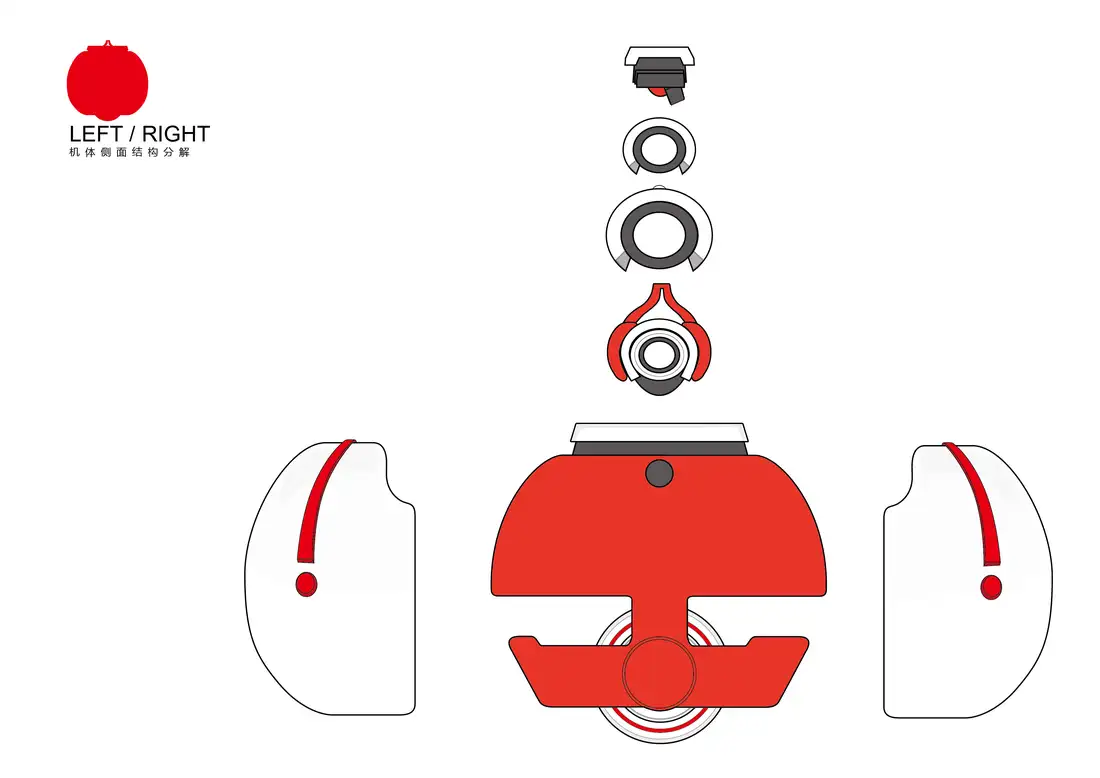
The combining system belongs to BOB and the two small utility robots. The twins fold their hands and lower shells into keyed side modules, then dock symmetrically to BOB's circular chassis. His white shell petals close around them while the red seams remain visible, so the lantern still looks assembled rather than magically replaced.
Transformation that can be understood
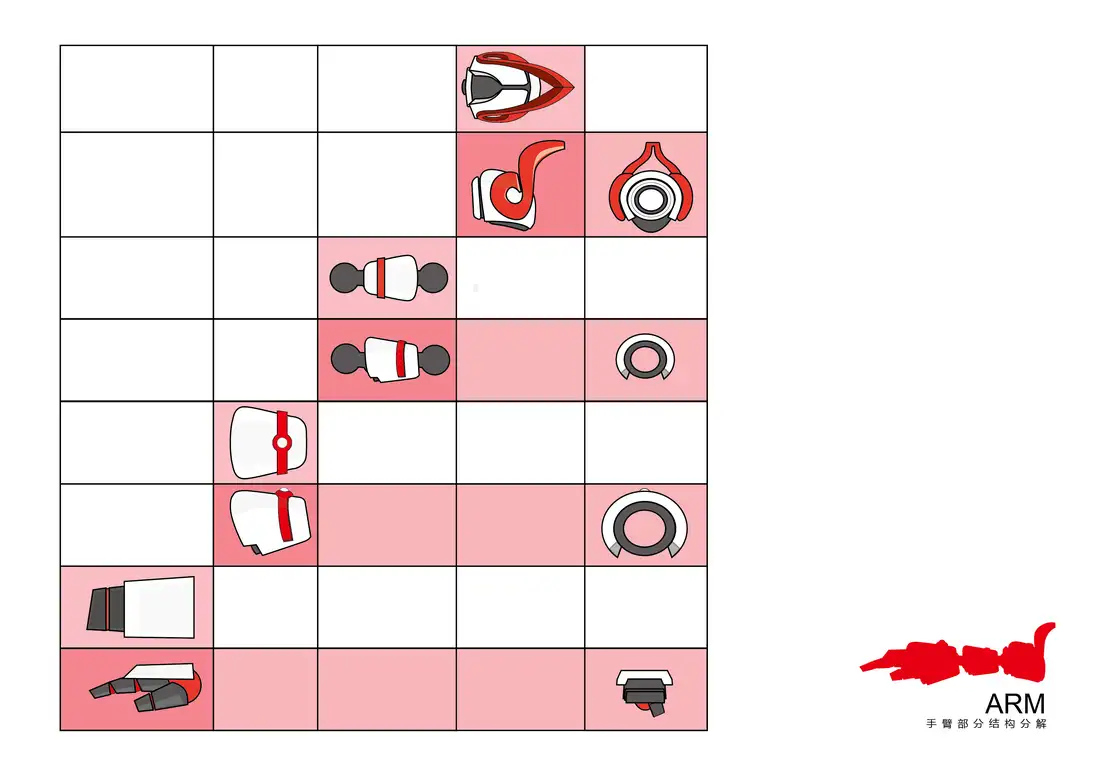
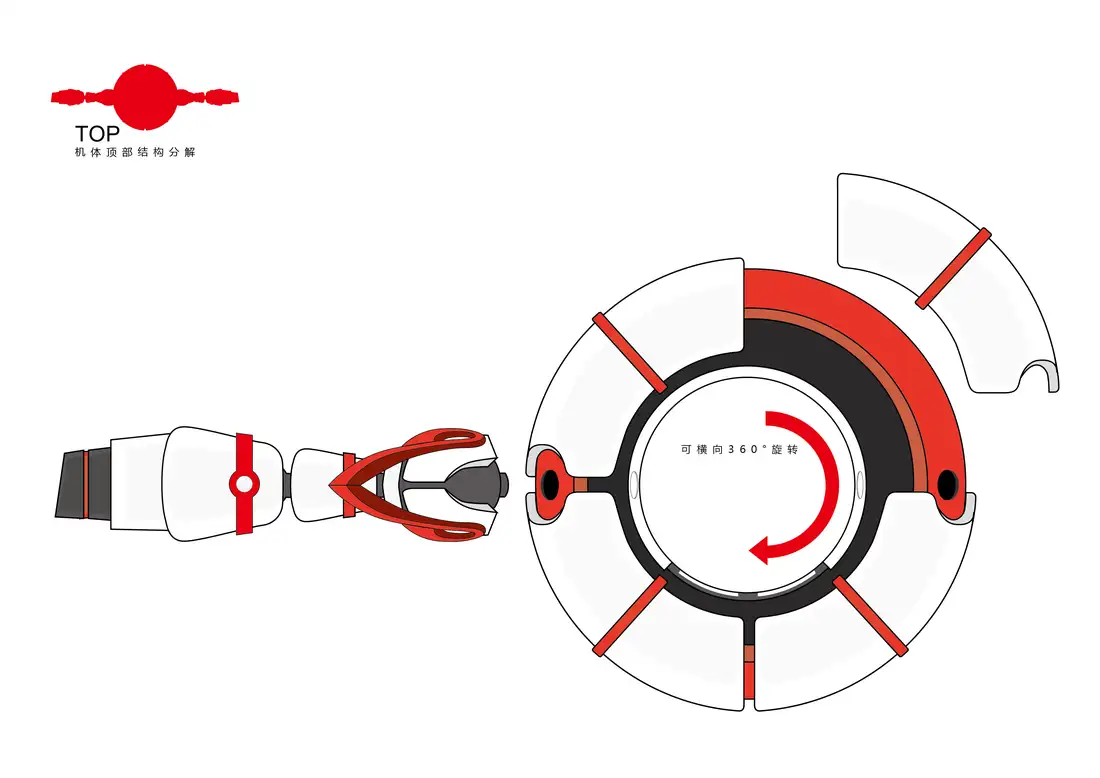
Every change is based on hinges, rotation and docking already suggested by the original arm and 360-degree body studies. No component disappears. Red connection points make the sequence legible, magnetic alignment helps small hands, and a final mechanical latch carries the load instead of asking magnets to do all the work.
Materials and scale
A 280 mm female figure establishes the premium display scale. BOB stands around 135 mm and the utility twins around 105 mm. Gloss white ABS shells, charcoal POM joints and restrained die-cast ballast give the figures weight; translucent amber polycarbonate carries light without turning the whole object into a glowing plastic ball.
Play without weapons
The Nian conflict is solved by light, rhythm and coordination. The female lead directs the encounter while the smaller robots assemble, project patterned light and turn a threatening shadow into a readable shape. The play pattern moves from character performance to construction and finally to a working bedside lantern.
A box that becomes the stage
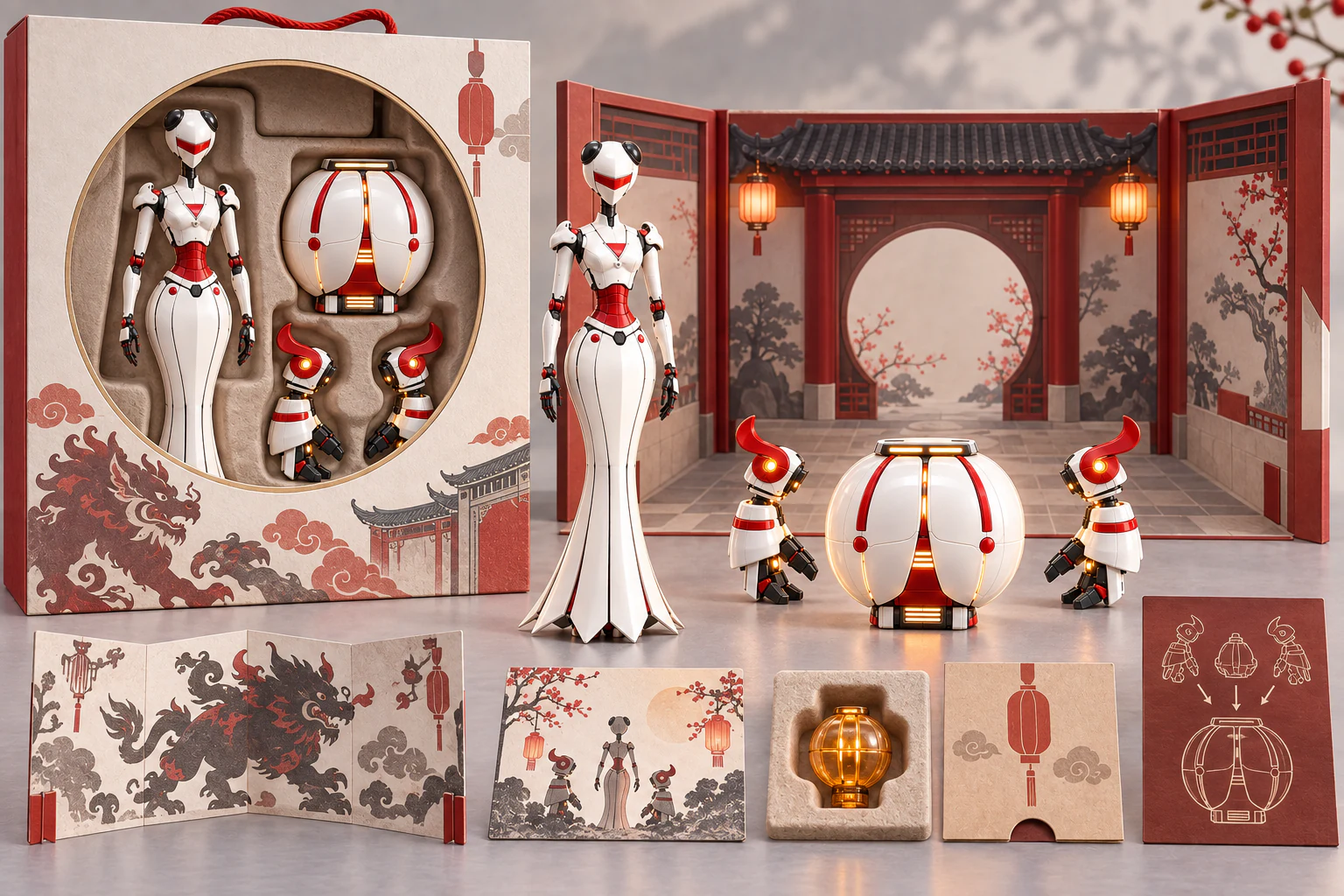
The fibre tray protects each silhouette, while the outer sleeve unfolds into a small courtyard. A paper Nian shadow, a warm light core, a red hanging cord and a short story deck extend the play without adding disposable plastic. The package stores the figures, explains the combination and becomes scenery instead of immediate waste.